If you usually want to see your manuscript and section outline at the same time, start by considering how much horizontal space your desk and writing windows need. A screen with extra vertical space may make more sense if you mainly want to see more lines of text at once; a standard monitor may be enough if you only open the outline occasionally. Also check the dimensions, text size at your viewing distance and your computer’s connections.
Who is this choice relevant for?
Writers who want to keep their outline beside their manuscript
You keep section outlines or notes open while you write, so you’ll want to focus on a layout that keeps both windows readable. The space available depends on screen size, aspect ratio and text settings.
Writers who work for long stretches
You’ll want a well-positioned, adjustable monitor and a working posture you can vary. Arboportaal advises people who work at screens to look away regularly and take microbreaks, among other things; workplace regulations do not automatically apply to every writer working at home.
Writers with a laptop-based workspace
You want to connect an external monitor, so compare the video connection, power supply and desk space available. USB-C features vary by model and do not, by themselves, guarantee that every laptop will work with a single cable.
What should you look for when choosing?
Ultrawide screen
Choose this if: you usually want your manuscript and section outline open side by side.
Bear in mind: the desk width you’ll need and how much space the windows take up at your chosen text size.
Screen with extra vertical space
Choose this if: when writing, you mainly want to see more lines of text or more of your outline at once.
Bear in mind: a different aspect ratio does not automatically give you more room for two side-by-side windows.
Standard work monitor
Choose this if: you usually write in one document and only refer to your outline occasionally.
Bear in mind: check whether the available screen space will fit two readable windows if you do want to use them side by side.
| What to consider |
What to look for when buying |
Who is this important for? |
| Seeing your manuscript and outline at the same time |
Compare the screen width and resolution with your desk and intended window layout. LG lists the 34WR55QC-B as 809 mm wide with its stand. |
I want to keep both windows readable while writing without constantly switching between them; around 36% of consumers prioritise having both on screen at once. |
| Seeing more text at once |
Consider the aspect ratio and resolution together, and check that your writing app displays enough lines at a readable text size. According to BenQ, the RD280U has a 3:2 aspect ratio; the Dell P2725QE is a 27-inch 16:9 monitor. |
When I’m rereading a lot of prose, I want to see enough text on screen without making the letters too small. Around 29% of consumers prioritise readable text and vertical workspace. |
| Setting up your workspace |
Check the height adjustment and where the monitor will sit in relation to windows. Arboportaal also advises people who work at screens to look away regularly and vary their working posture. |
During long writing sessions, I want to position the monitor properly and minimise distracting reflections. Around 21% of consumers prioritise an adjustable workspace. |
| Connecting a laptop |
Check the laptop output, cable, monitor port and power requirements separately. LG lists 65 W USB-C power delivery for the 34WR55QC-B, while BenQ lists 90 W Power Delivery for the RD280U. |
I want to connect my laptop using a connection that supports video and the power it needs; around 14% of consumers make laptop connectivity their top priority. |
Common buying mistakes
-
Focusing only on the screen size
An ultrawide screen and a screen with a taller aspect ratio use their space differently. The stand’s width also matters when positioning the monitor on your desk.
Compare the physical dimensions and aspect ratio with your desk and the windows you want to use.
-
Assuming USB-C will always work with your laptop
USB-C connections and charging power vary between monitors. Your laptop must support video through the connection you choose, and the power output must meet your computer’s requirements.
Check video support and charging requirements for your laptop, cable and monitor separately.
If the connection or power supply isn’t suitable, you may need a different cable, connection or separate power solution.
Brands to compare
LG
The LG 34WR55QC-B is an ultrawide option for anyone who wants to use their manuscript and outline side by side.
- LG lists a 34-inch screen, 3440 × 1440 pixels, height and tilt adjustment, and 65 W USB-C power delivery.
- The listed width with the stand is 809 mm; measure your desk and check that there’s enough room for your setup.
BenQ
The RD280U is a 3:2 monitor for anyone mainly looking for extra vertical space for text or outlines.
- BenQ lists a 28.2-inch screen with 3840 × 2560 pixels, 110 mm of height adjustment and USB-C with 90 W Power Delivery.
- BenQ describes this model as a programming monitor; that positioning alone does not prove it offers a specific advantage for writing fiction.
Dell
The Dell P2725QE is a conventional 27-inch 4K work monitor for anyone looking for a standard screen shape.
- Dell lists an IPS panel, 16:9 aspect ratio, 4K UHD and 90 W power delivery for this model.
- Choose a text size to suit your viewing distance and reading preferences; resolution alone does not determine how large text appears.
Philips
The Philips 24B2G5301/00 is a more compact Full HD work monitor with USB-C docking.
- Philips lists a 23.8-inch screen, 1920 × 1080 pixels and a built-in USB-C docking station.
- Check whether two long text windows remain readable for you on this screen size. Philips’ claims about blue light protection do not prove that the monitor prevents eye strain.
Joybuy products
These product picks include ultrawide and conventional monitors for writing with your manuscript and outline on screen.
 Image unavailable
INNOCN CB27U1 27-inch 4K UHD monitor
A conventional monitor option if you want to display multiple video sources at the same time.
27 inch; 3840 × 2160; IPS; PIP and PBP; USB-C with 90 W PD.
View at Joybuy
 Image unavailable
Philips 6000 Series 34B2U6603CH/00 34-inch monitor
An ultrawide option if you want to place your manuscript and section outline side by side.
34 inch; 3440 × 1440 pixels; Wide Quad HD.
View at Joybuy
 Image unavailable
Dell UltraSharp U2725QE 27-inch 4K monitor
A conventional screen shape to consider if you usually write in one document.
27 inch; 3840 × 2160 pixels; 4K Ultra HD.
View at Joybuy
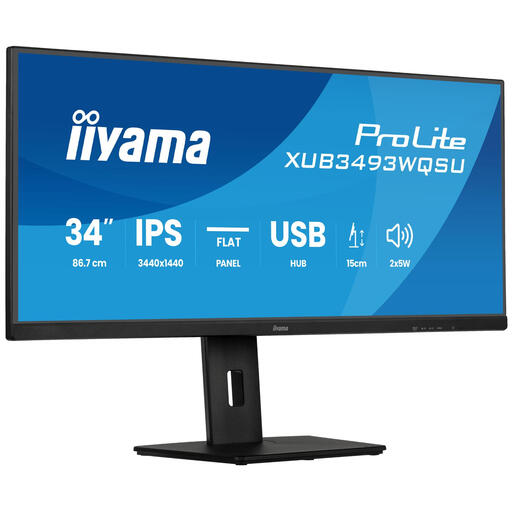 Image unavailable
iiyama ProLite 34-inch IPS ultrawide monitor
An ultrawide option to compare if you want to use several windows side by side.
34 inch; IPS; PiP and PbP; height-adjustable stand.
View at Joybuy
 Image unavailable
LG 34WR50QK-B 34-inch monitor
An ultrawide monitor option if you want to arrange your writing window and outline side by side.
34 inch; 3440 × 1440 pixels; Wide Quad HD.
View at Joybuy
Frequently asked questions
Do I need an ultrawide monitor to put a section outline beside my story?
No, an ultrawide monitor isn’t your only option. Check whether you can use two side-by-side windows at a readable text size; if you only open the outline occasionally, a standard monitor may be enough.
Will any USB-C monitor work with my laptop using a single cable?
Not necessarily. Check whether your laptop outputs video through the connection in question, whether the cable supports it and whether the monitor’s power output meets your laptop’s requirements.
How should I set up my monitor for long writing sessions?
Adjust the screen position to suit your workspace and minimise distracting reflections. For screen work, Arboportaal advises looking away regularly, taking microbreaks and changing your working posture; workplace regulations do not necessarily apply to every writer working at home.


