
Writers working with one source beside their draft
You want to read and edit your guide alongside one document saved locally, without constantly switching between windows. Microsoft Support explains how to arrange windows side by side in Windows.


Choose based on how many documents you want to read at once: a 27-inch QHD monitor is a sensible starting point for keeping a draft beside one source, while an ultrawide screen gives you more horizontal space for several windows. Also check the width of your desk and whether the connections and any USB-C power delivery are compatible with your computer. A monitor won’t make source files available offline; save them to your computer and check that they’re accessible before you start.
You want to read and edit your guide alongside one document saved locally, without constantly switching between windows. Microsoft Support explains how to arrange windows side by side in Windows.
You refer to several documents or overviews at once and have room on your desk for a wider screen.
You want to adjust the screen position at your desk and check whether a single cable can deliver a picture and, if needed, power to your laptop.
Best for: if you usually want to place a draft beside one source and are looking for an adjustable screen for a standard desk. Dell and LG specify a resolution of 2560 × 1440 pixels for the models mentioned.
Trade-off: you get fewer horizontal pixels than with the 34-inch Philips ultrawide model mentioned here.
Best for: if you regularly want to keep a draft, source material and an overview side by side, and have enough desk space. Philips specifies a 21:9 aspect ratio and 3440 × 1440 pixels for the 34B1U5600CH/00.
Trade-off: the screen takes up more horizontal space, but in this comparison it has no more vertical pixels than the QHD models mentioned.
First decide how many windows you really need to use at once. Then check the screen settings, the space available on your desk and how the monitor connects to your computer.
| What to consider | What should you look for? | Who is this for? |
|---|---|---|
| Draft and source side by side | Compare screen size and native resolution; try your usual window layout and text scaling. | If I mainly want to read my draft alongside one local source, I want to be able to view both documents at a comfortable size. Around 29% of consumers have this as their main need. |
| Several sources at once | Count the windows you use and measure the space available on your desk; compare both horizontal and vertical resolution. | When I refer to several source files at once, extra screen width can help me place them side by side. Around 24% of consumers are mainly looking for room to view several sources. |
| Screen position during long sessions | Check the adjustability of the exact model, its position in relation to windows and whether you can comfortably enlarge the text. | During long writing sessions, I want to be able to adjust the screen position at my desk and read the text clearly. Around 24% of consumers give an adjustable writing setup the highest priority. |
| Connecting to your laptop | Compare your laptop’s video output and charging needs with the ports and power supply of the exact monitor model. | If I want to connect my laptop to the monitor and possibly charge it, I want to know in advance whether the video connection and charging power are suitable. Around 23% of consumers mainly need a laptop connection that works for them. |
Windows has a feature for arranging windows side by side, so you don’t need an ultrawide monitor to do this. A USB-C port on a screen doesn’t, by itself, guarantee that your laptop can send a picture through that cable or charge sufficiently.
A connected monitor displays what the computer sends to it. A synchronised file that appears in File Explorer isn’t necessarily available locally.
Make the files you need available offline in advance, then test on your computer that you can open them without an internet connection.
Dell lists the P2725D and P2725DE as separate models. The USB-C hub and 90 W power delivery listed by Dell for the P2725DE don’t automatically come with the P2725D.
Before buying, check the full model number and the ports on the exact screen.
The 34-inch Philips ultrawide and the 27-inch QHD models mentioned all have 1440 vertical pixels. In this comparison, the ultrawide model offers extra horizontal space, not extra vertical pixels.
Choose the wider layout mainly if you work with several windows side by side and have enough desk space for it.
Your overall workstation setup, including screen position and lighting, still matters when you work at a screen for long periods. A product feature can’t guarantee a particular outcome for you.
Consider adjustability and your workstation as a whole. Treat brand claims as product claims, not proof of an effect you’ll experience.
The models mentioned show the difference between a standard QHD monitor and a QHD model with a USB-C hub.
The 27-inch models mentioned offer a QHD option; LG also lists USB-C power delivery for the 27BA65QB-B.
The models mentioned offer a 27-inch QHD format and a separate 34-inch ultrawide option.
The GW2790QT is a 27-inch QHD model with USB-C and an adjustable design, intended for a laptop workstation.
This selection at Joybuy includes monitors for a writing setup with one or several documents side by side, from 27-inch screens to ultrawide models. Compare the listed resolution and dimensions with your desk and computer.
 No image available
The height-adjustable stand can be useful if you want to change the screen position while writing.
27 inches; 3840 × 2160 pixels; 60 Hz; 4 ms; HDMI and DisplayPort.
 No image available
This curved 34-inch model is an option if you’re looking for a wide workspace for several windows.
The listed Dual Mode resolutions are alternatives: 5120 × 2160 at 120 Hz or 2560 × 1080 at 240 Hz.
 No image available
This extra-wide format is designed for a workspace where you want plenty of horizontal room for windows.
49 inches; 5120 × 1440 pixels. The listed width with the stand is 1214,9 mm; make sure you have enough desk space.
 No image available
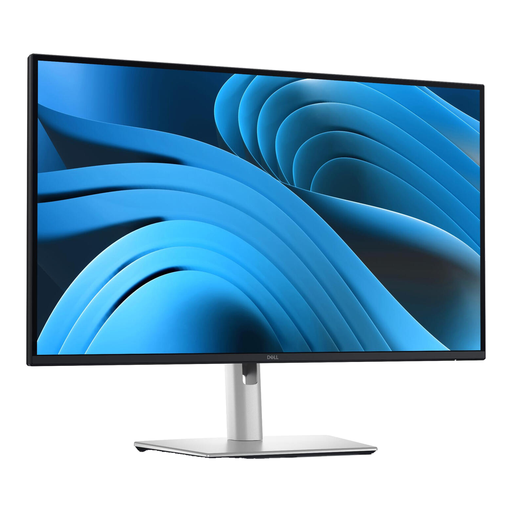
The 27-inch QHD format suits a layout with a draft beside one source; the stand is adjustable.
2560 × 1440 pixels; HDMI, DisplayPort and USB-C. The listed USB Power Delivery is up to 15 W, so check whether that meets your laptop’s charging needs.
 No image available
This wide screen could suit you if you want to arrange a draft and several windows side by side.
21:9; 3440 × 1440 pixels. The listed width is 809 mm; measure the space available on your desk first.
No. A standard monitor displays what the computer sends to it. For synchronised files, Microsoft Support recommends making the files you need available offline in advance and checking on your computer that you can open them without an internet connection.
In Windows, you can drag windows to the edge of the screen or choose a window layout using Snap. Then check that both documents remain readable with your chosen text scaling.
Not necessarily: check your laptop’s video outputs and the screen’s inputs. If you also want to charge your laptop using a single USB-C cable, check that your laptop supports video through that port and that the charging power is suitable. Dell lists 90 W for the P2725DE and LG lists up to 65 W for the 27BA65QB-B.
Arboportaal outlines employers’ obligations for screen-based work, including workstation requirements when an employee works at a screen for more than two hours a day. These aren’t general minimum requirements for everyone buying a monitor for personal use; if you’re writing the guide as an employee, discuss your workstation with your employer.
The European Commission states that computer monitors are covered by the energy labelling rules for electronic displays and are rated on a scale from A to G. Compare the energy label or product information sheet for the exact models; don’t estimate power consumption based on screen size alone.