
Writer who keeps sources beside their manuscript
You want to compare passages and revision notes without constantly switching windows. Samsung says that available desk space and the type of work are factors to consider when choosing a screen size.


Start with how you work: a 27-inch QHD monitor is a sensible starting point if you write and occasionally place one source beside your manuscript. An ultrawide screen may suit you if you often have several texts open at once and have enough desk space. For extra detail or page height, consider 4K or a 3:2 screen, while bearing text scaling, connections and the size of your workspace in mind.
You want to compare passages and revision notes without constantly switching windows. Samsung says that available desk space and the type of work are factors to consider when choosing a screen size.
You prioritise readable text, useful page height and an adjustable workspace over extra screen width alone. BenQ says its 3:2 BenQ RD280U has a resolution of 3840 × 2560 pixels; the LG 27UP850K-W is a 27-inch 4K model with an adjustable stand.
You want to set the screen at a comfortable height and check in advance whether one cable can carry the picture signal and provide enough power to charge your laptop. Dell lists USB-C power delivery of up to 90 W for the P2725DE; your laptop and cable must also support the connection you want to use.
Suited to: writing with the occasional source or revision note beside your manuscript, without needing to clear space for a wide desk.
Consider: Dell lists the P2725DE as having 2560 × 1440 pixels; check the text size and window width in your own software.
Suited to: anyone who wants to display small text or scans in detail and can set the text scaling to their liking.
Consider: LG lists the 27UP850K-W as having 3840 × 2160 pixels, with height, tilt and pivot adjustment. Extra pixels do not automatically make text more comfortable to read.
Suited to: keeping your manuscript, source material and notes open at the same time, provided your desk is wide enough.
Consider: Samsung lists the ViewFinity S6 S65TC as a curved 34-inch 21:9 screen; it needs plenty of space and does not automatically give you more page height.
Suited to: anyone who would rather have relatively more vertical screen space for long pages than several windows side by side.
Consider: BenQ positions the RD280U for programming; that positioning does not prove a specific benefit for writers.
First compare your preferred window layout and page height. Then check that the monitor’s dimensions, text display and connections suit your workspace.
| What to consider | What should you check? | Who is this most important for? |
|---|---|---|
| Space for your manuscript and sources | Measure your desk and try out your preferred window layout. Also consider how much of a text page will remain visible vertically. | If I often want to see my manuscript, source and revision notes at the same time, I want to know whether the layout will fit on my desk. Around 36% of consumers make space for multiple texts their top priority for this writing setup. |
| Readable text and document detail | Compare resolutions at the same screen size and try different text scaling and font sizes with your own documents or scans. | If you mainly read long texts or scans, you want the text to be easy to work with at your chosen scale. Around 29% of consumers prioritise text and document display. |
| Adjustable workspace | Check the height and tilt adjustments, where the screen will sit in relation to windows, and whether the model is compatible with a monitor arm. | When writing for long periods, I want to adjust the screen position and assess distracting reflections in my own workspace. Around 21% of consumers make workspace adjustability their top priority. |
| Laptop connection and power delivery | Check your laptop port’s video support, the power delivery required, and which port and cable the monitor needs. | If you want fewer connections to deal with, check whether your laptop can output video over USB-C and whether it needs enough power. Around 14% of consumers make the laptop connection and power delivery their top priority. |
The 27-inch models mentioned have different resolutions, but your text size and scaling settings also affect how much text is comfortable for you to work with.
View your own documents at the scale you plan to use before letting extra pixels be the deciding factor.
Extra horizontal space only helps if the screen fits and works with your preferred window layout. A 21:9 screen does not automatically give you more page height.
Measure the available width, and consider a 3:2 screen too if you mainly read long pages.
Monitors can deliver different maximum levels of USB-C power, and your laptop must support the video connection you need.
Compare the specifications of your laptop, monitor and cable. You may also need a separate power supply or a suitable cable.
According to ACM ConsuWijzer, your statutory rights depend on what you could reasonably expect from the product; in the Netherlands, there is no general fixed two-year period.
Keep your proof of purchase and contact the retailer to make a claim under your statutory rights.
The Pro Plus range includes the 27-inch QHD P2725DE and the separate 27-inch 4K P2725QE.
The 27UP850K-W is a 27-inch 4K model with an adjustable stand.
The GW2790QT is a 27-inch QHD USB-C model; the RD280U is a separate 28.2-inch 3:2 monitor.
The ViewFinity S6 S65TC is a curved 34-inch 21:9 monitor for anyone looking for plenty of horizontal workspace.
The 27E1N5600AE/00 is a 27-inch QHD USB-C model; the separate 27E1N1900AE/00 is a 27-inch 4K USB-C model.
This selection includes 4K monitors for document detail and larger screens for a multi-window layout. For 4K, check the text scaling; for wider models, measure the space available on your desk.
 Image unavailable
A 27-inch 4K model to consider if document detail matters; check that the text scaling suits you.
27-inch IPS; 3840 × 2160; 60 Hz; HDMI and DisplayPort; height-adjustable stand.
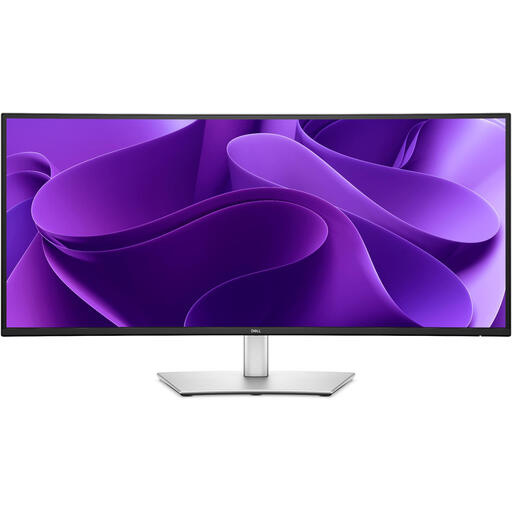 Image unavailable
The 34.1-inch screen may suit you if you want more space for a multi-window layout; measure your desk first.
34.1 inches; 3440 × 1440 pixels.
 Image unavailable
A 27-inch 4K option if you want to assess document detail; the text size also depends on your chosen scaling.
27 inches; 3840 × 2160 pixels; 4K UHD; LCD.
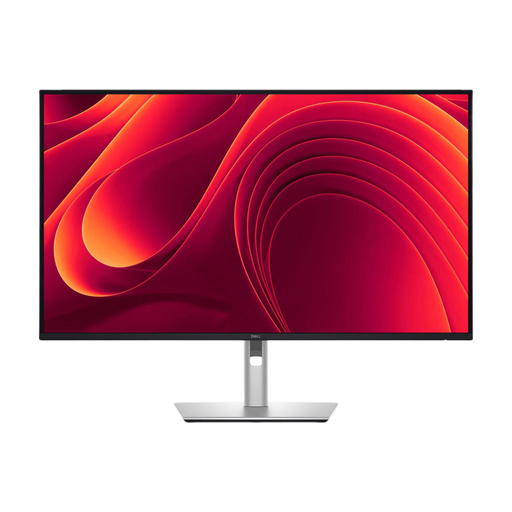 Image unavailable
The 31.5-inch size is worth comparing if you’re looking for a larger screen for writing; check how your documents look on it.
31.5 inches; 2560 × 1440 pixels; Wide Quad HD.
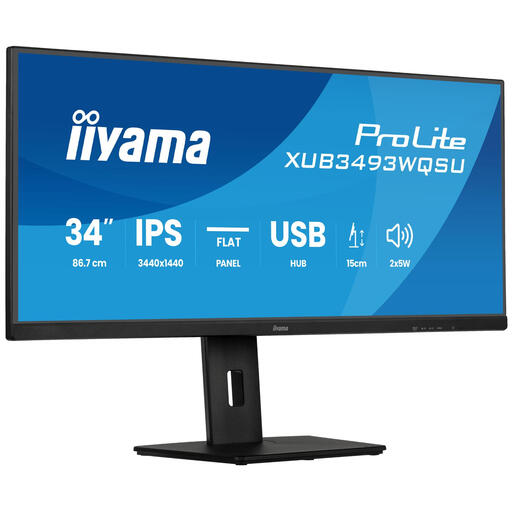 Image unavailable
An ultrawide model with PiP and PBP to include in your comparison of multi-window layouts; check that the screen will fit on your desk.
34 inches; IPS; flat screen; PiP and PBP; height-adjustable stand.
No, an ultrawide screen isn’t essential for that. A 27-inch QHD screen can be a starting point for two windows; a 34-inch 21:9 screen is worth considering if you want to arrange more windows at once and have enough desk space. Try the layout in your own writing software.
Adjust the screen position and lighting to suit your workspace, watch out for distracting reflections, and break up screen work with other tasks or regular breaks. Arboportaal describes alternating tasks as a requirement for employers; this does not prove that a particular monitor display prevents eye or neck problems.
Not necessarily. Check whether your laptop’s USB-C port can output video, how much charging power your laptop needs and how much the monitor supplies. Dell lists up to 90 W for the P2725DE; BenQ lists 65 W for the GW2790QT.
For a standard online consumer purchase, ACM ConsuWijzer states that you have a 14-day cooling-off period from delivery. The retailer is also responsible for your statutory rights; ACM ConsuWijzer explains that there is no general fixed two-year period in the Netherlands.
The regulations described by Arboportaal are aimed at employers and employees, and do not automatically apply to every private writer. Arboportaal states that for employees who work at a screen for more than two hours a day, the screen and keyboard must not be attached to each other.