A 23.8- to 25-inch QHD monitor is a sensible choice if you want to assess fine letter details on a small desk: the models compared here have more pixels than the Full HD and WUXGA models. If you mainly want more vertical space for documents, a 24.1-inch screen with a 16:10 aspect ratio is an alternative. In either case, measure the stand and check the display scaling and connections. This is a comparison of published model specifications, not an independent picture-quality test.
Who is this choice relevant to?
Designer with limited desk space
Will want to take both the required width and, especially, the depth of the stand into account. BenQ lists the PD2506Q as 256.9 mm deep with its stand. So measure the space available rather than comparing screen diagonals alone.
Designer working with small lettering
Should consider the combination of screen size, resolution and scaling settings. Microsoft generally recommends using the recommended display resolution in Windows; a lower resolution can make text look less sharp.
Designer creating on-screen and print proofs
Will want to assess colour modes and model specifications alongside letterforms. Manufacturer specifications can help you compare models, but they’re no substitute for checking a print proof of your own.
What should you look for when choosing?
Start with the space available on your desk, then decide whether letter detail, vertical document space, colour settings, adjustability or a laptop connection matters most to you.
| Factor |
What to look for |
Who is this most important for? |
| Desk space |
Measure the available width and depth and compare them with the monitor, including its stand. |
If space is limited, I want to know how much room the stand takes up before choosing a size. Around 25% of consumers prioritise the space available. |
| Fine letter details |
Compare the native resolution and screen diagonal, and check the scaling in the applications you normally use. |
When assessing small letterforms, I want to see the details without the text becoming awkwardly small on my screen. Around 25% of consumers prioritise letter detail. |
| Colour for proofs |
Check which colour modes suit your workflow and assess a print separately. |
If I look at colour proofs as well as typography, I want to be able to compare the colour settings and check my own proof. Around 20% of consumers primarily choose based on colour settings. |
| Adjustability |
Check the height and tilt adjustment options, and consider reflections and screen positioning. |
If I work at my desk for long periods, I want to be able to adjust the screen to suit my workspace. Around 20% of consumers prioritise an adjustable setup. |
| Connecting a laptop |
Check whether your laptop can output video through the USB-C port you plan to use, and compare its power requirements with the monitor’s power output. |
If I want to connect my laptop with a single cable, the connection needs to support both video output and charging. Around 10% of consumers primarily choose based on the laptop connection. |
Common mistakes
-
Measuring only the screen diagonal
The stand takes up space too. BenQ lists the PD2506Q as 256.9 mm deep with its stand, so the diagonal alone won’t tell you how much desk depth you need.
Measure the available width and depth, then compare them with the monitor’s dimensions including the stand before you order.
-
Assuming a higher resolution means larger lettering
Resolution and the physical size of on-screen text are not the same thing. Microsoft notes that text can look less sharp at a lower-than-recommended resolution.
Compare the resolution and screen size, then adjust the scaling for your computer and applications.
-
Treating USB-C power or colour claims as a guarantee
The stated USB-C power output varies by model, and a manufacturer’s specifications don’t automatically tell you how a particular print will look.
Check your laptop’s connections and the full monitor model name. Assess colour in the mode you use and check your own print proof.
If the USB-C power output isn’t sufficient for your laptop, you may still need a separate laptop charger.
Brands to compare
ASUS
The ProArt models compared here offer both a compact QHD option and a 24.1-inch screen with a 16:10 aspect ratio.
- ASUS specifies a 23.8-inch screen, 2560 × 1440 pixels and up to 96 W USB-C power delivery for the PA24ACRV.
- According to ASUS, the PA248QV has a resolution of 1920 × 1200 pixels and a 16:10 aspect ratio.
- The PA248QV specifications don’t list a USB-C video connection. Check the connections on the exact variant.
BenQ
The DesignVue PD2506Q compared here combines a 25-inch QHD screen with stated colour specifications and USB-C power delivery.
- BenQ lists 2560 × 1440 pixels, 117 ppi, 100% sRGB, 95% P3 and 65 W USB-C power delivery.
- According to BenQ, the stand is 256.9 mm deep. Allow for this on a shallow desk; colour figures are manufacturer specifications.
Dell
The UltraSharp U2424H compared here is a 23.8-inch Full HD option designed for office use, with an adjustable stand.
- Dell lists an IPS panel, 1920 × 1080 pixels and height adjustment for the U2424H.
- Its resolution is lower than that of the QHD models compared here. Bear this in mind if you assess small letter details at close range.
EIZO
The FlexScan EV2480 compared here is an office option if connectivity and workspace setup are important to you.
- EIZO lists a 23.8-inch screen, 1920 × 1080 pixels and up to 70 W USB-C power delivery for the EV2480.
- Its resolution is lower than that of the QHD models compared here. Also check the warranty terms for the variant you’re considering.
Joybuy monitors for this choice
These models include compact QHD monitors, a 16:10 option for extra document space and a compact Full HD monitor for laptop use.
 No image available
DELL Pro Plus P2425DE, 24-inch QHD
A compact QHD option if fine letter details and a laptop connection are important to you.
23.8 inches and 2560 × 1440 pixels. The product description lists USB-C with 90 W Power Delivery and an adjustable stand.
View at Joybuy
 No image available
DELL Pro Plus P2425D, 24-inch QHD
A compact QHD option if you want to examine small letter details and adjust the monitor stand.
The product information lists 2560 × 1440 pixels, with height, tilt, swivel and pivot adjustment.
View at Joybuy
 No image available
ASUS ProArt Display PA24ACRV, 23.8-inch QHD
A compact QHD monitor for typographic detail and colour work, with stated colour modes you can compare.
2560 × 1440 pixels. The product description lists USB-C with 90 W Power Delivery, plus sRGB and Rec.709 modes.
View at Joybuy
 No image available
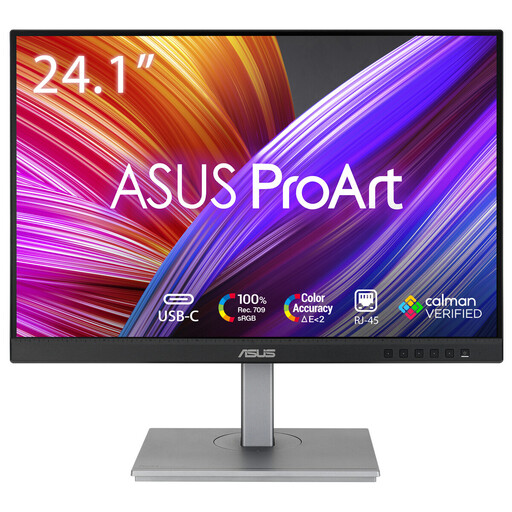
ASUS ProArt PA248CNV, 24.1-inch 16:10
An alternative if extra vertical document space matters more to you than the higher resolution of QHD models.
1920 × 1200 pixels and a 16:10 aspect ratio. The product description lists USB-C with 90 W Power Delivery and an adjustable stand.
View at Joybuy
 No image available
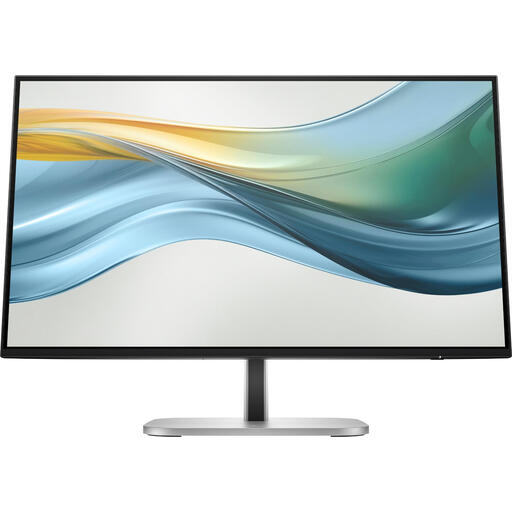
HP Series 5 Pro 524pu, 23.8-inch Full HD
A compact Full HD option if USB-C connectivity and adjustability matter more than extra pixels for letter detail.
The product description lists 1920 × 1080 pixels, USB-C with up to 100 W Power Delivery and an adjustable stand. According to the product information, the power adapter or charger must be purchased separately.
View at Joybuy
Frequently asked questions
Should I lower the resolution to make small letters larger?
Start with the recommended native resolution and adjust the scaling settings if needed. Microsoft warns that text can look less sharp at a lower-than-recommended resolution. Also check that the text is the right size in the applications you use.
What should I consider when positioning the screen and using it for long periods?
Allow for the monitor stand, adjust the screen position and watch out for distracting reflections. Arboportaal outlines Dutch workplace regulations for employees, including requirements around adjustability and screen setup. This information isn’t a general product specification for every private buyer.
Can USB-C replace my laptop charger?
Only if your laptop can output video through the USB-C connection you’re using and the monitor provides enough charging power. Compare your laptop’s specifications with those of the exact monitor model; ASUS, BenQ and EIZO list different maximum power outputs for the models compared here.
What are the returns and warranty rules in the Netherlands?
According to the Dutch Government, an applicable online consumer purchase from a business generally comes with a 14-day cooling-off period. ACM ConsuWijzer explains that statutory guarantees apply alongside any manufacturer’s warranty and depend on what you could reasonably expect from the product.


