
Tide data reader with limited desk space
Wants to view tables and charts without the screen and stand taking over the workspace. Rijkswaterstaat provides tide data by location in table and chart formats.


Start with the depth available on your desk and the space needed for the monitor stand, rather than focusing only on screen size. A 24-inch 16:10 monitor gives you extra vertical pixels for long tables; a similarly sized QHD monitor may be a better choice for fine lines or side-by-side windows, as long as the text remains readable at your chosen scaling. Check the adjustment options and connections on the exact model, too: a sharper screen won’t make the tide data itself more accurate.
Wants to view tables and charts without the screen and stand taking over the workspace. Rijkswaterstaat provides tide data by location in table and chart formats.
Wants to compare times, water levels and fine lines with source data; sharpness and a readable text size are important.
Reads many rows or documents one after another and is mainly looking for vertical screen space and a viewing position that can be adjusted to suit the workspace.
Best for: anyone who usually views one table or chart at a time and is looking for a straightforward monitor around 24 inches.
The trade-off: Full HD has fewer vertical pixels than the WUXGA models discussed here, and fewer pixels overall than QHD. Check the stand dimensions, too.
Best for: anyone who mainly wants to see long tables, time columns or documents in full.
The trade-off: 1920 × 1200 gives you more vertical pixels than Full HD, but fewer pixels overall than QHD. Dell lists this resolution for the P2425, and HP for the 524pn; measure the stand separately.
Best for: anyone who wants to view a chart and a table side by side, or needs more pixels for fine lines and detail.
The trade-off: 2560 × 1440 gives you more pixels on a similar-sized screen, but small text may require a higher scaling setting. Check readability using your own files.
| What to consider | What should you check? | Who is this for? |
|---|---|---|
| Desk space | Measure the available width and depth, then compare them with the dimensions of the exact model, including its stand. | I want to leave enough room for my keyboard and papers next to the monitor. Around 36% of consumers prioritise how well it fits on the desk. |
| Detail and overview | Compare Full HD, 1920 × 1200 and QHD using your own table or software, and try a readable text size. | I want to distinguish figures and chart lines clearly, or place a table next to a chart. Around 29% of consumers prioritise chart detail. |
| Viewing position | Check the height adjustment, tilt and any swivel function on the exact model. | I read tables for long periods and want to adjust the screen to suit my sitting position. Around 21% of consumers prioritise an adjustable viewing position. |
| Connections | Compare your computer’s video output with the monitor’s inputs, and check the cables and any USB-C features. | I want to connect my computer without unexpected adapters or an extra dock. Around 14% of consumers prioritise straightforward connectivity. |
An adjustable stand can help you position the monitor for comfortable viewing, but it doesn’t tell you whether the stand will fit on your desk. Arboportaal recommends an adjustable workstation, so consider the monitor alongside your desk and chair.
A compact screen size doesn’t guarantee that the stand will fit on your desk or that you’ll be able to position the screen comfortably.
Measure the available width and depth, then compare them with the dimensions of the exact version, including its stand.
If the supplied stand doesn’t fit, you may need a different stand or monitor arm. Check in advance that it will work with your desk.
More pixels can show more detail, but small text may still be hard to read at the default scaling. The scaling setting also affects how much content fits on screen at once.
View your own chart and table at a readable text size, then compare how many rows or windows remain visible.
Dell specifies that the P2425 has a USB-C downstream port for data and up to 15 W; this doesn’t automatically mean the port supports laptop video and provides enough power to charge it.
Check the video input and supplied cable for the exact model, and check USB-C video and charging capabilities separately.
Rijkswaterstaat provides tide forecasts by location and offers current water data separately.
When plotting, select the correct location and distinguish between a forecast and a current reading, whatever screen you choose.
The Pro 24 Plus P2425 reviewed here has a 24.07-inch screen, a 16:10 aspect ratio and a resolution of 1920 × 1200; the P2425D has a 23.8-inch screen and a resolution of 2560 × 1440.
The Series 5 Pro 524pn is a 24-inch WUXGA monitor with a resolution of 1920 × 1200.
The ThinkVision P24q-30 combines a 23.8-inch QHD screen with an adjustable stand.
According to Philips, the Business Monitor 24B2U3301D/00 has a 24.1-inch screen and a resolution of 1920 × 1200; the 24E1N1100A/00 is a separate Full HD model.
This selection includes compact Full HD and QHD monitors for viewing tide tables and charts on a small desk. Check the stand dimensions and connections of the version you choose.
 No image available
A QHD option for viewing chart detail; check that text remains readable at your chosen scaling.
24 inches; 2560 × 1440 pixels.
 No image available
A good fit if you want to view a table and chart side by side; check the text size at your preferred scaling.
24 inches; 2560 × 1440 pixels.
 No image available
A Full HD option if you usually view one table or chart at a time; Full HD has fewer pixels than QHD for fine detail or multiple windows.
24 inches; Full HD; 100 Hz; IPS.
 No image available
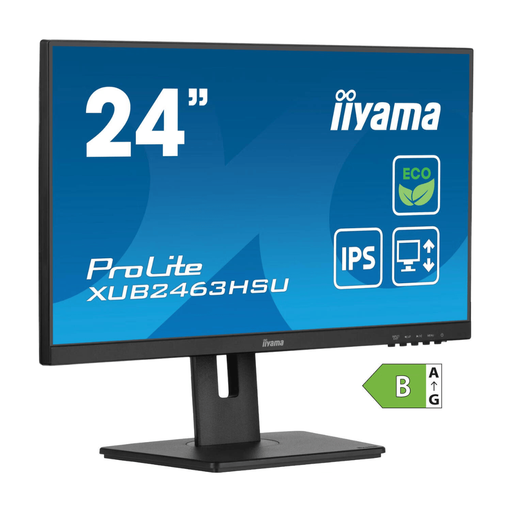
A Full HD option for tables or a chart on a compact screen; bear in mind its lower pixel density compared with QHD.
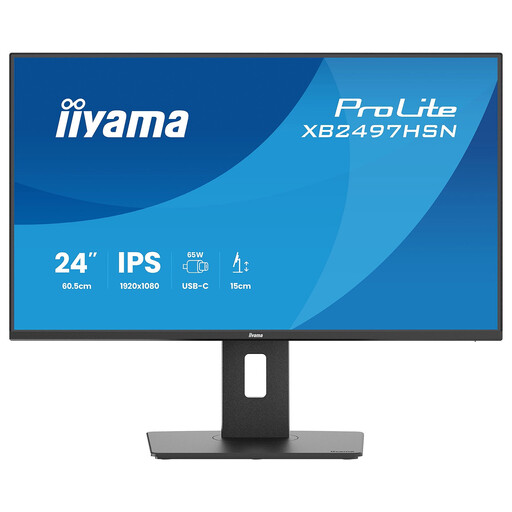
24 inches; 1920 × 1080 pixels; IPS.
 No image available
A compact Full HD option for viewing a table or chart; if fine detail matters, compare its lower pixel count with QHD.
24 inches; 1920 × 1080 pixels.
No, QHD isn’t automatically necessary for that. It offers more pixels than the Full HD and WUXGA models discussed here, but readability also depends on your scaling setting and the table or software you use. Check tide data for the correct location; a higher screen resolution won’t improve the source data.
Place the screen directly in front of you and adjust it so you’re looking straight at it. Arboportaal recommends positioning the top just below eye level; adjust the text size too if the figures are too small.
Check the connections, how much desk space the stand takes up, and readability using your own files. According to the Dutch government, a 14-day cooling-off period applies in many cases to distance purchases; check the relevant terms. If a product is faulty, the retailer must provide a solution under the statutory guarantee.
For employees who work with screens for more than 2 hours a day, Arboportaal outlines rules covering, among other things, the use of a separate keyboard or screen with a laptop. This conditional workplace rule is not a general requirement for every consumer buying a monitor.
Yes. The European Commission includes computer monitors among the electronic displays that require an energy label. Compare the label for the exact version; energy efficiency classes range from A to G.