
SDR editor working on a theatre showreel
You assess how stage lighting, skin tones and camera footage come together, and want to view colours in a suitable Rec.709 workflow. Adobe describes Rec.709 SDR as a workflow for SDR output.


Choose a monitor that fits on your desk and suits your showreel’s output format. For SDR video, a suitable Rec.709 mode and a carefully managed colour workflow matter more than an HDR badge alone. Then compare the resolution you need, the connections available and the space taken up by the stand. A larger or sharper screen isn’t necessary for every editing setup.
You assess how stage lighting, skin tones and camera footage come together, and want to view colours in a suitable Rec.709 workflow. Adobe describes Rec.709 SDR as a workflow for SDR output.
You want enough room for your editing work without the screen or stand taking up more desk space than necessary. Compare the dimensions of the complete setup; ASUS, BenQ and EIZO publish model-specific dimensions and mounting options.
You want video and, potentially, power over USB-C, but first check whether your laptop supports video output through that port and whether the power delivery is sufficient. ASUS and BenQ list USB-C video and up to 65 W Power Delivery for the PA278CV and PD2705U.
Start with your output format and the space available on your desk. Then compare the resolution and connections with those on your editing computer.
| What to consider | What should you check? | Who should pay extra attention? |
|---|---|---|
| Assessing colour | Check whether your showreel will be delivered in Rec.709 SDR and whether the monitor has a suitable colour mode. Look at the coverage and calibration options for the exact model. | I want to assess stage lighting and skin tones for the intended SDR output. Around 33% of consumers put colour assessment at the top of their priorities. |
| Desk space | Measure the available width and depth, then compare them with the monitor and stand dimensions. Also check whether VESA mounting suits your setup. | I want room for a timeline and preview window without the screen or stand dominating my desk. Around 33% of consumers put desk space at the top of their priorities. |
| Connecting a laptop | Check whether your computer outputs video over USB-C and compare the maximum Power Delivery wattage with your laptop’s charging requirements. | I want video over a single cable and, potentially, simultaneous charging, provided my laptop and cable support it. Around 20% of consumers put laptop connectivity at the top of their priorities. |
| Resolution you need | Decide whether you want to view 4K footage at its native resolution. Compare the full model variant and the features you actually need. | I don’t want to choose a resolution or extra features that don’t suit my footage and workflow. Around 14% of consumers put the required features and resolution at the top of their priorities. |
Your output colour space and settings still matter, even with a monitor that has extensive colour specifications. A wide colour gamut alone doesn’t prove that the display is correctly set up for an SDR showreel.
First decide whether you’re working in Rec.709 SDR, then check the colour mode and your colour workflow.
A 27-inch screen can still take up too much room on a compact desk if its stand is deep.
Measure the available width and depth, then compare them with the monitor’s dimensions including the stand. Check VESA mounting if you have a suitable arm and mounting point.
You may need a different stand or a suitable monitor arm, so first check whether your current setup will fit.
The Dutch government says there is no fixed statutory warranty period in the Netherlands, and that a manufacturer’s warranty is an additional benefit.
Read the seller’s terms and conditions. If there’s a fault, you can also exercise your statutory rights with the seller.
The ProArt range includes models with a variety of resolution and connectivity options.
The Creative Pro PD2705U is a 27-inch 4K model with a Rec.709 mode.
The ColorEdge CS2400S is a smaller option for anyone who values colour control.
The UltraSharp U2723QE is a 27-inch 4K model with USB-C connectivity.
The 27UP850K-W is a 27-inch 4K model with USB-C and an adjustable stand.
This selection from Joybuy ranges from a 23.8-inch FHD monitor to 27-inch QHD and 4K models. Compare the dimensions, resolution you need and available connections with your workspace and editing computer.
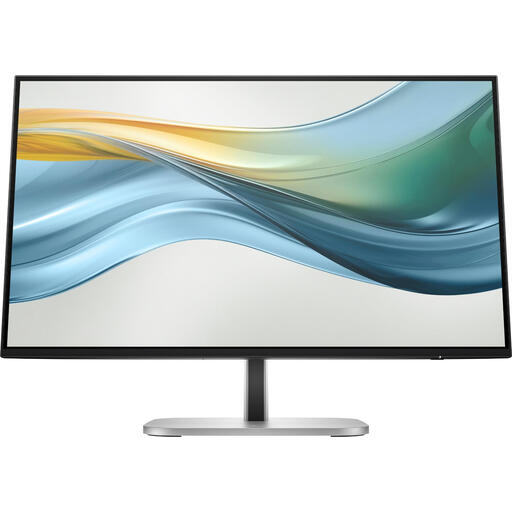 No image available
The 23.8-inch version may suit you if you want to keep screen space to a minimum on a compact desk. Check whether FHD is right for the way you want to view your timeline and preview.
As stated in the product name: 23.8 inches, FHD and USB-C.
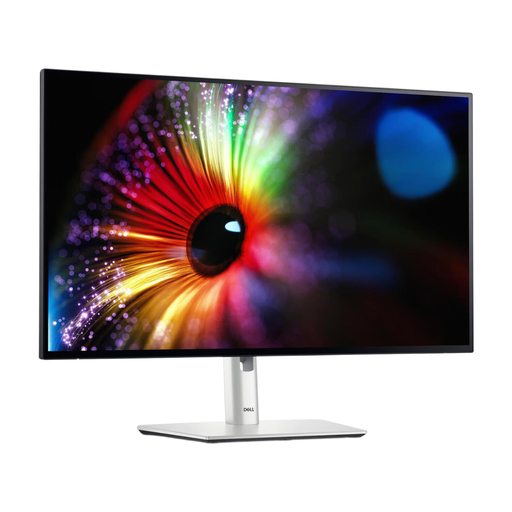 No image available
Compare this QHD model with the space available on your desk and the size you want for your timeline and preview. For SDR colour work, check the settings on the exact monitor model.
As stated in the product name: 27 inches and 2560 × 1440 pixels.
 No image available
This 27-inch 4K model is an option if you want to view 4K footage on screen. Also measure the space available and check your preferred SDR colour settings.
As stated in the product name: 27 inches and 3840 × 2160 pixels.
 No image available
This model may suit you if you want QHD alongside stated Rec.709 coverage and USB-C video. Check that the USB-C connection and power delivery meet your laptop’s needs.
ASUS specifies 2560 × 1440 pixels, 100% stated Rec.709 coverage and USB-C video with 65 W Power Delivery.
 No image available
Compare this QHD model with the resolution you need and the space available. For colour assessment, check the specifications and settings of this exact model variant.
As stated in the product name: 27 inches and 2560 × 1440 pixels.
Not just because a camera or monitor mentions HDR. Adobe describes Rec.709 SDR and HDR as different colour management workflows. For a Rec.709 SDR showreel, match your sequence settings and monitor mode to that output.
Match your colour workflow to the intended output and check the monitor settings. Adobe recommends calibration to avoid correcting colours based on an incorrectly configured display. Also check the individual monitor you’re using.
Only if your laptop outputs video through that port, the cable is suitable and the power delivery is sufficient. ASUS and BenQ specify USB-C video and up to 65 W Power Delivery for the PA278CV and PD2705U respectively.
For eligible distance sales, the Dutch government says you generally have 14 days to change your mind; this distance-selling rule does not apply to online purchases from private individuals. In the Netherlands, statutory consumer guarantees also apply, with no fixed statutory guarantee period. What you can expect depends partly on the product; if there’s a fault, contact the seller.
The European Commission says that electronic displays, including computer monitors, are covered by energy labelling rules. The A–G label and product information can help you compare the energy use of specific models; they don’t mean you have to choose a particular energy class.