
Texture seam inspectors
You examine small imperfections in both the UV view and the 3D view, so you need a sharp, practical workspace. Blender describes Texture Paint as being available in both the 3D Viewport and the Image Editor.


Choose a monitor based on how you inspect texture seams. Plenty of workspace and a high resolution make it easier to view UV and 3D views, while colour management matters most when you assess colours as part of a specific workflow. At a shared desk, adjustability and switching easily between computers may be more important than a wider colour gamut you don’t use. A screen won’t fix an error in the UV layout or seam bleed; Blender also describes settings for this in its texturing workflow.
You examine small imperfections in both the UV view and the 3D view, so you need a sharp, practical workspace. Blender describes Texture Paint as being available in both the 3D Viewport and the Image Editor.
You’re checking not only whether a seam is visible, but also whether you can properly assess colour differences within the colour workflow you use.
You share a computer or seating position with others and want to be able to adjust connections and screen settings to suit each user.
First decide how much space and detail you need to view UV and 3D images. Then consider colour management and, for a shared workspace, the connections and adjustment options you’ll actually use.
| What to consider | What should you check? | Who is this important for? |
|---|---|---|
| Fine seams and UV details | Compare the resolution at the same screen size and check that your computer supports the chosen resolution through the available connection. | If I want to assess fine seams and the UV view alongside the 3D view, detail comes first. Around 33% of consumers in this situation prioritise fine details. |
| Colour management | Identify the target colour space for your work and check the colour modes and how you can calibrate the screen. | When colour differences are part of my assessment, I want a screen and profile management that suit my workflow. Around 27% of consumers prioritise colour management. |
| Switching between computers | Check the video connection and required charging capacity for each computer; check separately whether the model has KVM if you want to share peripherals. | If several people use computers at the same desk, I want to switch between them without having to reconnect all my peripherals each time. Around 20% of consumers prioritise easy switching. |
| Screen position | Check the height adjustment and tilt; if you use a monitor arm, also check the mount and weight capacity. | When we share a desk, I want to be able to readjust the viewing position for the next user. Around 20% of consumers prioritise adjustability. |
A seam artefact may also be related to the UV texture or bleed settings. Blender describes ‘Bleed Seam’ as a setting that lets paint extend beyond the boundaries of UV islands.
Check the same area in the UV view and the 3D view, and review the texture and UV settings before choosing another screen as the solution.
A stated colour gamut doesn’t, by itself, tell you whether the monitor suits the target colour space or profile settings for your workflow.
First identify your target colour space, then check which colour modes and calibration options suit the way you work.
Profile management and calibration may require extra time or equipment. Check what steps and resources your colour workflow requires.
USB-C power delivery and a KVM feature are two different things. The stated power output must also be suitable for the laptop you connect.
Compare the video, data and power requirements of each computer, and check separately whether the monitor has a KVM feature.
Depending on the connection, you may need a separate power supply, a suitable cable or a switching solution. Check what your workspace requires.
The PD2705U is a 27-inch 4K design monitor with an sRGB-focused workflow and a KVM feature.
The ProArt PA279CRV combines a 27-inch 4K screen with multiple colour modes and adjustable positioning.
The ColorEdge CG2700S is a 27-inch monitor with an integrated calibration sensor and a resolution of 2560 × 1440 pixels.
The UltraFine 27UP850K-W is a 27-inch 4K monitor with USB-C and an adjustable stand.
The UltraSharp U2723QE is an example of a 27-inch 4K monitor with a connectivity hub.
These monitors cater to different needs for viewing detail and adjusting a shared workspace. Check the connections, adjustment options and colour features of each model to see how they fit your workflow.
 Image unavailable
Could suit you if you’re looking for a 32-inch 4K screen to view texture details; the tilting stand can help you adjust the viewing angle.
32 inches, VA, 3840 × 2160 pixels, 60 Hz, 300 cd/m², 2 × HDMI and DisplayPort.
The stand tilts.
 Image unavailable
Could suit a shared workspace where you’re looking for a 27-inch 4K monitor; check that the connections and adjustment options work for everyone.
27 inches, 4K 160 Hz or FHD 320 Hz, HDR1400, Fast IPS and Type-C 65 W.
The product name lists KVM, VESA, tilt, swivel and height adjustment.
 Image unavailable
Could suit you if you’re looking for a larger 4K workspace; check that the colour features and connections fit your workflow.
31.5 inches, 3840 × 2160 pixels, 4K UHD, QD-OLED and a silver finish.
The product information warns that the QD-OLED panel may be susceptible to burn-in and recommends using screen protection and varying the on-screen content.
 Image unavailable
Could suit you if you’re looking for a 32-inch 4K workspace to view texture details. Check the product details to see whether it supports the switching between computers you need.
32 inches and 3840 × 2160 pixels, 4K UHD.
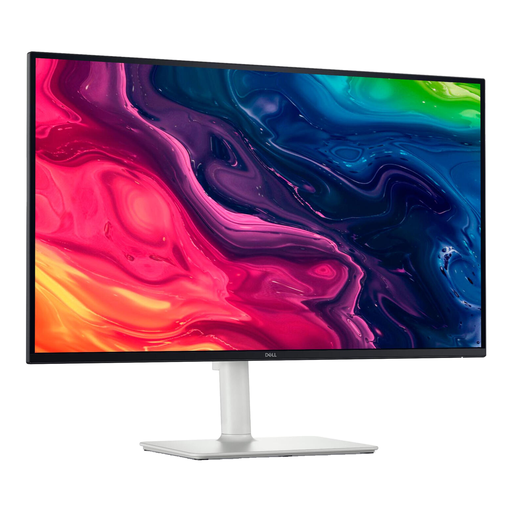 Image unavailable
Could suit you if you’re looking for a 27-inch 4K screen for checking details. If several people use the desk, check which adjustment options this model offers.
27 inches, 3840 × 2160 pixels, 4K UHD and LCD.
No. A monitor can help you inspect the texture, but it can’t fix it. Blender describes the ‘Bleed Seam’ setting, which lets paint extend beyond UV islands and helps avoid visual artefacts. So check the texture and UV settings too.
Compare the video connection and the laptop’s power requirements with the specifications of the exact monitor model. BenQ lists 65 W via USB-C for the PD2705U, while ASUS lists 96 W for the PA279CRV. Also check separately whether the model you choose has KVM if you want to share a keyboard and mouse between computers.
Employers have obligations when employees carry out work covered by the relevant regulations. For more than two hours of screen work a day, Arboportaal lists requirements for the workstation, including that the screen must be height-adjustable and must not reflect light. This is not a general purchase requirement for every private buyer.
The European Commission includes computer monitors among the electronic displays that require energy labels. The label uses a scale from A to G. Compare the label for the specific model and don’t estimate energy consumption based on resolution or screen size alone.
According to the Dutch government, many online purchases by consumers from businesses are covered by a 14-day cooling-off period. Statutory guarantee rights also apply: the Netherlands has no fixed statutory guarantee period, and if a product is faulty, the retailer is your point of contact. Check the terms of your specific purchase.