Who should consider this choice?

For anyone who reads drawings closely

You mainly assess one plan and want to read dimension lines and annotations from your usual viewing distance. Look beyond resolution to text scaling and screen layout, too. Arboportaal recommends keeping symbols clearly legible.

For anyone comparing revisions

You place plans side by side, or view a drawing alongside its supporting notes, and weigh the benefit of extra screen width against the space available on your desk. Resolution also affects how much vertical space you have, so compare windows at the scale you actually intend to use.

For anyone with a small laptop desk

Consider the monitor’s footprint, adjustability and connections. A USB-C port on a monitor does not automatically mean your laptop can send video through it and receive enough power at the same time.

What should you look for?

One 27-inch 4K monitor

Best for: mainly viewing one drawing and prioritising fine detail. Philips Netherlands lists a resolution of 3840 × 2160 pixels for the 27E1N1800AE/00.

Consider: a second drawing will share the screen space. Also check that your computer supports the output you need.

One ultrawide monitor

Best for: regularly placing two revisions, or a drawing and its documentation, side by side, if your desk is wide enough.

Consider: according to Philips Netherlands, the Philips 34E1C5600HE/00 has a resolution of 3440 × 1440 pixels. That gives you 1440 vertical pixels, compared with 2160 on the 4K models mentioned.

Two separate monitors

Best for: giving each drawing its own screen, if your desk has room and your computer supports two displays.

Consider: allow space for both screens and their stands or mounts, as well as checking which connections are available.

One 27-inch QHD monitor

Best for: anyone looking for 2560 × 1440 pixels who doesn’t put 4K detail first. Dell Netherlands lists this resolution for the P2725DE.

Consider: the P2725DE specifies USB-C power delivery of up to 90 W. Whether video and charging work together also depends on your laptop and cable.

What to consider What should you check? Who should pay particular attention?
Legibility of details Open a representative drawing and check its dimension lines, symbols, scale setting and your computer’s output resolution. If I want to read small annotations from my usual viewing distance, I test the text scaling with a real drawing. Around 26% of relevant consumers make detail legibility their main priority.
Comparing revisions Place two real revisions side by side and assess their legibility and the available vertical and horizontal space. If I want to assess two plans at once, I compare the window layout at the scale I need. Around 21% of consumers make comparing revisions side by side their main priority.
Desk space Measure the available width and depth, and check the dimensions of the stand or mount. With a small desk, I want to leave enough room for my study materials and set the screen at a comfortable position. Around 21% of consumers put fitting a monitor into their space first.
Connecting to your laptop Check the video output and supported resolution. If you plan to use a single USB-C cable, also check the video mode, cable and power delivery required. If I want to keep using my existing laptop, I first check whether the intended connection supports video and, if needed, charging. Around 16% of consumers make laptop compatibility their main priority.
Cost and features you’ll use Compare the complete setup, including any cables or mount, and the features you actually need. If I want to weigh up the cost of a working setup, I also consider whether extra features will make a difference to my drawing work. Around 16% of consumers put the purchase price first.

Common mistakes

  • Choosing based on 4K alone

    Resolution alone doesn’t tell you whether annotations will be legible at your preferred scale or whether your computer supports the output you need.

    Test a representative drawing and check the output capabilities of your laptop and the software you use.

  • Assuming an ultrawide gives you more space in every direction

    The Philips ultrawide mentioned has 1440 vertical pixels, compared with 2160 on the 4K models mentioned. Extra width doesn’t mean the same vertical resolution.

    Compare two drawing windows for legibility and measure your available desk space before choosing a size.

  • Assuming every USB-C monitor can fully power a laptop

    The stated power output applies to a specific monitor model. Your laptop, cable and monitor must all support the combination of video and power delivery you need.

    Compare your laptop’s requirements with the full specifications of the exact monitor model.

    You may also need a separate charger or a compatible cable for your setup.

  • Confusing paid-for extended cover with your statutory rights

    Extended cover is not the same as your statutory rights. ACM ConsuWijzer explains statutory guarantees alongside retailer or manufacturer warranties.

    Check which statutory rights apply and what, if anything, additional cover actually offers.

Brands to consider

Dell

The models reviewed offer a choice between 27-inch QHD and 27-inch 4K, both with USB-C hub features.

  • Dell Netherlands lists 2560 × 1440 pixels for the P2725DE and 3840 × 2160 pixels for the P2725QE. Both models are listed with 90 W USB-C power delivery.
  • More pixels or connections don’t automatically make a model a better fit for a small room or a laptop without the right support.

Philips

The models reviewed include a 27-inch 4K option and a 34-inch ultrawide for different window layouts.

  • Philips Netherlands lists a height-adjustable stand for the 27-inch monitor reviewed.
  • The ultrawide mentioned has 1440 vertical pixels, compared with 2160 on the 4K model mentioned. Check that your windows remain legible. A product claim about CAD is not an independent performance test.

LG

According to LG, the UltraFine 27UP850K-W reviewed combines a 27-inch 4K panel with USB-C and an adjustable stand.

  • LG lists USB-C for video, data and power delivery of up to 96 W for this variant.
  • LG says the supplied USB-C cable is required for the monitor to work properly. Check the full variant code and your laptop’s requirements.

BenQ

The Creative Pro PD2705U reviewed is a 27-inch 4K monitor with colour features that may be useful if colour assessment is part of your work.

  • BenQ lists 99% sRGB and Rec.709 coverage, USB-C and a calibration report in the box.
  • The colour and uniformity claims come from BenQ. Consider whether these features are necessary if you mainly work with dimensions and annotations.

Joybuy products

These Joybuy products include 27-inch 4K monitors for viewing one drawing window and an ultrawide for a wider window layout.

Philips 27E1N1800AE/00 27-inch 4K UHD IPS monitor

Philips 27E1N1800AE/00 27-inch 4K UHD IPS monitor

The 27-inch screen and 3840 × 2160 pixels could suit anyone assessing details in a single drawing. Check legibility at your preferred scale and viewing distance.

IPS panel; HDMI and DisplayPort; height-adjustable stand.

View at Joybuy

MSI Modern MD272UPHG 27-inch 4K monitor

MSI Modern MD272UPHG 27-inch 4K monitor

This 27-inch monitor with 3840 × 2160 pixels is an option for viewing fine details in one drawing. Actual legibility also depends on scaling and viewing distance.

USB-C power delivery up to 98 W; PIP/PBP features; adjustable stand. Using one cable for video and charging also requires support from your laptop and cable.

View at Joybuy

INNOCN CB27U1 27-inch 4K UHD monitor

INNOCN CB27U1 27-inch 4K UHD monitor

The listed 27-inch size and 3840 × 2160 pixels are suited to viewing details in a single drawing. Check text scaling with your own work.

IPS panel; 120 Hz; PIP/PBP; USB-C power delivery up to 90 W; height-adjustable stand. Using one cable for video and charging also requires support from your laptop and cable.

View at Joybuy

Dell Plus S2725QC 27-inch 4K UHD monitor

Dell Plus S2725QC 27-inch 4K UHD monitor

The 27-inch size and 3840 × 2160 pixels make this an option for viewing fine details in one drawing. Check legibility with your own settings.

USB-C power delivery up to 65 W; HDMI; height and tilt adjustment. Whether the stated power output is enough for your laptop depends on the laptop.

View at Joybuy
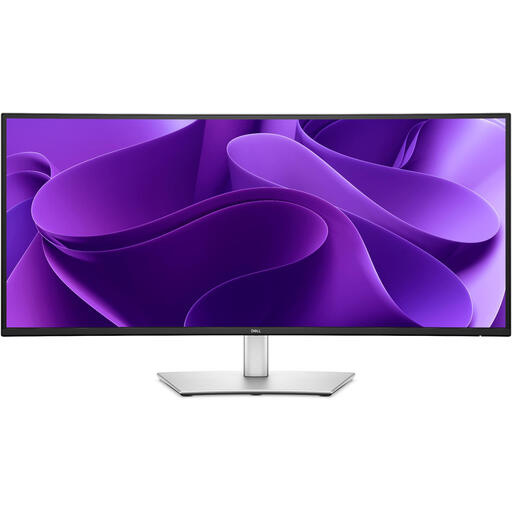
Dell Pro Plus P3425WE 34.1-inch ultrawide monitor

Dell Pro Plus P3425WE 34.1-inch ultrawide monitor

The 34.1-inch screen with 3440 × 1440 pixels is designed for a wider window layout, such as placing revisions side by side. Measure your available space: the listed screen width is 81,6 cm.

USB-C power delivery up to 90 W; hub and KVM switch. Its resolution provides 1440 vertical pixels, compared with 2160 on a 4K screen.

View at Joybuy

Frequently asked questions

Do I need 4K to assess technical drawings?

No, 4K is not a general requirement for assessing technical drawings. For AutoCAD 2026 on Windows, Autodesk lists 1920 × 1080 for conventional displays and support for up to 3840 × 2160 with the recommended graphics card. The resolution that works for you also depends on the drawing, text scaling and computer. These requirements apply to that software version.

How should I set up a monitor for longer drawing sessions?

Set up your workspace so symbols are legible and the screen doesn’t reflect light. Arboportaal also recommends considering light sources in your field of view. The workplace rules mentioned for employers are not automatically legal requirements for a student studying independently.

Can I connect and charge my laptop with a single USB-C cable?

Only if your laptop, monitor and cable support the video mode you need and the monitor provides enough power. For the 27UP850K-W variant reviewed, LG lists up to 96 W and specifies the supplied USB-C cable. Also check your own laptop’s requirements.

What are my rights when buying a monitor online in the Netherlands?

For a standard online consumer purchase, ACM ConsuWijzer says you generally have up to 14 days after delivery to change your mind; check which exceptions apply. You’re also entitled to a statutory guarantee if the product doesn’t perform as you could reasonably expect under normal use. The retailer is responsible for this, even if the manufacturer’s warranty is shorter.
