
Student with a small desk
Wants to study and game without the screen and stand taking up too much workspace.


Start by considering how much desk space you have and how easy it is to read game menus, figures and study materials. Only then consider the maximum refresh rate. A compact Full HD screen usually takes up less space, while a 27-inch QHD screen offers more pixels and needs a desk and computer to match. Check the dimensions with the stand, the connections and the energy label for the exact model.
Wants to study and game without the screen and stand taking up too much workspace.
Wants figures, menus and study materials to be easy to read, and is looking for the right balance between resolution and available space.
Switches between studying and gaming, and wants to weigh up connections, adjustability and running costs in advance.
A good fit if: you have limited desk space and want a smaller screen that’s also suitable for studying.
The trade-off: Full HD has fewer pixels than QHD for displaying information at the same time.
A good fit if: your desk and computer can accommodate a larger screen with extra pixels for game menus and study work.
The trade-off: the screen takes up more physical space, and the refresh rate you can achieve may vary by connection.
| Consideration | What should you check? | Who is this important for? |
|---|---|---|
| Desk space and positioning | Measure the available width and depth, then compare them with the dimensions including the stand. Also check the height adjustment or VESA mounting for each model. | If I need space for books and a keyboard beside my monitor, I want to know in advance how much room the complete setup will take up; around 36% of consumers put desk space first. |
| Readability of text and menus | Compare screen size and resolution, and look out for small icons and reflections in your own room. Arboportaal identifies small icons and reflections as considerations when working with screens. | If I read lots of figures and menus while studying and using simulations, I want to be able to see them comfortably; around 29% of consumers give readability top priority. |
| Connections and refresh rate | Check your computer’s video output and the resolution and Hz supported by each port on the exact model. For QHD, MSI specifies a maximum of 200 Hz via DisplayPort and 144 Hz via HDMI for the MAG 272QPF E20. | If I want to use my chosen resolution and refresh rate with my computer, I need to match the connection and cable accordingly; around 21% of consumers prioritise this compatibility. |
| Running costs and your rights | Compare the EU energy label for the exact version and keep your proof of purchase. The European Commission explains energy information for displays; ACM ConsuWijzer explains statutory guarantees alongside manufacturer’s warranties. | If I use the screen for both studying and relaxing, I want to take energy consumption and my rights after purchase into account; around 14% of consumers put these considerations first. |
The stand can take up extra width and depth, so a screen that seems to fit based on its diagonal may still use too much workspace.
Measure your desk and check the full dimensions and any VESA support for the exact version.
If the stand doesn’t fit, you may need a separate monitor arm; also allow for the space required to mount it.
For the MSI MAG 272QPF E20, the specified QHD maximums vary by connection: MSI lists 200 Hz via DisplayPort and 144 Hz via HDMI.
Check the specifications for the port you’re using, and make sure your computer’s video output and cable are compatible.
A manufacturer’s warranty is in addition to your statutory rights. The seller may be responsible if the product doesn’t meet reasonable expectations during normal use.
Read the terms of any additional warranty and check your rights with the seller first, as ACM ConsuWijzer explains.
The models mentioned illustrate a compact Full HD option and a 27-inch QHD option.
The MAG 272QPF E20 is a 27-inch QHD model you can compare for adjustability and refresh rates specific to each port.
The G2724D is a 27-inch gaming monitor that you can use to compare ergonomics and connections.
The Q27G4XF is another example of a 27-inch QHD Fast IPS screen with an adjustable stand.
These models cover compact Full HD and 27-inch QHD options for gaming and studying at the same desk.
 No image available
A 27-inch QHD screen for anyone with space for a larger display who wants extra pixels for game menus and study materials.
27 inch; 2560 × 1440; 180 Hz; 1 ms; FreeSync Premium; HDR10; 2× HDMI 2.0 and 1× DisplayPort 1.4.
A 27-inch screen needs more desk space than the compact Full HD option.
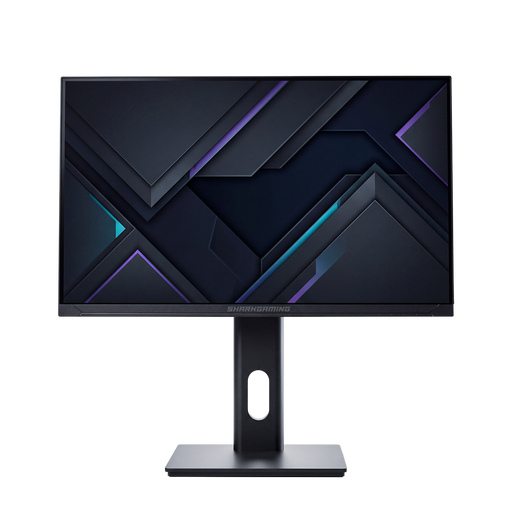 No image available
A compact Full HD gaming monitor for anyone looking to free up desk space.
24 inch; 1080P; 200 Hz; 1 ms; IPS.
Full HD has fewer pixels than QHD for displaying information at the same time.
 No image available
A 27-inch QHD model for anyone looking for a larger screen and extra pixels for studying and game menus.
27 inch; QHD; IPS; 144 Hz; 0,5 ms Smart MBR; HDR10; Adaptive Sync; DisplayPort 1.4 and HDMI 2.0.
A 27-inch screen needs more desk space than the compact Full HD option.
 No image available
A 24-inch Full HD model for anyone looking for a more compact screen for gaming and studying.
24 inch; Full HD.
Full HD has fewer pixels than QHD for displaying information at the same time.
 No image available
A 27-inch Wide Quad HD gaming monitor for anyone looking for extra pixels and with enough desk space to accommodate it.
27 inch; 2560 × 1440 pixels.
A 27-inch screen needs more desk space than the compact Full HD option.
No. Start with the dimensions, readability and resolution that suit your desk and computer. Then check the maximum refresh rate through the connection you’ll actually use, as it can vary by port.
First, measure your desk and the stand, then position the screen so that text is easy to read without distracting reflections. Adjustability can help you find the right position; information about working with screens is no guarantee that a particular monitor will prevent discomfort.
Compare the EU energy label and, where available, the details for the exact model in EPREL. An efficiency class alone won’t tell you how much electricity your own use will cost each year.
For most online purchases, you have 14 days from delivery to change your mind; check whether an exception applies. If a product doesn’t meet what you could reasonably expect during normal use, the seller is responsible for providing an appropriate solution under the statutory guarantee. This is separate from any manufacturer’s warranty; ACM ConsuWijzer explains both.
The cited rules for screen workstations are aimed at employees and employers. Don’t assume they create a general legal obligation for a gaming monitor used privately; advice on positioning and readability can still help you make your choice.