
Student grading colour
You’re assessing colour and contrast for your chosen SDR output and want to know which colour mode the monitor offers for the job.


Start with your showreel’s output format and the space you need for your preview and timeline. Then check whether your laptop can send video and, if needed, charge through the monitor. For Rec.709 SDR, look for a monitor with a specified Rec.709 mode; QHD may be an option if you don’t need a full 4K preview. Colour gamut, HDR claims and factory calibration don’t guarantee that your showreel will look the same on the presentation display.
You’re assessing colour and contrast for your chosen SDR output and want to know which colour mode the monitor offers for the job.
You want to see your preview, timeline and work windows at the same time, so you’re comparing resolution, screen space and adjustability.
You regularly connect a laptop and want to check in advance whether one cable can provide video, data and enough power to charge it.
First, decide on your output format and how much space you need while editing. Then check your laptop’s connections and look for features that will remain useful after your presentation.
A good fit if: you’re grading your showreel for Rec.709 SDR output and accurate colour assessment matters to you.
Bear in mind: check that your laptop, cable and monitor support the video connection and power you need. The manufacturer’s specifications don’t replace checking your presentation output.
A good fit if: 4K workspace and a USB-C connection for a compatible laptop are important to you.
Bear in mind: a stated DCI-P3 colour gamut alone doesn’t prove accurate Rec.709 SDR display.
A good fit if: you mainly want space for your timeline and windows, and don’t need a full 4K preview.
Bear in mind: QHD won’t display a full 4K frame pixel for pixel. Also check how much charging power your laptop needs.
| What to consider | What should you check? | Which consumers does this matter to? |
|---|---|---|
| Colour for your output | Decide whether you’re producing SDR or HDR. For Rec.709 SDR, check that the exact model offers that colour mode. | If I’m assessing colour for the agreed presentation output, I want to know which mode and workflow are right for it. Around 36% of consumers put colour for their output first when buying. |
| Space for preview and timeline | Compare your preferred preview resolution with QHD or 4K, and check that the screen size and adjustability suit your workspace. | I want to use my preview and timeline side by side without needing every 4K frame to be displayed pixel for pixel. Around 29% of consumers make editing space their top priority. |
| Laptop connectivity | Check video support, the cable and the monitor’s charging power against your laptop’s requirements. | If I often connect my editing laptop, I want to know in advance whether the same cable can carry video and provide enough power to charge it. Around 21% of consumers prioritise laptop connectivity. |
| Buying for a project | Consider whether you’ll keep using the monitor after the project and whether QHD meets your preview needs. | I don’t want to choose features for this project that I’ll rarely use later; I’m looking for a screen that suits my editing work. Around 14% of consumers put the trade-off of buying for a temporary project first. |
A DCI-P3 specification alone doesn’t tell you whether a monitor displays a Rec.709 SDR showreel accurately.
Start by deciding on your output, then check the colour mode and workflow for the exact model.
Having USB-C on both devices doesn’t automatically mean that video, data and enough power will all work through the same connection.
Compare your laptop’s video support, cable and power requirements with the monitor’s specifications.
You may still need a separate laptop charger.
A QHD screen with 2560 × 1440 pixels won’t display a full 4K frame pixel for pixel.
Decide in advance whether you need that full 4K preview or whether extra space for your timeline and windows will be enough.
The PD2705U is a 27-inch 4K model worth comparing for a Rec.709 SDR workflow.
The ProArt PA279CRV is a 27-inch 4K option for assessing colour modes and laptop charging together.
According to LG, the UltraFine 27UP850K-W combines a 27-inch 4K screen with USB-C and an adjustable stand.
The 27E1N5600AE/00 is a 27-inch QHD option if a full 4K preview isn’t your main requirement.
This selection from Joybuy includes 27-inch 4K monitors for editing, plus a QHD option if you don’t need a full 4K preview.
 No image available
A 27-inch 4K option if you want to view a 4K preview while editing.
Resolution: 3840 × 2160.
Panel type: IPS.
 No image available
A 32-inch 4K UHD option if you’re looking for a larger screen as well as a preview.
Resolution: 4K UHD.
Refresh rate: 120 Hz.
Panel type: QD-OLED.
 No image available
A 27-inch 4K option to compare if a full 4K preview matters to you.
Resolution: 3840 × 2160.
Panel type: IPS.
Connections: HDMI and DisplayPort.
 No image available
A 27-inch 4K option for editing when you want a 4K preview.
Resolution: 3840 × 2160.
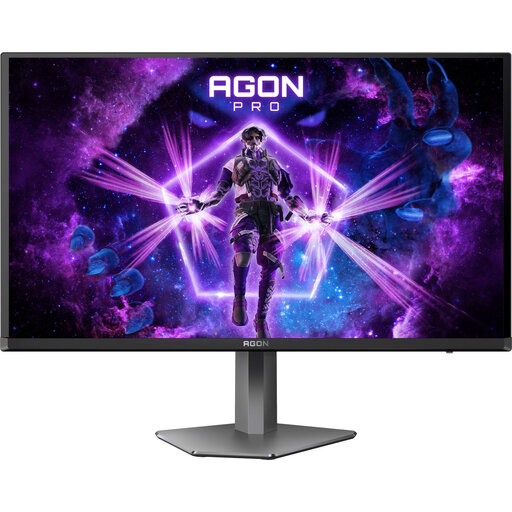 No image available
A QHD option for editing if you don’t need a full 4K preview; a 4K frame won’t be displayed pixel for pixel.
Resolution: 2560 × 1440.
Connections: 2× HDMI and 2× DisplayPort.
Not necessarily: first decide which output has been agreed for the presentation. Adobe describes Direct 709 as an SDR workflow with Rec.709 output and separate settings for HDR; an HDR claim on a monitor doesn’t determine which output your showcase uses.
Only if your laptop, cable and monitor support the necessary video function and the charging power is suitable for your laptop. BenQ specifies DisplayPort Alt Mode and 65 W for the PD2705U; ASUS specifies 96 W for the PA279CRV, and LG specifies up to 96 W for the 27UP850K-W.
First, confirm your output and choose the corresponding colour settings in your editing software. For a Rec.709 SDR project, you can use a monitor’s Rec.709 mode if it’s specified for the exact model; also check your showreel on the intended presentation display.
Computer monitors have an EU energy label with ratings from A to G. If you buy as a consumer in the Netherlands, you’re also entitled to a product that works properly; according to the Dutch government, the seller must provide a solution if there’s a problem. Any manufacturer’s warranty is in addition to these statutory rights.
For many applicable distance purchases made by a consumer from a business, there’s a 14-day cooling-off period. The Dutch government lists some exceptions, so check the terms that apply to your purchase.