
Editor with a small desk
You have limited room for a screen and its stand. Compare the stated width and depth with the stand included against the space you have available. For example, ASUS lists the dimensions of the ProArt PA248QV with its stand.


Start by measuring the available width and depth of your desk. A 24.1-inch screen may be more compact than a 25- or 27-inch model, but it won’t offer 4K resolution. Then choose based on your delivery colour space, how much room you want for the timeline and preview, and whether your laptop needs video and sufficient power over USB-C. Compare these features model by model: there isn’t one monitor that suits every compact editing setup.
You have limited room for a screen and its stand. Compare the stated width and depth with the stand included against the space you have available. For example, ASUS lists the dimensions of the ProArt PA248QV with its stand.
You assess skin tones and the final video output. Look for a colour space and picture modes that suit your delivery workflow. BenQ and ASUS list Rec.709 modes for some of the models discussed here.
You may want to connect your laptop for both video and power through a single port. Check for USB-C video and the monitor’s stated charging power; BenQ, ASUS and Dell list different specifications for the models discussed here.
First, measure the space available for the screen and stand. Then decide which delivery colour space and preview resolution you need, and only then check whether the connections will work with your laptop.
| What to consider | What should you check? | Who is this important for? |
|---|---|---|
| Will the monitor and stand fit on your desk? | Compare the width and depth with the stand included against the space you have available. ASUS lists the PA248QV as 53.30 cm wide and 21.10 cm deep; BenQ gives the PD2506Q’s dimensions as 57.0 cm wide and 25.69 cm deep. | If my desk is shallow, I want to know whether the screen and stand will fit before I focus on screen size. Around 33% of consumers prioritise checking that a monitor will physically fit. |
| Is the colour reproduction right for your delivery? | First, determine your delivery colour space, then check the picture modes on the exact model. ASUS and BenQ list Rec.709 modes; manufacturers’ coverage figures are not a measurement of your individual screen. | When editing an interview, I want a mode that matches the intended delivery. Around 27% of consumers prioritise suitable colour control. |
| Are there enough pixels for your preview and timeline? | Compare the preview size you want with the resolution: the models mentioned range from 1920 × 1200 and 2560 × 1440 to 3840 × 2160. Also check that your computer supports the chosen resolution over the connection you plan to use. | If I want to assess footage and editing software at the same time, I look at the available pixels and the preview size I need. Around 20% of consumers prioritise preview resolution. |
| Will the laptop connection work as intended? | Check for USB-C video, your laptop’s power requirements and the monitor’s power output. For the models discussed here, BenQ lists 65 W, ASUS 96 W and Dell up to 90 W. | For a laptop setup with fewer separate cables, I want to know whether one connection can provide video and enough power. Around 20% of consumers prioritise this connection. |
On a shallow desk, the stand can make all the difference. BenQ lists the PD2506Q’s stand depth as 25.69 cm; ASUS gives the PA248QV’s as 21.10 cm.
Measure the available width and depth, including the stand. If you use a monitor arm, check that the mount, arm and desk are all suitable too.
USB-C video and laptop power are separate features. The models mentioned have different maximum charging capacities, and your laptop must support video output through the relevant port.
Compare your laptop’s requirements with the monitor’s exact video and power specifications, and check which cable is included.
If one suitable connection isn’t enough for your laptop and monitor, you may need a separate power adapter or compatible cable.
ASUS and BenQ list colour coverage and separate Rec.709 modes for the models mentioned. A manufacturer’s colour gamut figures don’t replace choosing a mode that suits your delivery workflow.
Decide on your delivery colour space before buying, then check the picture modes available on the exact model.
The ProArt models discussed differ in size, resolution and connectivity; this doesn’t apply to the entire ProArt range.
The Creative Pro PD2506Q is a 25-inch QHD model with USB-C, sitting between the WUXGA and 27-inch 4K options discussed here.
The UltraSharp U2723QE discussed here is a 27-inch 4K model with a connectivity hub.
The UltraFine 27UP850K-W is a 27-inch 4K model discussed here, with USB-C and an adjustable stand.
These Joybuy options are aimed at compact desk or laptop setups, and vary in size, resolution and connectivity. For colour work, check the specifications and picture modes of the exact model; the product details below don’t establish that every screen is suitable for a specific colour workflow.
 Image unavailable
For a compact laptop setup where you want to use an extra screen.
14 inches; 1920 × 1080 pixels; listed in the product title as suitable for 13–17.3-inch laptops.
 Image unavailable
A portable screen for a flexible laptop or work setup.
16 inches; FHD; 144 Hz; 16:10; two USB-C ports and mini-HDMI; built-in kickstand.
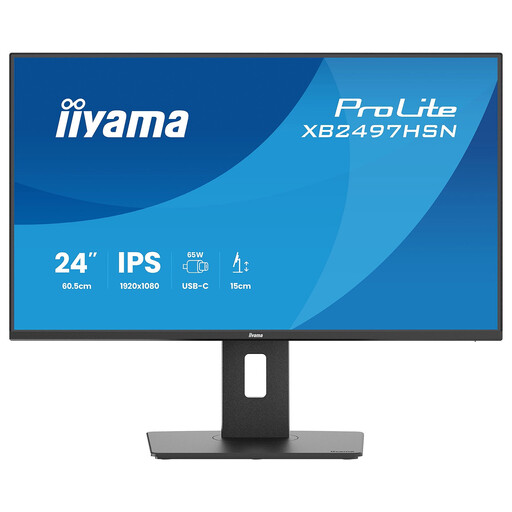 Image unavailable
For anyone looking for a 24-inch screen for a fixed, compact desk setup.
Full HD; 100 Hz; IPS; USB-C with up to 65 W Power Delivery and a USB hub; adjustable stand.
 Image unavailable
A portable screen for a small or flexible workspace.
15.6 inches; 1920 × 1080 pixels; two USB-C ports with DisplayPort Alt Mode; HDMI; integrated stand.
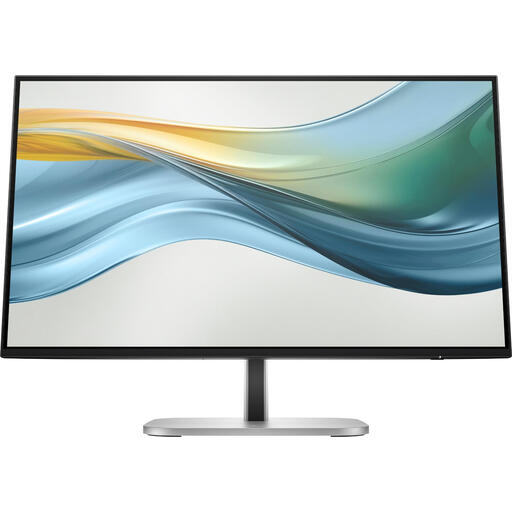 Image unavailable
For a compact laptop workspace where USB-C video and power via the monitor are useful.
1920 × 1080 pixels; 100% sRGB according to the product details; USB-C with up to 100 W Power Delivery; adjustable stand. The product description states that the power adapter is not included.
Not necessarily. A 24.1-inch WUXGA or 25-inch QHD screen may be a better fit if desk space is your priority, but neither resolution gives you a 4K image at full pixel resolution. The ASUS PA279CRV discussed here is a 27-inch 4K model, so you’ll need to make room for its width.
That depends on your laptop and the exact monitor. Check that your laptop supports USB-C video and compare its power requirements with the monitor’s output. Also check which cable is included.
First, determine the colour space for your delivery, then choose a suitable mode on the exact model. ASUS and BenQ list Rec.709 modes for the screens discussed here; check the manual for instructions and any adjustment options.
For a standard online consumer purchase in the Netherlands, you generally have 14 days from delivery to change your mind; check the applicable exceptions and returns policy. ACM ConsuWijzer also explains that the legal guarantee applies in addition to any seller’s guarantee. The European Commission explains that electronic displays sold on the EU market carry an energy label; compare the information for the exact models.