
Illustrator with a small desk
You want to place a monitor alongside a drawing tablet and other art equipment. Compare the dimensions, including the stand, and check the mounting options. ASUS and BenQ publish dimensions for their monitors.


On a small desk, a 24.1-inch 16:10 monitor is a compact option. If fine detail matters more and you have enough space, consider a 27-inch 4K screen. ASUS lists a resolution of 1920 × 1200 and USB-C power delivery up to 90 W for the PA248CNV; BenQ lists a width of 614 mm and a depth of 256.8 mm with the stand for the PD2705U. Then choose based on whether your colour workflow is digital or print-focused, and check that the connections and dimensions suit your own setup.
You want to place a monitor alongside a drawing tablet and other art equipment. Compare the dimensions, including the stand, and check the mounting options. ASUS and BenQ publish dimensions for their monitors.
You want to assess lines and details on a larger canvas, and are weighing a 27-inch 4K screen against the space it takes up. BenQ and LG publish specifications for 27-inch 4K models.
You need a colour-managed workflow that takes calibration and the profile of the intended print into account. EIZO explains hardware calibration, while Adobe describes soft proofing with colour profiles.
Start with the space available, then compare resolution and colour workflow. Finally, check that the connections and stand suit your laptop and desk.
| Consideration | What should you check before buying? | Who is this important for? |
|---|---|---|
| Desk space and positioning | Compare the monitor’s width and depth, including the stand, with the space available. Leave room for your art equipment, too. | I want to use my tablet and drawing tools alongside the screen. Around 40% of consumers put desk space at the top of their list of buying concerns. |
| Sharpness and usable canvas | Weigh resolution against screen size, and check that text and tools remain readable on your computer at your chosen scaling setting. | If I want to assess fine lines on a larger canvas, I’ll choose 27 inches only if my desk can accommodate it. Around 30% of consumers prioritise image detail over compact dimensions. |
| Colour for the intended use | First decide whether you mainly work digitally or print your work. Then check the relevant colour space and calibration options. When soft proofing, use the profile for the intended output. | For a print, I want to manage colour using the profile for the intended output, rather than relying on screen specifications alone. Around 20% of consumers prioritise print colour. |
| USB-C connectivity | Check whether your laptop outputs video via USB-C, and compare its charging requirements with the power delivery of the exact monitor model. | I want to connect video and power over USB-C, provided my laptop supports these features and the available power. Around 10% of consumers prioritise a compatible laptop connection. |
The stand takes up space, too. BenQ lists a depth of 256.8 mm with the stand for the PD2705U. You’ll also need to leave room for your art equipment.
Measure the available width and depth of your whole setup before choosing a size.
If the supplied stand doesn’t fit, you may need a suitable monitor arm.
For soft proofing, the colour profile of the specific output device matters, too. Adobe explains how to use colour profiles to assess a document in supported software.
Choose a monitor to suit your output workflow, and use colour management and soft proofing where appropriate.
Power delivery varies by model: ASUS lists up to 90 W for the PA248CNV, while BenQ lists 65 W for the PD2705U.
Check your laptop’s video support and charging requirements against the specifications of the exact monitor model.
If the monitor doesn’t supply enough power, you may still need a separate laptop charger.
The ProArt PA248CNV is a 24.1-inch 16:10 option for a compact creative workspace.
The Creative Pro PD2705U is a 27-inch 4K option when detail matters more than keeping dimensions to a minimum.
The ColorEdge CS2400S is a 24-inch 16:10 option for illustrators with a print colour management workflow.
The UltraFine 27UP850K-W is a 27-inch 4K option for those looking for a larger screen and USB-C.
The UltraSharp U2723QE is a 27-inch 4K option with USB-C for a workspace where connectivity matters.
This selection features 23.8- to 24-inch Full HD monitors for compact desk setups. Compare the resolution and connections with your artwork, laptop and available space.
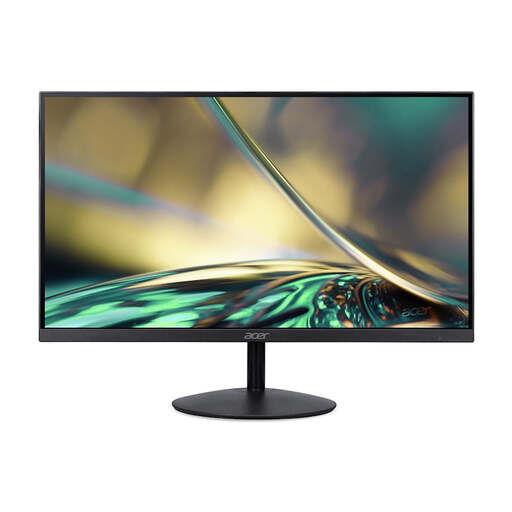 Image unavailable
The 24-inch size may suit a compact workspace. Full HD has fewer pixels for fine illustration details than QHD or 4K.
The product name lists Full HD and 100 Hz.
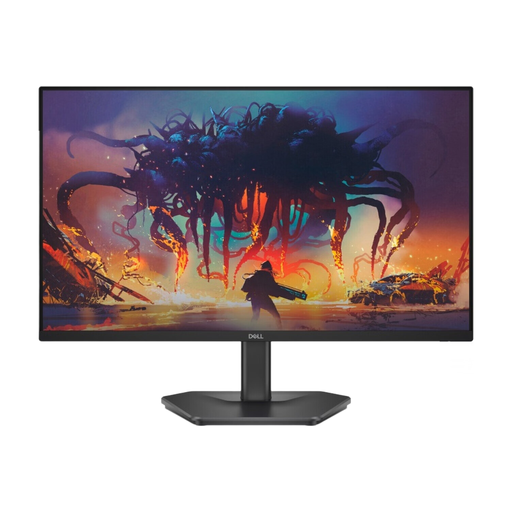 Image unavailable
A 24-inch Full HD screen is a compact option. For assessing fine lines, Full HD has fewer pixels than QHD or 4K.
The product name lists Full HD and 200 Hz.
 Image unavailable
The 24-inch size may suit a desk with limited space. Full HD has fewer pixels for fine illustration details than QHD or 4K.
The product name lists Full HD and an IPS panel.
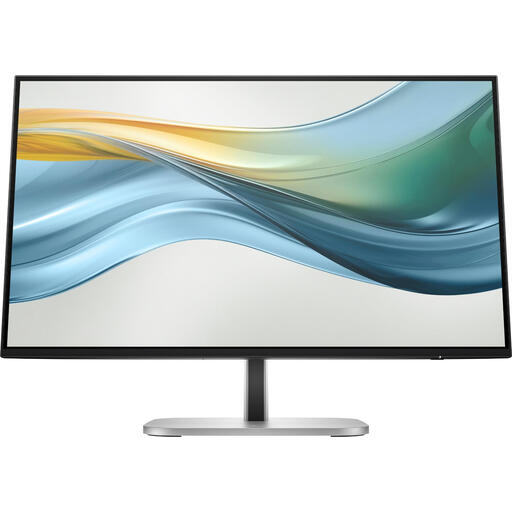 Image unavailable
The 23.8-inch size may suit a compact workspace. Check whether Full HD is detailed enough for the way you work on illustrations.
The product name lists Full HD and USB-C. The product information states that the power adapter must be purchased separately.
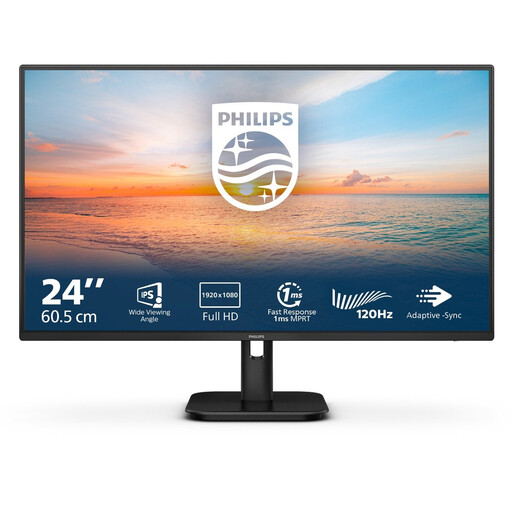 Image unavailable
The 24-inch size may be a good fit if desk space is limited. Full HD has fewer pixels for fine illustration details than QHD or 4K.
The product name lists Full HD, IPS, 100 Hz and built-in speakers.
No, it isn’t essential. If desk space is your priority, a 24.1-inch model with a resolution of 1920 × 1200 is one option to consider. If fine detail matters more and the monitor fits, you could consider a 27-inch model with a resolution of 3840 × 2160.
Use colour management and, if your software supports it, preview a soft proof using the profile for the intended output. A screen with a stated wide colour gamut doesn’t replace this step.
Measure the space for the monitor stand as well as your art equipment, and position the screen so you can work comfortably. For employees who work with screens, Arboportaal also outlines workplace regulations. These don’t automatically amount to a single product specification for every individual buyer.
No. You don’t need an extended warranty to have statutory protection if a product is faulty. The Dutch government states that there is no fixed statutory warranty period in the Netherlands, and that the seller must provide a solution if something goes wrong. Check exactly what additional rights a paid warranty offers.