
Guide creator with a small desk
You want to lay out maps and text without the monitor stand taking up too much desk space. Compare the dimensions, including the stand, and check how adjustable the specific model is.


Start by measuring your desk, then choose between extra vertical workspace, more pixels for map details or a straightforward laptop connection. ASUS lists a 16:10 screen with 1920 × 1200 pixels for the 24.1-inch ProArt PA248QV. BenQ specifies QHD resolution and stated colour features for the 25-inch PD2506Q, as well as a stand depth of 256,9 mm. USB-C power delivery works as intended only when your laptop’s features and power requirements are compatible with the specific monitor. The colour and product specifications cited are manufacturer information, not the result of independent testing.
You want to lay out maps and text without the monitor stand taking up too much desk space. Compare the dimensions, including the stand, and check how adjustable the specific model is.
You want to check small map labels and layout details. Resolution and screen size are both worth considering.
You want to connect your screen and peripherals with as few cables as possible. Check that your laptop’s features match the monitor’s. BenQ, Philips and LG describe different USB-C features for the models mentioned here.
First, measure the available space, including room for the stand. Then decide whether screen space for maps and text, colour assessment or a compatible laptop connection matters most for your work.
| What to consider | What should you check? | Who is this more important for? |
|---|---|---|
| Fit and positioning | Measure the available width and depth, then compare them with the monitor’s dimensions including the stand. BenQ lists the PD2506Q as 570,0 mm wide and 256,9 mm deep with the stand; also check the model’s adjustment options. | If I want to fit a map, keyboard and notes on a small desk, the stand matters just as much as the screen. Around 40% of consumers put fit and positioning first. |
| Space for maps and text | Compare the resolution, aspect ratio and screen size with your own maps and layouts. ASUS lists 1920 × 1200 pixels at 16:10 for the PA248QV; BenQ lists 2560 × 1440 pixels for the PD2506Q. | If I want to view map labels and layout panels at the same time, I want to see how my own design fits on screen. Around 30% of consumers prioritise this space for detail and layout. |
| Colour assessment | Check which colour space your project uses, and distinguish between stated coverage, calibration features and the results of your own workflow. BenQ and ASUS list 100% sRGB for the models mentioned. | If I’m editing illustrations or a colour key, I want to know which colour settings suit my project and whether I also need to check a print. Around 20% of consumers put colour assessment first. |
| Laptop connection | Check your laptop’s video features, the monitor’s features and power delivery, and which cable is included. BenQ specifies USB-C with DisplayPort Alt Mode and 65 W Power Delivery for the PD2506Q; check which charging power is suitable for your setup with a Philips 24E1N1300A/01. | If I want to connect my laptop with as few cables as possible, I want to know in advance whether the connection also supports video and enough power. Around 10% of consumers prioritise the laptop connection. |
The diagonal measurement doesn’t tell you how much space the stand takes up. For example, BenQ lists the PD2506Q as 256,9 mm deep with the stand.
Before buying, compare the dimensions with the stand against the free space on your desk.
You may need to rearrange your desk or use a suitable monitor arm if the stand takes up too much workspace.
Your laptop’s features need to match the monitor’s. The connector shape alone doesn’t tell you whether video, data and sufficient power for your laptop are supported.
Compare your laptop’s specifications with the full connectivity and power specifications of the exact monitor model.
Depending on your laptop and chosen connection, you may need a separate charger, cable or adapter.
Manufacturer information about colour-space coverage or calibration features doesn’t, by itself, predict how your design will look when printed.
Decide whether your guide will be digital or printed. For print, also check the colour settings and intended output.
A proof print may be part of your colour-checking process for a printed guide.
The DesignVue PD2506Q is a 25-inch QHD option to consider for a compact desk if stated colour features and USB-C power delivery matter to you.
The ProArt PA248QV is a 24.1-inch 16:10 option to consider if you want extra vertical space for text and layouts.
The 24E1N1300A/01 is a Full HD option to consider if USB-C and a simple desk setup matter more to you than QHD resolution.
The 24BA850-B is a 23.8-inch Full HD option with features suited to a laptop-focused workspace.
The UltraSharp U2724D is a 27-inch QHD option for anyone with room for a larger screen on their desk.
These monitors suit different priorities when designing a walking guide in a compact workspace. Check that each model’s size and connections work with your desk and laptop.
 No image available
A portable 16-inch model to consider if you’re looking for a compact screen for maps and layouts. Check that the screen size suits your desk and working style.
The product name lists 2.5K, 16:10, 144 Hz, IPS, 100% sRGB, 10-bit, HDR, FreeSync, two USB-C ports, Mini HDMI, speakers and a kickstand.
 No image available
A 24-inch QHD model to include in your comparison if both map detail and screen size matter to you.
The product name lists 2560 × 1440 pixels, Quad HD and an LCD screen.
 No image available
This 24-inch model is worth comparing if you’re looking for QHD resolution for maps and text. Check the connections and adjustment options of the exact model.
The product name lists 2560 × 1440 pixels, Quad HD and an LCD screen.
 No image available
A 23.8-inch QHD option to compare if you want to view map details while also considering the physical screen size.
The product name lists 2560 × 1440 pixels, Quad HD and an LCD screen.
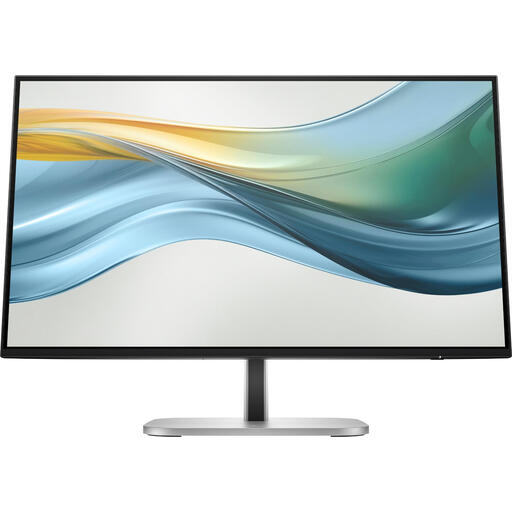 No image available
A Full HD option to consider if laptop connectivity is a priority. Check in advance that the monitor and your laptop have the features you need.
The product name lists a 23.8-inch screen, FHD and USB-C.
Measure the available depth and compare it with the monitor’s dimensions including the stand, not just the screen size. For example, BenQ lists the PD2506Q as 256,9 mm deep with the stand. Then check whether there’s still room for your keyboard and other items.
No. Don’t assume this based on the connector shape alone. BenQ specifies DisplayPort Alt Mode, data and 65 W Power Delivery on the monitor side for the PD2506Q; also check your laptop’s video features and charging requirements.
According to ACM ConsuWijzer, a product must meet the standards you could reasonably expect when used normally. If it breaks too soon, the seller is responsible for providing a suitable solution free of charge, such as a repair or replacement and, where applicable, a refund. Online purchases also generally come with a statutory cooling-off period; ACM ConsuWijzer states that it ends 14 days after delivery. Terms and exceptions may apply.
Yes. The European Commission states that energy labelling and ecodesign rules also cover computer monitors, with exceptions for certain screen types. Check the product information sheet for the exact model; the brand name alone won’t tell you its energy class.
No. Arboportaal’s guidance concerns employers’ obligations and the setup of display screen workstations, not a fixed screen size or resolution for every individual buyer. If you work at a screen from home, assess your entire workstation setup.