
Duplicate record checker
You compare catalogue entries, object numbers and photos to establish which record belongs to which object. The Cultural Heritage Agency of the Netherlands recommends giving each object a unique number.


Mostly comparing text and tables side by side? An adjustable 27-inch QHD monitor is a practical starting point. If you often zoom in on shell photos, consider a 27-inch 4K monitor for more image detail. Only choose a photography monitor with colour features if colour assessment is genuinely part of your workflow: no monitor can find or remove duplicate records on its own.
You compare catalogue entries, object numbers and photos to establish which record belongs to which object. The Cultural Heritage Agency of the Netherlands recommends giving each object a unique number.
You regularly examine small details or colours in collection images. Tweakers discusses QHD as a way to gain more working space; for colour assessment, the display’s specific colour features matter.
You spend extended periods working with tables and descriptions, so you’ll benefit from text that remains easy to read at your chosen scaling and a screen that can be positioned to suit you.
Best for: mainly comparing inventory numbers, descriptions and existing records, with limited desk space.
Consider: QHD offers more pixels than standard Full HD, but fewer than 4K. Also check the connections and adjustability of the exact model.
Best for: regularly zooming in on shell photos while viewing record fields at the same time.
Consider: check that your computer and connection support the resolution you want, and that text remains readable at your chosen scaling.
Best for: assessing colour in collection images as a regular part of your workflow.
Consider: BenQ and EIZO make specific models for photography. Decide whether their colour features are useful for your work. Careful record-keeping is still essential.
| What to consider | What to look for | Who should prioritise this? |
|---|---|---|
| Overview of records | Try out your preferred window layout and text scaling. Compare the resolution, screen size and space available on your desk. | If I want to compare existing records alongside photos, a clear layout is my first priority. Around 36% of consumers give comparing records top priority. |
| Photo detail | Decide whether you’ll simply view photos alongside records or assess colours too. If so, check the colour modes and calibration options listed for the exact model. | When I regularly assess details in shell photos, I want to see them clearly without mistaking colour features for proof of colour accuracy. Around 29% of consumers prioritise photo detail. |
| Readability and positioning | Check the height adjustment, reflections and text readability at your chosen scaling. Also consider the rest of your workspace. | During long data-entry sessions, I mainly want readable text scaling and a screen I can position to suit me. Around 21% of consumers make comfortable reading over long periods their top priority. |
| Connections | Compare your computer’s video output with the monitor’s inputs. For USB-C, also check the video mode and the power delivery required. | If I want to avoid extra cables or adaptors, I first check that my computer and monitor support the connection I need. Around 14% of consumers give connection convenience top priority. |
A monitor displays information, but it won’t automatically link two records to the same physical object.
Record unique object numbers and check for possible duplicates in your records system before merging records based on photos. The Cultural Heritage Agency of the Netherlands recommends using unique numbers as a way to catalogue objects.
Checking and correcting records takes time, even with a screen that’s easy to read.
A stated colour gamut or colour mode alone doesn’t tell you how accurately a particular unit will display your photos.
If colour matters, check the calibration features and consider your entire photo workflow. For routine text-based record-keeping, this needn’t be a deciding factor.
Your computer, cable and monitor must support the required video mode. The stated power delivery must also be suitable for your laptop.
Before buying, compare the specifications of your exact laptop and monitor.
Dell describes the Pro Plus P2725D as a QHD model and the P2725QE as a 27-inch 4K model with USB-C hub features. These are different models, so check the full model number.
Philips describes the 27E1N1800AE/00 as a 27-inch 4K IPS monitor for general display use.
According to LG, the 27UP850K-W combines a 27-inch 4K IPS screen with USB-C.
BenQ positions the PhotoVue SW272U for photography work. This model is most relevant if colour assessment is part of your collection work.
EIZO describes the ColorEdge CS2740 as a model for photography and image editing, among other uses.
This Joybuy selection includes QHD models suited mainly to text and tables, and 4K models for greater photo detail. The product description for one model also mentions colour modes and factory calibration.
 Image unavailable
A 27-inch 4K model for viewing photos and catalogue fields side by side.
3840 × 2160; IPS; 60 Hz; 4 ms; HDMI and DisplayPort; height-adjustable stand.
 Image unavailable
A 4K model for viewing shell photos alongside catalogue fields, with colour features for those who need them.
27 inches; 3840 × 2160; 4K Ultra HD. The product description mentions factory calibration, colour modes and a stand with height, tilt and swivel adjustment.
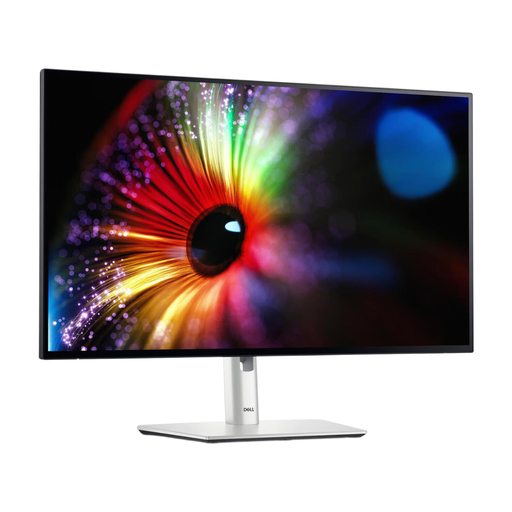 Image unavailable
A QHD option for catalogue work where text and tables come first.
27 inches; 2560 × 1440; Quad HD.
 Image unavailable
A 4K model for viewing photos and record fields at the same time, with an adjustable screen position.
27 inches; 3840 × 2160; USB-C and HDMI; stand with height and tilt adjustment.
 Image unavailable
A 4K option for viewing more photo detail alongside catalogue fields, with the stated colour gamut also worth considering.
27 inches; 3840 × 2160. The product description lists 99% DCI-P3 and Display P3 colour gamuts.
No. A monitor displays photos and records so you can compare them, but it won’t identify or remove duplicate records on its own. Use unique object numbers and check for possible duplicates in your records system; the Cultural Heritage Agency of the Netherlands recommends using a unique number for each object.
QHD may suit you if you mainly read text and tables side by side; 27-inch 4K is an option if you often examine details in photos. Whichever you choose, check that your computer supports the resolution and that text remains readable at your chosen scaling.
Not necessarily: check that both your laptop and monitor support USB-C video output. If you also want to charge your laptop through that cable, compare the supported power delivery with your laptop’s requirements.
No. A stated colour gamut or HDR rating alone doesn’t prove colour accuracy. If colour is an identification criterion, check the colour modes and calibration options of the exact model, and consider the rest of your photo workflow.
No. The specific recording requirements for those responsible for the national collection don’t automatically apply to every private collection. The Cultural Heritage Agency of the Netherlands does, however, recommend unique numbers for each object as a general recording method.