
Cataloguer working with multiple windows
You enter data while consulting search filters, results and a score. Having room to use windows side by side matters more to you than a high refresh rate.


For catalogue work where you use search filters, results and sheet music at the same time, an adjustable 27-inch QHD monitor is a practical choice. A 34-inch ultrawide could suit you if you want more windows side by side and have enough desk space. Also check readability at your viewing distance, adjustability and whether the connections are compatible with your computer. The search features come from the catalogue software, not the monitor.
You enter data while consulting search filters, results and a score. Having room to use windows side by side matters more to you than a high refresh rate.
You read lots of small notes and text, and want to adjust the screen position, text size and reflections to suit your workspace.
You want to connect a laptop, keyboard or other equipment. Compare the specific USB-C, video and charging options with what your equipment needs.
Start with the screen layout you actually use when cataloguing, then check readability, desk space and connections.
| What to consider | What should you check? | Who is this important for? |
|---|---|---|
| Room for windows | Place your search results, input fields and score side by side at your usual text size; compare the screen space with the width of your available desk space. | If I want to see filters, results, input fields and a score at the same time, I focus on space for multiple windows. Around 36% of consumers give simultaneous window space top priority. |
| Readability and position | Check the height adjustment, reflections and readability at your viewing distance; if necessary, try your operating system’s scaling or text settings. | When I spend a long time reading small notes and catalogue text, I want to adjust the text and screen position to suit my workspace. Around 29% of consumers prioritise readability over long periods. |
| Laptop and peripherals | Compare your laptop’s video and charging options with the monitor’s features, and check which cables you need. | If I want to connect my laptop and peripherals to the monitor, I check that it works with my own devices. Around 21% of consumers give connectivity top priority. |
| Desk space | Measure the available width and depth, including the stand; also consider whether you usually use one window or several. | With limited workspace, I don’t want to choose a screen size I won’t use and that won’t fit my desk properly. Around 14% of consumers prioritise physical fit. |
Searching and filtering happen in the catalogue software and depend on the available data; a monitor only displays the interface.
Test the search fields and filters in the software itself, separately from the screen layout.
A higher resolution doesn’t automatically make text more comfortable to read. Screen position, reflections and scaling settings matter too.
Compare the windows at a readable scale for you, and check adjustability and light levels.
Available features vary by monitor model and need to be compatible with the computer and cable you use.
Check video support, charging requirements and the cables needed for your setup.
According to ACM ConsuWijzer, statutory rights exist alongside the warranty provided by the retailer or manufacturer.
Keep your proof of purchase and contact the retailer if a consumer product is faulty.
The GW2790QT we looked at combines a 27-inch QHD screen with an adjustable stand and USB-C.
The P2725DE we looked at is a 27-inch QHD monitor that Dell positions as a USB-C hub monitor.
The 34WR55QC-B we looked at is an ultrawide model designed for a wide window layout.
The ThinkVision T27h-30 is a 27-inch QHD office option we looked at, with docking features.
The 27E1N5600AE/00 we looked at is a 27-inch QHD option for a compatible laptop with USB-C.
These monitors offer options for a wide window layout and a more compact screen for catalogue work. For each model, check the connections, dimensions and settings that suit your computer and workspace.
 No image available
An option for viewing multiple catalogue windows side by side.
The product name lists a WQHD resolution of 3440 × 1440, 1800R curvature and 120 Hz.
 No image available
A 34-inch curved model to consider if you want a wider workspace.
The product name describes it as a Dual-Mode Business Monitor.
 No image available
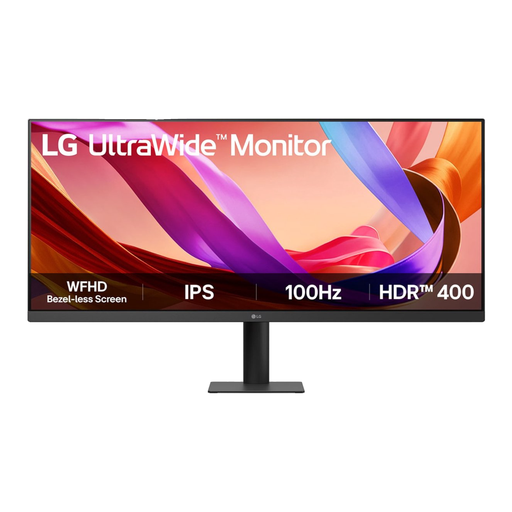
An ultrawide option if you want to view multiple windows side by side.
The product name describes it as a 34-inch monitor.
 No image available
A 27-inch option to consider if you prefer a more compact screen for catalogue work.
The product name lists 4K UHD (3840 × 2160) and USB-C with 90 W Power Delivery.
 No image available
A 27-inch option if you want to arrange catalogue fields and sheet music on a less wide screen.
The product name lists QHD 2560 × 1440 and a height-adjustable stand.
No. The monitor displays the interface; search and filter options depend on the catalogue software and the data entered. For example, Archive440 describes filters in its own application, not as a monitor feature.
First, check the screen position and reflections. In Windows, you can also adjust the scaling for text and apps; then see how many search results and how much sheet music remain visible at the same time.
No. Check which USB-C features the exact monitor model offers, and whether your laptop and cable support them. BenQ lists DisplayPort Alt Mode and 65 W Power Delivery among the features of the GW2790QT.
Arboportaal explains employers’ responsibilities for safe screen work. If an employee works at a screen for more than 2 hours a day, the portal lists, among other things, the option of using a separate screen or keyboard with a laptop, a height-adjustable monitor and avoiding reflections. This is not a universal purchase requirement for every private buyer; the actual working situation is what matters.
Don’t assume you have permission just because you’ve bought a monitor. The Dutch government states that a private copy for personal use may not be distributed or made available to the public. Consider the rights applying to the specific collection and intended use separately.