What to look for when choosing
First decide whether the workstation will be used mainly for audio, video or both. Then check the available space and connections for everyone who will use it.
| Consideration |
What should you check? |
Who is this most relevant for? |
| Space for tracks and the timeline |
Compare the aspect ratio, resolution and screen width with your editing software and available desk space. |
If I want to see long audio tracks and several panels side by side, I focus on timeline space. Around 29% of consumers give this priority. |
| Connecting and switching |
Note the video output and required connections for each computer. Separately check whether the exact model supports KVM and which cables are needed. |
At a shared workstation, I want to switch between computers without having to reconnect everything each time. Around 36% of consumers put easy switching first. |
| Resolution and colour for video |
Decide on your delivery format, then compare the resolution and available colour modes. Choose a mode suited to your video workflow. |
If I edit nature footage as well as sound, I want to assess detail and colour settings suited to my video format. Around 21% of consumers prioritise the video image. |
| Adjustability and reflections |
Check the height adjustment, screen coating and position in relation to windows and lighting. |
When several people use the screen for long periods, I want to be able to adjust it and reduce distracting reflections. Around 14% of consumers make workstation comfort their top priority. |
Manufacturer specifications describe individual models; they are not independent measurements of the complete editing workstation. For example, a stated colour gamut or colour mode does not prove that every part of your workflow is properly matched.
Joybuy monitors for this workstation
These models include 4K screens for video work and ultrawide options for timeline space. Check the connections for each model and make sure its features suit your shared workstation.
 No image available
Dell UltraSharp U3226Q 32-inch 4K UHD 120Hz QD-OLED monitor
A 4K option if your nature footage also includes video; check that the connections suit the computers at your shared workstation.
32 inches; 4K UHD; 120 Hz; QD-OLED.
Joybuy
 No image available
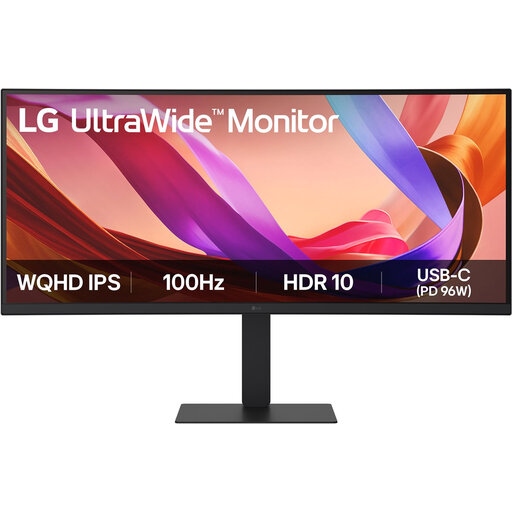
LG UltraWide 34U650A-B 34-inch monitor
An ultrawide option to consider if you mainly need space for a long timeline and several editing panels.
34 inches.
Check the resolution and connections of the exact model variant before pairing it with your computers.
Joybuy
 No image available
MSI Modern MD272UPHG 27-inch 4K Ultra HD monitor
A 4K option for an editing workstation where you also want to assess nature footage as video.
27 inches; 3840 × 2160 pixels; 4K Ultra HD.
Check the connections and switching options of the exact model for shared use.
Joybuy
 No image available
Dell UltraSharp U4924DW 49-inch monitor
A very wide option to consider if you need plenty of space for tracks and editing panels side by side.
49 inches; 5120 × 1440 pixels.
Check that it fits on the shared desk and that its features suit the computers you use.
Joybuy
 No image available
iiyama ProLite 34-inch UWQHD curved monitor with USB-C dock, LAN and KVM switch
An ultrawide option to consider if you need timeline space and want to use multiple computers at one workstation.
34 inches; UWQHD; curved screen; USB-C dock, LAN and KVM switch, according to the product name.
Check which connections your computers need and how the KVM feature works in your shared setup.
Joybuy
Frequently asked questions
Do I need a 4K monitor for nature footage?
Not if you only edit audio. If your footage also includes video, compare a 4K screen with the horizontal space you need for your timeline; an ultrawide screen can offer plenty of timeline space without 4K resolution.
How should I set up a monitor at a shared workstation?
Choose a setup that users can adjust to suit themselves, and reduce reflections from windows and lighting. For workplaces where employees use display screen equipment, Arboportaal outlines additional employer obligations; these do not automatically apply to every private editing workstation.
Where can I check power consumption, and what if a monitor develops a fault too soon?
Compare the energy label and model details in EPREL, as the European Commission recommends for electronic displays. For a consumer purchase in the Netherlands, your statutory guarantee depends on what you could reasonably expect from the product under normal use; ACM ConsuWijzer explains that you are entitled to a product that works properly. A manufacturer’s guarantee does not replace this statutory right.
Can I return a monitor bought online in the Netherlands?
For distance purchases from a business, there is often a 14-day cooling-off period, according to the Dutch government; exceptions apply. Check the terms for your specific purchase, and do not confuse the cooling-off period with your statutory guarantee.


