
Cataloguer working with multiple source windows
You enter records with scans, spreadsheets or source pages open and want to read windows side by side. GBIF explains how media files can be hosted elsewhere and linked to data using a URL.


A 27-inch QHD monitor is a practical choice for entering collection records and consulting source files. If you regularly examine fine details in images, you could consider a 27-inch 4K model. Also check that the monitor fits your workspace and that its video connection and any USB-C power delivery are compatible with your computer. File links are managed in the cataloguing software, not by the monitor.
You enter records with scans, spreadsheets or source pages open and want to read windows side by side. GBIF explains how media files can be hosted elsewhere and linked to data using a URL.
If you regularly view images alongside collection records, you’ll want to assess details without mistaking screen sharpness for certainty about an identification.
You switch between computers or users, so you’ll want to consider adjustability and connections that suit your laptop and workspace.
First decide how many records and source windows you want to view at once. Then consider whether your images need the extra pixel density of 4K.
The percentages below relate to consumers considering a monitor for this cataloguing work; each row describes one primary purchasing need.
| What to consider | What should you check? | Who is this important for? |
|---|---|---|
| Viewing records and sources | Compare screen size and native resolution; try your preferred window layout and text scaling on your computer. | If I want to read records and source files side by side, usable screen space matters most. Around 36% of consumers prioritise having a clear overview. |
| Detail in images and scans | Check the native resolution and whether your imaging workflow requires colour calibration. | When I examine fine details in scans, I want to see them clearly without treating sharpness as proof of a correct identification. Around 29% of consumers prioritise image detail. |
| Workspace adjustability | Check the height adjustment and tilt, and whether the stand fits on your desk. | In a shared workspace, I want to adjust the screen to suit the user and their sitting position. For around 21% of consumers, workspace adjustment comes first. |
| Connecting a laptop and peripherals | Compare video support, the required charging power in watts and the ports you need with the monitor’s specifications. | If I connect my laptop regularly, I want to know whether the chosen connection supports video, data and charging. Around 14% of consumers prioritise easy connectivity. |
A monitor displays the cataloguing software, but it doesn’t determine how that software links source files to records or where files are hosted.
Test the record and file workflow separately from screen readability. GBIF explains that media files can be hosted elsewhere and linked using a URL.
USB-C features and power delivery vary between monitors. The computer port and cable must also support the connection you intend to use.
Before buying, check video support, port functions and the power your laptop needs.
Depending on your computer and monitor, you may also need a compatible video cable, adapter or separate laptop power supply.
A stated gamut, such as the typical DCI-P3 coverage listed by LG for the 27UP850K-W, doesn’t by itself prove that a screen will be colour-accurate without calibration.
First decide whether colour assessment is part of your workflow, then check separately what calibration options you need.
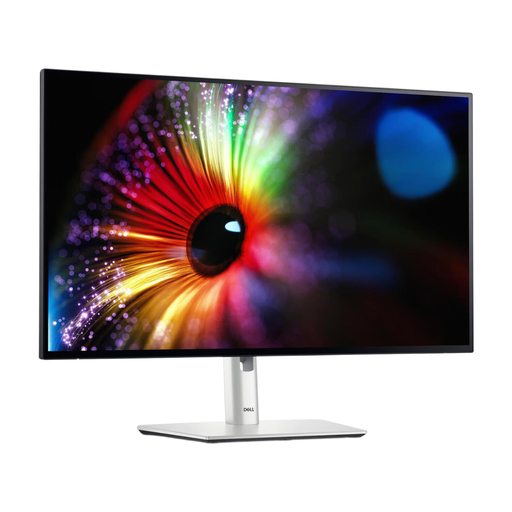
The Pro 27 Plus P2725DE is a QHD monitor with a laptop hub, suited to cataloguing work.
The GW2790QT is a QHD option with an adjustable stand and USB-C.
The 27UP850K-W is a 27-inch 4K model for those who regularly examine image detail.
The FlexScan EV2740X is a 27-inch 4K monitor with docking, designed for a permanent office workspace.
This selection of Joybuy products includes QHD and 4K monitors in various sizes. Compare the listed resolution and connections with your window layout and computer.
 No image available
An option for viewing records and source files, as well as examining fine image details on a 27-inch screen.
3840 × 2160 pixels; IPS; 120 Hz; USB-C with 90 W Power Delivery; height-adjustable.
 No image available
A QHD layout for viewing text windows and collection records side by side.
2560 × 1440 pixels; IPS panel; 120 Hz; HDMI and DisplayPort; VESA mounting.
 No image available
The 34-inch size may suit those who want to view lots of records and source windows side by side.
3440 × 1440 pixels; LCD.
 No image available
A 27-inch QHD option for viewing collection records and source windows.
2560 × 1440 pixels; HDMI and DisplayPort.
 No image available
A 26.5-inch WQHD model to consider when comparing screen size and resolution for viewing records and images.
QD-OLED; WQHD; 240 Hz; HDMI, DisplayPort and USB Type-C.
No. A monitor displays the cataloguing software; links are managed in the data or file environment you use. GBIF explains how a collection record can point to media files hosted elsewhere. Check whether your software supports the file links you need.
Check that the computer port and cable support video, and compare those features with the monitor’s specifications. Microsoft notes that combinations of hardware and software can limit a USB-C video connection; the shape of the connector alone doesn’t confirm video support.
Make sure your complete workstation meets the applicable requirements. Arboportaal outlines considerations for employees who work at a screen for more than two hours a day, including using a separate screen or keyboard with laptops and having a height-adjustable, non-reflective display. These aren’t general product specifications for every private buyer.
The European Commission explains the energy label for electronic displays, including computer monitors. For consumer purchases in the Netherlands, the seller is responsible for the statutory guarantee, which has no fixed statutory duration. For online purchases from a business, a 14-day cooling-off period applies in many cases. The Dutch government website explains these terms for consumers in the Netherlands.