A 27-inch 4K widescreen is a good starting point if you mainly read and edit one script. An ultrawide gives you more room to place the script and revision notes side by side, while a 3:2 screen offers relatively more height for long text. The layout that suits your work best depends on how you use windows and how much desk space you have. If you also review footage, check which colour modes are available, and make sure the size, adjustability and connections suit your workspace and laptop.
Who is this relevant for?
Scriptwriters working with long texts
If you do a lot of reading and rewriting, compare a widescreen with a 3:2 screen: they distribute space differently between width and height. Dell lists a height-adjustable stand for the P2725QE, while BenQ specifies a 3:2 aspect ratio for the RD280U.
Editors who keep notes alongside the script
If you often view passages and revision notes at the same time, an ultrawide could suit the way you arrange your windows. Do check that its physical width will fit on your desk; Philips and Samsung offer listed 34-inch models in this screen category.
Scriptwriters who also review footage
If you review footage as well as writing, check which colour modes are listed for the specific model. ASUS lists a Rec.709 mode for the PA279CRV; this specification alone does not prove that it will deliver colour accuracy across your entire video workflow.
What should you look for when choosing?
27-inch 4K widescreen
Choose this if: you usually read or edit one script and do not need two wide windows side by side.
Trade-off: a 16:9 screen offers relatively less height than 3:2 and less width for notes than an ultrawide; check that the text remains a comfortable size.
34-inch ultrawide
Choose this if: you often have your script and revision notes open side by side.
Trade-off: measure your available desk space; an ultrawide does not automatically give you more vertical room for long documents.
3:2 for long documents
Choose this if: you would rather see more lines of text stacked vertically than two wide windows side by side.
Trade-off: extra screen height gives you a different layout; it does not prove that you will write faster. Check that the format suits your software and working style.
| What to consider |
What to look for |
Who it matters most to |
| Long script text |
Compare your preferred text size and window layout; consider both a 27-inch 4K widescreen and a 3:2 screen. |
If I read and rewrite long drafts, I want the text to be comfortable to read in the format I choose. Around 27% of consumers make readable long text their top priority. |
| Notes alongside the script |
Measure your desk and check whether your preferred two-window layout will fit on the screen. |
When I want to compare passages with revision notes, horizontal workspace matters. Around 27% of consumers prioritise having notes visible at the same time. |
| Reviewing footage |
Check which colour mode you need and whether your software and settings support it. |
If I review footage as well as writing, I want to know which display settings are available. Around 13% of consumers make reviewing footage their top priority. |
| Adjustability and workspace |
Check the height adjustment and the position of the screen in relation to the light. |
During long work sessions, I want to be able to adjust the screen to suit my workspace and vary my tasks. Around 20% of consumers prioritise a workspace that can be adjusted to suit them. |
| Connecting a laptop |
Check whether your laptop supports DisplayPort Alt Mode or a suitable Thunderbolt port, and how much charging power you need. |
If I want to connect my laptop through the monitor, the laptop must support the necessary video output and any power delivery. Around 13% of consumers make this compatibility their top priority. |
Things to look out for when buying
-
A USB-C port does not automatically mean it supports video and charging
Video support also depends on the capabilities of your laptop's port; a USB-C connection alone does not guarantee a video signal.
Check your laptop specifications for DisplayPort Alt Mode or a suitable Thunderbolt port, and compare the power you need with what the monitor can provide.
Depending on your equipment, you may need a suitable cable, adapter or separate charger.
-
An ultrawide and extra screen height are not the same thing
A 34-inch screen with 3440 × 1440 pixels distributes space differently from a 3:2 screen with 3840 × 2560 pixels. The former offers more width for side-by-side windows; the latter gives you relatively more height for long text.
Choose based on your everyday layout: windows side by side or more lines of text stacked vertically.
-
Colour specifications are no guarantee of accuracy across your entire video workflow
A listed colour mode or colour space alone does not determine how accurately footage will appear across your complete software and display setup.
Check which colour mode your work requires, and configure your monitor and software accordingly.
Brands to consider
The features listed below apply to the specific models and product lines mentioned; they are not recommendations for every product from the same brand.
Dell
The Pro Plus P2725QE is a 27-inch 4K widescreen with USB-C hub features, suited to a writing workspace.
- Dell lists a height-adjustable stand and USB-C power delivery of up to 90 W.
- The 16:9 format offers relatively less height than 3:2; USB-C video also depends on your laptop.
BenQ
The RD280U is a 28.2-inch 3:2 model that BenQ positions as a programming monitor, rather than specifically as a monitor for scriptwriting.
- BenQ lists a resolution of 3840 × 2560 pixels.
- Its format distributes screen space differently from a wide setup with side-by-side windows; no productivity benefit for scriptwriting has been established.
Philips
The B Line 346B1C/00 is a 34-inch ultrawide for anyone who wants to place a script and notes side by side.
- Philips lists 3440 × 1440 pixels, USB-C and an ergonomic stand.
- Check that its physical width will fit on your desk; claims about eye comfort and energy savings are not independently verified usage results.
ASUS
The ProArt PA279CRV is worth considering if you review footage as well as working on your script.
- ASUS lists a 27-inch 4K screen, a Rec.709 mode and USB-C Power Delivery of 96 W.
- These specifications alone do not prove that it will deliver colour accuracy across your entire video workflow.
Samsung
The ViewFinity S6 LS34C652UAUXEN is a 34-inch ultrawide option for keeping multiple windows open at once.
- Samsung lists 3440 × 1440 pixels, 1000R curvature and USB-C with 90 W.
- Decide for yourself whether the curve feels comfortable for reading script pages; the manufacturer's claim that it reduces eye strain has not been independently verified here.
Monitors at Joybuy
The Joybuy options below focus on 27-inch 4K monitors and 34-inch ultrawides for script work and side-by-side windows.
 No image available
Philips 27E1N1800AE/00 27-inch 4K UHD monitor
Suited to anyone looking for a 27-inch screen to read and edit one main text.
3840 × 2160 pixels; 60 Hz; 4 ms; HDMI and DisplayPort; height-adjustable stand.
View at Joybuy
 No image available
MSI Modern MD272UPHG 27-inch 4K monitor
A 27-inch 4K option to compare if you want to combine a main script on screen with a second video source.
3840 × 2160 pixels; PIP/PBP display; stand with height, tilt and swivel adjustment.
View at Joybuy
 No image available
INNOCN CB27U1 27-inch 4K UHD monitor
Suited to anyone comparing 27-inch 4K screens and wanting to adjust the screen position.
3840 × 2160 pixels; USB-C with 90 W Power Delivery; PIP/PBP; stand with height adjustment, tilt, swivel and pivot.
View at Joybuy
 No image available
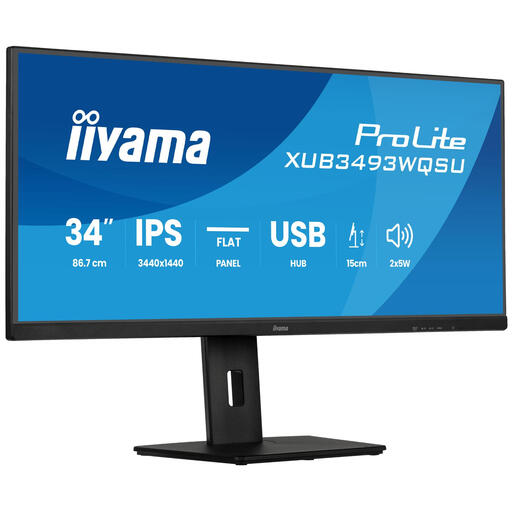
iiyama ProLite 34-inch ultrawide monitor
An ultrawide option to compare if you want to place your script and revision notes side by side.
3440 × 1440 pixels; PiP/PbP; stand with height adjustment of up to 15 cm.
View at Joybuy
 No image available
Philips E Line 346E2CUAE/00 34-inch ultrawide monitor
Suited to anyone looking for a wide workspace for multiple windows and who wants to factor screen curvature into their choice.
21:9 aspect ratio; 3440 × 1440 pixels; USB-C with 65 W Power Delivery; MultiView and PIP/PBP. The curvature is 1500R.
View at Joybuy
Frequently asked questions
Do I need an ultrawide for revision notes?
No, it is not essential. Choose an ultrawide if you often have your script and notes open side by side and have enough desk width. If you would rather see more lines of a single document, consider a 3:2 screen too.
Why might my laptop not display an image over USB-C?
A USB-C connection that only supports data or power will not automatically provide a video signal. Dell Support recommends checking whether your laptop's port supports DisplayPort Alt Mode or a suitable Thunderbolt feature; otherwise, you can use another suitable video output.
What should I consider during long writing sessions?
Set the screen position and lighting to suit you, and take breaks from screen-based work. Arboportaal highlights the risks of prolonged screen work; additional workplace requirements apply to employees who spend more than two hours a day working with screens, subject to certain conditions.
How can I compare the energy consumption of monitors?
Compare the EU energy labels for the specific models on the same basis. The European Commission states that electronic displays have an energy label on a scale from A to G, with information about HDR display as well.
What colour information is useful if I also review footage?
Check whether the model lists a colour mode that suits your footage and working style. A listed mode, such as the Rec.709 mode ASUS specifies for the PA279CRV, is not in itself a guarantee of accuracy across your entire video workflow.
What rights do I have when buying a monitor online in the Netherlands?
For a standard online purchase, you generally have a 14-day cooling-off period after delivery, subject to legal exceptions. ACM ConsuWijzer also explains that your statutory guarantee is separate from any manufacturer's warranty. If a product does not perform as you could reasonably expect under normal use, the seller is responsible for providing an appropriate solution.


