
Creator of detailed diagrams
You draw or check small labels, fine lines and several elements at once. Clear details and plenty of workspace are your main priorities. Dell and ASUS describe 27-inch 4K models for this kind of screen use.


Start with a monitor that makes fine lines and small labels easy to read, and has connections that suit the computers at the shared desk. Prioritise adjustability and easy switching between users if you need them every day. A wide colour gamut or calibration is mainly relevant when you assess diagram colours for a defined publishing or print workflow. Also check that lines, labels and legends remain clear without relying on colour differences.
You draw or check small labels, fine lines and several elements at once. Clear details and plenty of workspace are your main priorities. Dell and ASUS describe 27-inch 4K models for this kind of screen use.
You regularly switch computers or working positions and want suitable connections and simple controls. Dell and BenQ describe models with features for connecting or sharing devices; check they work with your computers.
You need to assess colours for an agreed digital or printed output, so you want to consider colour settings or calibration when choosing a monitor. ASUS describes factory calibration, while EIZO specifies hardware calibration for the ColorEdge CS2740.
Start with the smallest details you need to read, then decide which connections and settings will make the shared desk practical.
| Factor to consider | What should you check? | Who is this important for? |
|---|---|---|
| Clarity of fine lines and labels | Check the resolution and screen size, and whether the smallest labels you typically use are readable at your usual working scale. | If I need to check small labels and fine lines, I want to be able to read them clearly at my usual scale. Around 33% of consumers prioritise detail clarity above all else. |
| Switching between computers | For each computer, check support for video over USB-C, the power delivery required and the available connections. If you’re using a KVM setup, check which connections it needs too. | If I regularly switch between computers at the same desk, I want to avoid swapping cables and make sure the connections are suitable. Around 27% of consumers put this first. |
| Adjustable workspace | Check the height adjustment, tilt, stand dimensions and glare from the lighting at your workspace. | If different people use the same desk, I want to be able to set the screen at a comfortable height and position each time. Around 20% of consumers prioritise adjustability above all else. |
| Colour management for figures | Work out the colour gamut you need, whether your output is digital or printed, and whether regular calibration is part of your workflow. | When I need to assess figure colours for a defined output, I want to know which settings or calibration are suitable. Around 20% of consumers choose colour management as their main consideration. |
A monitor feature will only work if the computer you’re using supports the required video connection and power delivery.
Compare the ports and power requirements of each laptop with the monitor’s full specifications.
Depending on your setup, you may need extra cables, an adapter or a separate laptop charger.
A colour-focused screen won’t automatically make information easy to follow if meaning is conveyed through colour alone.
Check that labels, line styles and legends remain distinct in greyscale. The Association for Computing Machinery recommends that figures for publication should be readable in greyscale.
Factory calibration isn’t the same as a workflow with repeated hardware calibration. ASUS lists factory calibration for the PA279CRV, while EIZO describes hardware calibration for the CS2740.
Decide whether you need a suitable starting setting or whether regular checks are part of your workflow.
Repeated calibration may require measuring equipment.
The P2725QE is worth comparing for 27-inch 4K work with USB-C hub features at a shared desk.
The PD2706U is worth comparing if you’re using two computers and shared input devices for design work.
The ProArt PA279CRV is an option for detailed diagram work as part of a defined colour workflow.
The ColorEdge CS2740 is worth considering when hardware calibration is part of your graphics workflow.
The 27E1N5600AE/00 is a QHD USB-C model to compare if a specialised colour workflow isn’t your main priority.
These Joybuy monitors are worth comparing for detailed diagram work and shared desks. Check which connection or adjustment features suit your needs on each model.
 Image unavailable
Worth comparing if you want to view fine lines and small labels on a 27-inch screen.
27 inches; 4K resolution; IPS panel.
 Image unavailable
Worth comparing if you want to use two computers and input devices at the same desk.
27 inches; 3840 × 2160 pixels; KVM switch; USB-C power delivery up to 98 W.
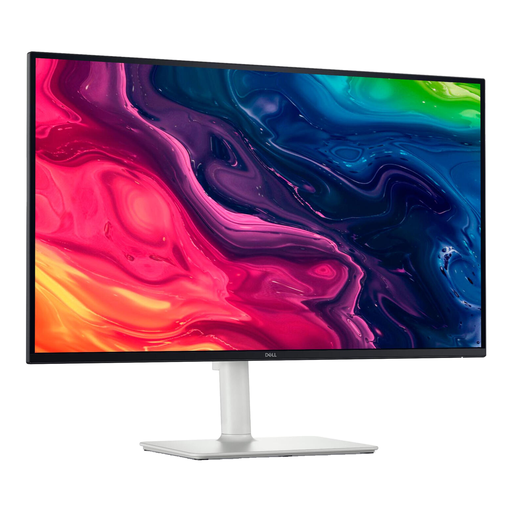 Image unavailable
Worth comparing if you want to combine 4K detail with an adjustable screen position.
27 inches; 3840 × 2160 pixels; IPS; height and tilt adjustment.
 Image unavailable
Worth comparing if you want to connect a USB-C laptop at a shared desk.
27 inches; 3840 × 2160 pixels; USB-C power delivery up to 65 W; height and tilt adjustment.
 Image unavailable
Worth comparing for detailed diagram work on a 27-inch 4K screen.
27 inches; 3840 × 2160 pixels; IPS panel; anti-glare screen.
Adjust the screen’s height and position when someone else takes over the desk, and check for glare and ambient light. Arboportaal explains the rules for employees; whether they apply to a particular workplace depends on the working context and how long the screen is used.
No. A wide colour gamut alone doesn’t make a figure accessible. The Association for Computing Machinery advises that figures for publication should remain understandable in greyscale, with information not conveyed through colour differences alone.
Choose the colour setting that suits your intended output. If regular hardware calibration is part of your workflow, EIZO describes ColorNavigator support for the CS2740; check what measuring equipment you’ll need.
If a product used normally develops a fault sooner than reasonably expected, the seller must offer an appropriate solution at no cost, according to ACM ConsuWijzer. For an eligible online consumer purchase, you have a statutory cooling-off period; ACM ConsuWijzer states that it ends 14 days after delivery. Check the terms and exceptions that apply to your purchase.
No. Sharing a desk isn’t in itself enough to determine whether the rule applies. The regulations described by Arboportaal apply to employees under certain conditions; these include a requirement for employees who work at a screen for more than 2 hours a day.