
Flashcard maker who works with lots of text
You read source material while making flashcards and need plenty of room for documents. Compare the vertical resolution and check how much desk space the monitor takes up.


Start with a monitor that fits on the shared desk and can be adjusted properly for each user. Then decide whether you need extra vertical screen space, an adjustable stand or a simpler laptop connection. At the resolutions listed, 16:10 gives you more vertical pixels than Full HD, while USB-C video and laptop charging only work if both the monitor and laptop support them.
You read source material while making flashcards and need plenty of room for documents. Compare the vertical resolution and check how much desk space the monitor takes up.
You share the desk with someone who sits differently and want to be able to reposition the screen. Arboportaal advises readjusting your workstation when you sit somewhere different.
You regularly disconnect your laptop and may want to use a single cable for video, data and power. Check that both the monitor and your laptop support these features.
Start with the desk space available and how different users will adjust the screen. Then decide whether screen space, laptop connectivity or after-sales support matters most to you.
| Key consideration | What to check before buying | Who is this most important for? |
|---|---|---|
| Screen space for source material and flashcards | Compare the resolution and screen size; try your usual text size and window layout. | If you want to read plenty of source material while making flashcards, vertical document space matters; around 33% of consumers put screen space first. |
| Adjusting the monitor at a shared desk | Check the height adjustment, tilt and swivel, and measure the stand and available desk space. | If you share the screen, you’ll want to reposition it for a different sitting height; adjustability is a top priority for around 27% of consumers. |
| Connecting a laptop | Check whether USB-C supports video, how much power your laptop needs and which cable is included. | If you often take your laptop with you, fewer connection steps can be handy when both devices are compatible; around 20% of consumers say this is their top priority. |
| Purchase and after-sales support | Choose features that suit the way you work and compare the terms of any additional warranty with your statutory rights. | If you mainly want to choose features you’ll actually use and know where you stand after buying, after-sales support matters; around 20% of consumers put this first. |
A USB-C connection doesn’t automatically provide video and enough power for a laptop. Dell lists the P2425 as having a USB-C downstream port for data and up to 15 W; Philips describes the 24E1N5300AE/00 as providing video, data and power over a single cable with compatible devices.
Check the exact model to see whether USB-C accepts video input and whether its power output suits your laptop. Also check which cable is included.
A screen position that works well for one user may not suit the next. Arboportaal advises readjusting your workstation when you sit somewhere new.
If needed, choose an adjustable stand and readjust the screen whenever someone else sits at the desk.
ACM ConsuWijzer distinguishes between additional warranties and your statutory right to a product that does what you could reasonably expect it to do.
Check what an additional warranty covers and keep your proof of purchase.
The P2425 we looked at is a 16:10 office monitor for anyone who values vertical document space and an adjustable stand.
The 24E1N5300AE/00 we looked at is a Full HD option for a laptop that you connect regularly.
The 24BA450-B we looked at is a Full HD option for a shared desk where the screen needs to be readjusted regularly.
These Joybuy products are suited to reading study materials and making revision flashcards at a shared desk. For portable models, check that the connection and setup work with your laptop and study space.
 Image unavailable
A portable 16:10 monitor to consider if you want to view source material alongside your flashcards; check that the connections suit your laptop.
The product name lists 144Hz, FHD IPS, FreeSync, HDR, two USB-C ports, Mini HDMI and stereo speakers.
 Image unavailable
A portable 16:10 model to consider if vertical space for study materials matters to you; check your laptop’s connection before buying.
The product name lists 2.5K, 144Hz IPS, HDR, FreeSync, two USB-C ports, Mini HDMI and speakers.
 Image unavailable
A portable WUXGA model to consider if you’re looking for a USB-C monitor for document work; check that your laptop supports the features you need.
The product name lists 16-inch, WUXGA IPS, USB-C and 65W Power Delivery. The built-in stand offers limited height adjustment.
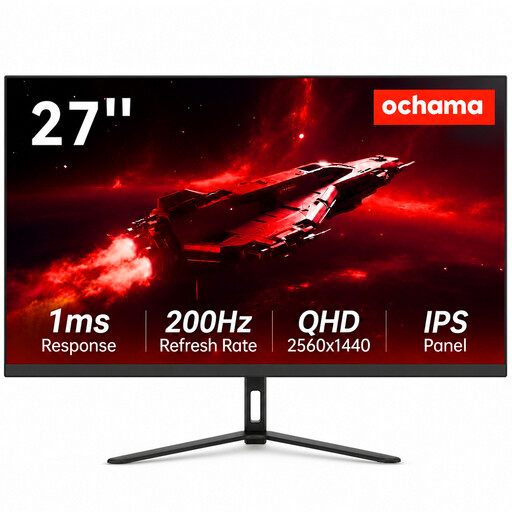 Image unavailable
A 27-inch model to consider if you want a larger screen for the shared desk; measure the available space first.
The product name lists 200Hz and 2K Ultra HD.
 Image unavailable
A portable 16:10 model to compare if vertical space for study materials is your priority; check the connection and where it will sit on your desk.
The product name lists a QLED screen, 450 nits, Mini HDMI, Type-C and VESA compatibility.
Position the screen directly in front of you, with the top just below eye level, as Arboportaal advises. Readjust the workstation when another user sits down; this advice does not guarantee that a particular model will prevent discomfort.
No, the shape of the connection alone doesn’t tell you that. Philips lists these features for the 24E1N5300AE/00 with compatible devices; check your laptop’s video capabilities and power requirements. Dell lists data and up to 15 W for the P2425’s USB-C downstream port.
According to ACM ConsuWijzer, online purchases often come with a cooling-off period of up to 14 days after delivery; check the applicable terms. You also have statutory rights if, under normal use, the product doesn’t do what you could reasonably expect it to. An additional warranty does not replace those statutory rights.
Government information on display screen work sets out employers’ obligations and offers advice on setting up a workstation. It does not establish a single mandatory monitor size for a monitor bought for personal study.