
Planning together at one desk
You share a workspace or laptop with someone else and want to adjust the connections and screen height easily.


For renovation planning at a shared desk, an adjustable QHD monitor with the right laptop connections is a sensible starting point. Choose 4K if extra detail is useful for your files and software, design-focused colour features if you assess digital images, or an ultrawide screen if there’s enough room on the desk. For USB-C, check that each laptop supports video and that the power delivery is sufficient; manufacturer specifications alone don’t prove a benefit for your work.
You share a workspace or laptop with someone else and want to adjust the connections and screen height easily.
You view floor plans, budgets and references side by side, and want the screen size to suit the files you use.
You look at digital colour and design proposals, but don’t use the screen as a substitute for physical material samples.
Choose according to your main need: an overview of documents, easy switching between laptops, adjustability, reviewing digital images or the space available on your desk.
| What to consider | What should you check? | Who is this important for? |
|---|---|---|
| Viewing plans and quotes | Compare the screen size and resolution with your drawings, spreadsheets and viewing distance. Also check that text and lines remain legible at your chosen scaling. | If I want to view floor plans and quotes at the same time, usable screen space is my priority; around 27% of consumers prioritise an overview of plans and quotes. |
| Switching between laptops | Check each laptop’s USB-C video output, power requirements and the cable supplied. Separately, consider whether you need a KVM function for shared peripherals. | If we use different laptops at the same desk, I want to know whether we can connect them without repeatedly unplugging cables; around 27% of consumers prioritise switching between laptops. |
| Adjustability for different users | Check the height, swivel and tilt adjustments, and measure the space behind the screen. Also consider glare from windows or lamps. | When we take turns at the desk, I want to adjust the screen to suit my posture; around 20% of consumers prioritise adjustability. |
| Digital colour and design visuals | Check the specified colour gamut and colour modes for the exact model. Compare final paint and material choices with physical samples too. | If I review digital design visuals, the specified colour features are relevant, but they don’t determine how real materials will look; around 13% of consumers prioritise reviewing digital images. |
| Desk space and accessories required | Measure the available width and depth, including space for the stand and cables. Check whether your existing laptops can connect using the monitor’s cables and ports. | If the desk also needs to accommodate paperwork and a second user, I want to know how much space the complete set-up will take; around 13% of consumers prioritise desk space and the costs involved. |
Video, data transfer and charging will only work if the monitor, cable and laptop support the necessary features. Power delivery can also vary between laptops.
Check the video output and power requirements of both laptops, then compare them with the specifications for the exact monitor model and the cable supplied.
Depending on the connection and power requirements, you may need a suitable cable, adapter, charger or dock. Check this before choosing your set-up.
An ultrawide screen can take up a lot of desk space. LG lists the 34WR55QK-B as 809 mm wide, including the stand, so measure the complete set-up rather than looking only at the diagonal screen size.
Measure the available width and depth, allowing space for the stand, cables, paperwork and the other user.
A commercial warranty period isn’t the same as your statutory protection if a product doesn’t meet what you could reasonably expect.
Keep your purchase and product information, and contact the seller if something goes wrong. ACM ConsuWijzer explains the Dutch rules on warranties.
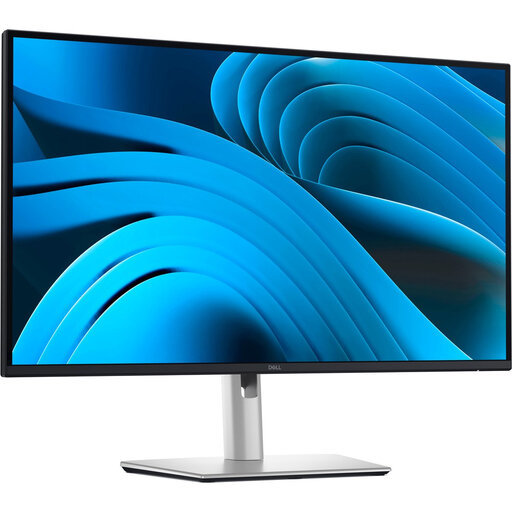
The P2725DE we reviewed combines 27-inch QHD, USB-C power delivery and adjustability; the P2725QE is a 27-inch 4K model.
The Philips 27E1N5600AE/00 is a 27-inch QHD monitor with USB-C that we reviewed.
The DesignVue PD2705Q we reviewed is designed for digital design work and switching between computers.
The ThinkVision T27h-30 we reviewed is a 27-inch QHD office monitor with USB-C docking features.
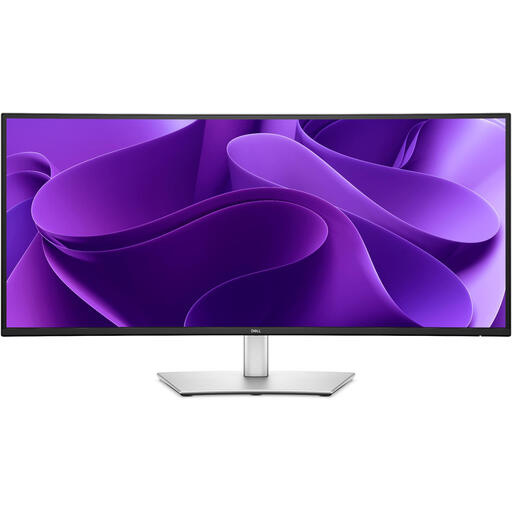
The 34WR55QK-B we reviewed shows how much space a 34-inch ultrawide set-up can require.
This selection includes 27-inch 4K and QHD monitors, as well as larger ultrawide models for anyone who values detail, multiple documents or sharing a desk. Check the connections and space available for each model.
 No image available
An option to compare if you’re looking for a 27-inch 4K screen for drawings or design visuals.
27 inches; 3840 × 2160 pixels; 4K Ultra HD.
 No image available
A good option to compare if you’re looking for QHD, adjustability and laptop connections for a shared desk.
27 inches; 2560 × 1440 pixels; up to 90 W USB-C power delivery and an Ethernet port, according to Dell.
 No image available
A larger screen to compare if you want to view documents side by side and have enough space on your desk.
34.1 inches; 3440 × 1440 pixels.
Bear in mind the stated width of 81.6 cm.
 No image available
An option to compare if you prefer a larger 4K screen for working with drawings.
31.5 inches; 3840 × 2160 pixels; 4K Ultra HD.
 No image available
An option to compare if you want to see fine details and display content from multiple sources side by side.
27 inches; 3840 × 2160 pixels; 4K UHD.
KVM isn’t listed in the product information, so the ability to control two computers with one keyboard and mouse isn’t specified.
Only if each laptop and the cable being used support the necessary features, and the monitor provides enough power. Dell lists up to 90 W for the P2725DE; BenQ lists 65 W for the PD2705Q. Check the connections and power requirements for each laptop.
Adjust the screen height and angle for each user, and position it to avoid distracting glare. For employees who work at a screen for more than two hours a day, Arboportaal sets out specific requirements for screen-based workstations; whether those employment rules apply depends on the workplace and how it is used.
For a purchase by a consumer in the Netherlands, statutory consumer rights may apply if the product doesn’t meet what you could reasonably expect. ACM ConsuWijzer explains that the seller is responsible for providing an appropriate solution; a manufacturer’s warranty period doesn’t replace those rights.
For a standard online consumer purchase, you generally have a statutory cooling-off period of up to 14 days after delivery. There are exceptions and conditions for returns, so check which rules apply to your specific order. ACM ConsuWijzer explains the cooling-off period.
Employment law requirements don’t automatically apply to every private set-up. For applicable employee workstations, Arboportaal sets out requirements including screen height and glare for people who work at a screen for more than two hours a day. The rules depend on the circumstances of the workplace.