
Recipe page designer
You review text, captions and photos alongside the tools in your layout software, and want to see every detail clearly.


Choose a monitor based on what you mainly do. For everyday page layout, sharpness and workspace matter most, while assessing colour for print also calls for a suitable colour workflow. At a shared desk, adjustability and connectivity are important too; check that the ports and charging power work with the laptops you use. A wide colour gamut alone does not guarantee a match with the print proof.
You review text, captions and photos alongside the tools in your layout software, and want to see every detail clearly.
You assess colours in food photography and pages against an agreed print condition. That’s why the correct print profile and monitor settings need to be part of the same workflow.
You switch between users or laptops and want to reposition the screen and connect your computer with ease.
First, work out how much detail and workspace you need. Then consider colour management, laptop connectivity and how easily the shared workstation can be adjusted.
| What to consider | What should you check? | Who is this most important for? |
|---|---|---|
| Sharpness and page space | Compare screen size and resolution, and check that text remains comfortable to read from your usual viewing distance. | If I want to review text, photos and layout tools at the same time, seeing fine detail is my priority. Around 31% of consumers prioritise sharpness and space for the layout. |
| Assessing colour for print | Ask the printer about the print condition and its associated profile, then check the colour gamut and calibration options. | When I assess colours for a printed cookbook, I want to match my screen to the agreed print condition. Around 25% of consumers prioritise assessing colour for print. |
| Connecting laptops | For each laptop, check whether USB-C supports video, how much charging power is required and which other video outputs are available. | If different people connect their laptops to the same screen, I want to avoid choosing a port that won’t transmit video or provide enough power. Around 25% of consumers prioritise switching between laptops. |
| Readjusting the workstation | Check the height, swivel and tilt adjustments, how much desk space the stand takes up and whether there could be glare at the workstation. | When I share a desk with others, I want to be able to adjust the viewing position easily. Around 19% of consumers prioritise a workstation that can be readjusted. |
A monitor’s stated specifications don’t determine how a printed recipe book will look. The European Color Initiative describes different profiles for print conditions and paper types.
Ask the printer which print condition they use, then build your colour workflow around it. If you do this regularly, check whether the monitor supports calibration and which sensor you’ll need.
Colour management, calibration and coordination with the printer all take time.
A USB-C connector doesn’t guarantee that a laptop can output video through that port. The maximum stated power output also varies by monitor model.
Check the USB-C features and power requirements of every laptop before relying on a single cable.
Depending on the connections available, you may need an extra video cable or the laptop’s own charger.
Product specifications and warranty rights are two different things. The Dutch consumer information service ACM ConsuWijzer explains statutory guarantees in terms of what you could reasonably expect from a product.
Compare colour specifications with the manufacturer’s information, and consult ACM ConsuWijzer for information about your consumer rights.
The PD2705U is one example of a monitor for 4K page layout, sRGB work and connecting a laptop at a shared desk.
According to ASUS, the ProArt PA279CRV combines a wide colour gamut with a compact stand and an adjustable setup.
The ColorEdge CS2740 is one example for anyone who regularly reviews colour-critical book pages.
The UltraSharp U2723QE is one example of a 4K screen with connectivity options for a shared workstation.
The UltraFine 27UP850K-W is one example of a monitor for 4K page layout, with USB-C and an adjustable stand.
These Joybuy picks are 4K monitors for viewing detail in recipe pages. For each model, check which connections and adjustment options suit your shared workstation.
 No image available
An option for anyone who wants to view details in pages and images.
The product listing specifies a 27-inch IPS screen with a resolution of 3840 × 2160 pixels.
 No image available
An option for anyone who wants to view page details and readjust the screen position at a shared desk.
The product listing specifies 3840 × 2160 pixels, 99% Adobe RGB, height adjustment, pivot and USB-C with 90 W Power Delivery. The stated colour specification doesn’t guarantee a match with a print.
 No image available
An option for anyone who wants to view pages and images on a larger 4K screen and connect a laptop at a shared desk.
The product listing specifies 3840 × 2160 pixels, a QD-OLED panel, height adjustment up to 13 cm and Thunderbolt 4 with up to 96 W Power Delivery. The description warns of possible burn-in and recommends using a screen saver and varying the on-screen content.
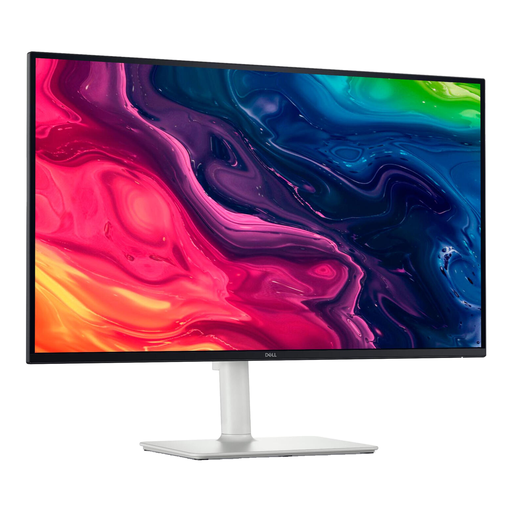 No image available
An option for anyone who wants to view layout details and readjust their viewing position at a shared desk.
The product listing specifies 3840 × 2160 pixels, an IPS panel, and height, tilt and pivot adjustments. HDMI and DisplayPort connections are also listed.
 No image available
An option for anyone who wants to view detail and connect a laptop via USB-C, provided the laptop supports it.
The product listing specifies 3840 × 2160 pixels, an IPS panel, USB-C with 65 W Power Delivery, and a height-adjustable, tiltable stand.
A 27-inch 4K screen can be a good starting point for viewing page details alongside layout tools. Readability also depends on your scaling settings and workstation; 4K isn’t a set requirement for every recipe book.
Agree the print condition with the printer and use the associated profile. If the monitor supports hardware calibration, check which sensor you’ll need; a stated colour gamut doesn’t replace these steps.
No. Check that each laptop’s USB-C port supports video via DisplayPort Alt Mode and that the charging power is suitable for the laptop. If not, check which video connections are available.
For a standard online consumer purchase, ACM ConsuWijzer says you generally have a statutory cooling-off period of up to 14 days after delivery. You also have a statutory guarantee: if a product is faulty, the seller must offer a solution under the applicable terms. This doesn’t automatically mean a fixed two-year guarantee period.
For an employee workstation, Arboportaal says that rules for screen-based work are relevant, including adjustability and preventing glare. These employer obligations don’t automatically apply as a legal requirement to a private purchase.