
Developer who works with multiple windows
Wants to see their editor, puzzle example and test output at the same time, so compares screen aspect ratios and available workspace.


Start with your window layout: QHD may suit a single workstation, a 3:2 screen offers a different aspect ratio with more vertical space, and an ultrawide screen is designed for side-by-side windows. Then check readability, adjustability and your computer’s connections. Storing puzzle data locally doesn’t, by itself, require a special monitor.
Wants to see their editor, puzzle example and test output at the same time, so compares screen aspect ratios and available workspace.
Prioritises readable text and an adjustable workstation during long coding sessions. Taking breaks and changing your posture are important too.
Wants to connect the display and possibly power their laptop through the monitor. The laptop, cable and exact monitor version must all support this.
Choose this if: you mainly use one editor and want a tidy workspace. Dell specifies a resolution of 2560 × 1440 pixels and a height-adjustable stand for the U2724D.
Bear in mind: this screen layout offers less width than the ultrawide models mentioned; Dell doesn’t list an integrated USB hub for this version.
Choose this if: you want to see lots of lines of code or long test output stacked vertically. BenQ specifies a resolution of 3840 × 2560 pixels and a 3:2 aspect ratio for the RD280U.
Bear in mind: BenQ lists the RD280U as a 60Hz model. Its coding modes are manufacturer features, not proof of a productivity benefit.
Choose this if: your laptop supports the required USB-C video features and you’re looking for a 4K screen that can power your laptop. LG specifies a resolution of 3840 × 2160 pixels and power delivery of up to 96 W for the 27UP850K-W.
Bear in mind: adjust the text scaling to suit your viewing distance and check your laptop and cable. 96 W is this model’s stated maximum.
Choose this if: your editor, puzzle example and output are often on screen at the same time. Philips specifies a 34-inch screen with a resolution of 3440 × 1440 pixels for the 346B1C/00.
Bear in mind: measure the width of your desk. Philips states that, at 3440 × 1440 via USB-C, this model supports 60 Hz in the standard USB 3.2 hub mode and 100 Hz when switched to USB 2.0.
| What to consider | What to look for before buying | Who should pay particular attention? |
|---|---|---|
| Room for code and test windows | Compare the aspect ratio and resolution with your window layout, and try out your preferred text scaling on your computer. | If I want to see my editor, test output and puzzle example at the same time, the screen layout matters most. Around 33% of consumers say window layout is their top priority. |
| Reading comfort and adjustability | Check the height adjustment, screen reflections and readability at your intended viewing distance; an adjustable monitor doesn’t replace taking breaks. | During long coding sessions, I want to be able to read the text and adjust the screen to suit me. Around 25% of consumers prioritise readability and adjustability. |
| Connecting and charging a laptop | Check your laptop’s video support and charging requirements, as well as the cable and USB-C features of the exact version you’re choosing. | If I want to connect my laptop through the monitor and possibly charge it, I first check that everything works together. Around 25% of consumers make laptop connectivity their top priority. |
| A simple setup | Start with the windows you usually use and the connections you already have; then compare only the features you actually need. | If I mainly use one editor window, I don’t want to choose features my workstation doesn’t need. Around 17% of consumers prioritise a simple setup that suits their needs. |
The percentages provide a general indication of which needs may be a priority for consumers in this situation; don’t treat them as a breakdown of the UK market. Local file storage and backups are managed on your computer and in the software you use, not through a special monitor feature.
Choosing to store project files locally is a matter for your computer and software. The monitor mainly determines how your code, examples and output appear on screen.
Keep your screen-space requirements separate from your storage and backup choices.
USB-C features and power outputs vary by model. With the Philips 346B1C/00, the stated USB-C display mode also depends on the hub setting.
Before buying, compare your laptop’s video output and power requirements with the monitor and cable specifications.
Depending on the combination, you may need a different cable, an adapter or a separate laptop charger.
A wider screen can show windows side by side, but it also needs enough desk space.
Measure your workspace and decide whether you mainly want to view windows side by side or stacked vertically.
ACM ConsuWijzer explains that your statutory rights don’t automatically end when a commercial warranty expires. What you can expect from a product depends, among other things, on the product and the circumstances.
Keep your proof of purchase and contact the retailer if something goes wrong.
The UltraSharp U2724D is a 27-inch QHD option for a single coding workstation.
The RD280U is a 3:2 monitor for programming, designed for anyone looking for a different vertical window layout.
The 27UP850K-W offers a 27-inch 4K option with USB-C power delivery.
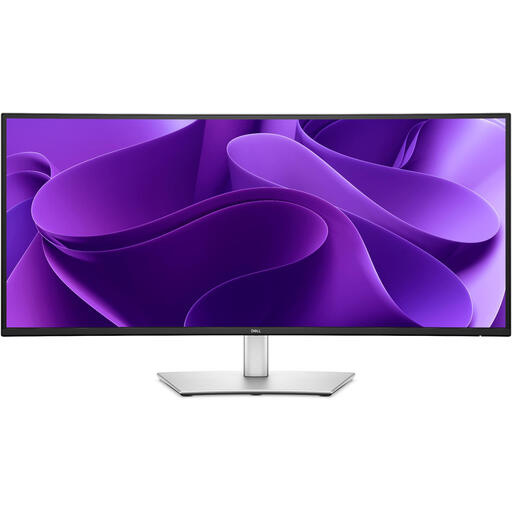
The 346B1C/00 is an ultrawide option for side-by-side windows.
These Joybuy products are larger screens for working with multiple windows. Check the stated screen size, resolution and connections for each model.
 No image available
A 34-inch model to consider if you’re looking for a larger screen for working with multiple windows.
The product name describes a curved screen and Dual-Mode.
 No image available
A very wide model to consider if you want to arrange multiple windows side by side.
The product name lists a 49-inch screen, a resolution of 5120 × 1440 pixels, a 165 Hz refresh rate and a 32:9 aspect ratio.
The product information recommends a desk or VESA mount that can support at least 15 kg, and installation by two people.
 No image available
A large ultrawide screen to consider if you want to display code and other work windows at the same time.
The product name lists a resolution of 5120 × 2160 pixels, a 100 Hz refresh rate, a 21:9 aspect ratio and USB-C Power Delivery of up to 65 W.
 No image available
The 49-inch size may suit you if you’re looking for a spacious layout with multiple windows.
The product name lists a resolution of 5120 × 1440 pixels and an LCD screen.
 No image available
A 34.1-inch screen to consider for a side-by-side window layout.
The product name lists a resolution of 3440 × 1440 pixels.
Before buying, check that your laptop and cable support the USB-C video and power features you need.
No. Local storage is a choice for your computer and software, not your monitor. Choose a screen based on what you want to see at the same time, and manage storage and backups separately.
Adjust the height and text scaling to suit your workspace, and minimise reflections. Arboportaal recommends changing your working posture, looking away from the screen regularly and taking microbreaks; this doesn’t mean that any particular monitor model prevents problems.
No. Check the combination of laptop, cable and monitor. BenQ specifies DisplayPort Alt Mode and 90 W Power Delivery for the RD280U; LG lists video, data and power delivery of up to 96 W for the 27UP850K-W. Check that the video features and power output are suitable for your laptop.
For the Philips 346B1C/00 specifically, Philips lists 3440 × 1440 at 60 Hz in the standard USB 3.2 hub mode and 100 Hz when switched to USB 2.0. Check your computer and cable too; this doesn’t automatically apply to other models.
No. ACM ConsuWijzer explains that there is no fixed statutory warranty period that applies to every product. The retailer must supply a product that, under normal use, offers what you can reasonably expect from it. A manufacturer’s warranty doesn’t limit your statutory rights.