
Poster designer with a small desk
You want to leave space for paper and other items. Compare the width and depth of the complete setup, including the stand, and check which adjustment options you need.


First, measure the available desk width and depth, including the stand. Then decide how much detail and colour control your poster work requires. A basic monitor may be enough for occasional design work. For colour-critical print work, a suitable colour management workflow and a proof for the intended output matter more than a stated colour gamut alone.
You want to leave space for paper and other items. Compare the width and depth of the complete setup, including the stand, and check which adjustment options you need.
You review images for a printed poster and may need a colour management workflow and a proof for your chosen output.
You want to connect your laptop to an external screen with as few cables as possible. Check whether your laptop supports video over USB-C and whether the power delivery is suitable for your device.
Measure your available workspace before choosing a screen size. Then decide whether colour control, extra pixels or a connection that powers your laptop matters most for your poster work.
| What to consider | What should you check? | Who is this important for? |
|---|---|---|
| Desk space | Measure the available width and depth and compare them with the dimensions including the stand. Screen diagonal alone doesn’t tell you how much space the complete setup will take up. | If you want to keep paper and other items on your small desk, the stand can make all the difference to whether the monitor fits. Around 36% of consumers in this survey give desk space top priority. |
| Colour for print | Compare the stated colour gamut and calibration options. For critical print work, use the profile and a proof for the intended output wherever possible. | If you review colours for a printed poster, it helps to use a workflow that matches your chosen printing method. Around 29% of consumers give colour control top priority. |
| Room for detail | Compare resolution and aspect ratio at a screen size that will actually fit on your desk. | If you mainly want to edit text and illustration details, extra pixels may influence your choice. Around 21% of consumers prioritise editable detail. |
| Laptop connection | Check whether your laptop supports video over USB-C, how much power it needs and which ports are available on the exact monitor model. | If you want to connect and possibly charge your laptop with as few cables as possible, check that both devices support the same features. Around 14% of consumers give a single laptop connection top priority. |
The stand takes up space too, and can determine whether you still have room for paper and input devices.
Measure the available width and depth and compare them with the full dimensions of the model before you choose.
A screen specification doesn’t determine how a particular printing method will reproduce the colours in your poster.
Match your colour management to the intended printing method and, for critical work, review a proof wherever possible.
Colour management and reviewing a proof can take extra time.
Your laptop must support video through the relevant port, and the power delivered must be sufficient.
Compare your laptop’s video capabilities and power requirements with the monitor’s specifications.
Depending on the combination, you may need a separate power adapter or a different video connection.
The ProArt PA248QV is a 24.1-inch 16:10 option with an adjustable stand.
According to its specifications, the PD2506Q combines a 25-inch QHD screen with USB-C.
The ColorEdge CS2400S is a 24-inch option for a colour-managed print workflow.
The 245E1S/00 is a 23.8-inch QHD option for anyone looking for more pixels on a relatively small screen.
These monitors are suited to poster work where detail, colour settings or a laptop connection are important. Check the dimensions of the complete setup before choosing a model for a small desk.
 No image available
An option for highly detailed poster work if you have enough room for the 27-inch setup.
3840 × 2160 pixels, IPS, 99% Adobe RGB and DeltaE < 2. The stated dimensions with the stand are 613,4 mm wide and 195 mm deep.
 No image available
A 24-inch option for anyone looking to combine QHD detail with a USB-C laptop connection.
2560 × 1440 pixels. The USB-C connection is listed as supporting DisplayPort Alt Mode and 90 W Power Delivery; the stand is adjustable.
 No image available
An option for poster design if QHD resolution and stated sRGB coverage matter to you, provided the screen size fits your desk.
2560 × 1440 pixels and 100% sRGB. The product details list factory calibration and height and tilt adjustment. The stated dimensions with the stand are 615 mm wide and 228 mm deep.
 No image available
A 24-inch option for poster work if Full HD provides enough detail for the work you want to edit.
IPS panel, 1920 × 1080 pixels, 144 Hz and a tilt-adjustable design.
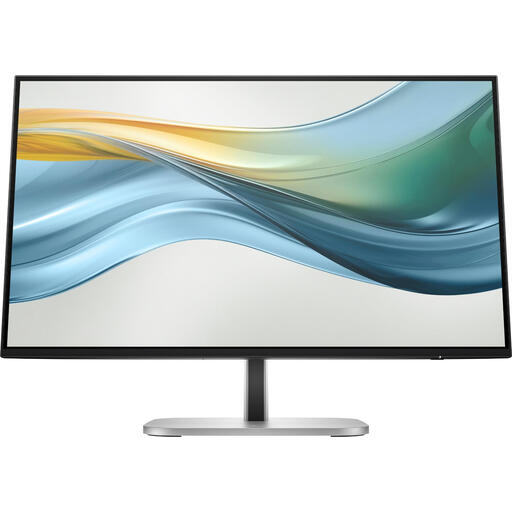 No image available
A relatively small monitor for poster work where sRGB coverage and a USB-C laptop connection are desirable.
1920 × 1080 pixels, 100% sRGB and USB-C with up to 100 W Power Delivery. The stated dimensions with the stand are 539,4 mm wide and 189,5 mm deep. A charger isn’t included as standard.
No. This manufacturer specification describes the screen’s colour gamut, not the result of a specific printing method. For colour-critical work, use suitable colour management settings and, wherever possible, review a proof for the intended output.
Check the dimensions including the stand, and position the screen so that text is easy to read without an awkward posture or distracting reflections. For employees who spend more than two hours a day working with a screen, Arboportaal describes applicable workplace regulations; these don’t automatically apply to everyone making posters at home.
Only if your laptop supports video over that USB-C connection and the power delivery is sufficient. The BenQ PD2506Q lists USB-C with DisplayPort Alt Mode and 65 W Power Delivery; compare these features with your laptop’s specifications.
The European Commission lists computer monitors as electronic displays with an energy label on a scale from A to G. Compare the label for the exact model; its energy rating doesn’t tell you whether the screen is suitable for poster design.
No. Consumer purchases are also covered by statutory guarantees if a product doesn’t meet what you could reasonably expect under normal use. According to ACM ConsuWijzer, the seller is responsible; there isn’t one fixed statutory guarantee period for every monitor.