
Student who prints portraits
You want to assess skin tones and prints carefully. A colour workflow you can check is more important than a high stated gamut alone.


Choose based on your biggest constraint: colour assessment for prints, available desk space or laptop connectivity. A 27-inch 4K monitor gives you more screen space, while a 24-inch model is easier to fit on a small desk. For predictable prints, a suitable colour profile, calibration and controlled ambient lighting are still important.
You want to assess skin tones and prints carefully. A colour workflow you can check is more important than a high stated gamut alone.
You need to fit the screen, stand and the rest of your study space, so you’re weighing up a 24-inch monitor against the extra screen space of a 27-inch model.
You want to use one monitor for both studying and retouching, so you’re checking for video over USB-C, charging power and the cables you’ll need.
Start with the limitation that’s hardest to work around: an unsuitable colour workflow, limited desk space or a connection that isn’t compatible with your laptop.
Choose this if: you prepare portraits for print and a 24-inch screen fits your desk better. BenQ and EIZO list Adobe RGB coverage and hardware calibration for the SW242Q and ColorEdge CS2400S respectively.
Trade-off: BenQ lists a resolution of 2560 × 1600 pixels; EIZO lists 1920 × 1200 pixels. Compare the connections too, along with the space taken up by the stand.
Choose this if: you have room for a 27-inch screen and want space beside your portrait for editing panels. ASUS lists a resolution of 3840 × 2160 pixels and 99% Adobe RGB for the ProArt PA279CRV.
Trade-off: the larger screen and stand need more space; stated gamut figures are manufacturer specifications, not measurements of the specific unit you buy.
Choose this if: USB-C connectivity and using the monitor for both study and other tasks are important to you. LG lists USB-C power delivery of up to 96 W for the 27UP850K-W.AEU.
Trade-off: LG lists 95% typical DCI-P3 coverage, not Adobe RGB coverage. Check that your laptop supports video over USB-C and that the charging power is sufficient.
| Factor | What to look for | Who it matters to |
|---|---|---|
| Colour workflow | Compare the stated colour spaces and calibration options. Also check which profiling and calibration method suits your intended output. | If I’m editing portraits for print, I want to assess colours in suitable conditions rather than rely on a high gamut figure alone. Around 36% of consumers put colour accuracy first. |
| Desk space | Measure the available width and depth, then compare them with the dimensions of both the screen and stand. | With a small desk, I want to make sure the screen and stand will fit, even if a more compact model gives me less screen space. Around 29% of consumers give desk space top priority. |
| Laptop connectivity | Check whether your laptop’s USB-C port supports video, how much charging power you need and which cable is included. | If I want to connect my study laptop to the monitor, I need to know whether one cable can provide both a picture and enough power. Around 21% of consumers put laptop connectivity first. |
| Studying and retouching | Check which features you’ll use for both tasks and whether the monitor includes any calibration software or equipment you need. | When I use the same screen for studying and portrait editing, I want to choose features that suit both tasks and know what else I’ll need for colour management. Around 14% of consumers make versatility their top priority. |
Adobe emphasises that calibration, ambient lighting and paper all contribute to predictable prints, alongside colour management. A stated colour-space coverage figure alone therefore doesn’t confirm that a print will match what you see on screen.
These are different colour spaces. A DCI-P3 percentage doesn’t automatically tell you how much of Adobe RGB the screen can display.
Compare coverage for the colour space that suits your intended output, and don’t infer unlisted coverage from a different figure.
According to Adobe, calibration, ambient lighting, paper and suitable colour profiles also play a part. LG states that Calibration Studio software isn’t included with the 27UP850K-W.AEU.
Before buying, check which software and equipment you need for your calibration method, and how to set up the screen for your final output medium.
The Dutch government states that the Netherlands has no fixed statutory warranty period. A manufacturer’s warranty and your statutory rights are not the same thing.
Read the seller’s information and distinguish between a voluntary warranty and your statutory rights if a product doesn’t meet the terms of the contract.
BenQ says the SW242Q is designed for colour-focused photography and preparing images for print.
The ColorEdge CS2400S is a 24-inch model for colour-focused work.
ASUS says the ProArt PA279CRV combines a 27-inch screen with 4K resolution for image editing.
The 27UP850K-W.AEU is a 27-inch 4K monitor for creative work and laptop use.
The UltraSharp U2723QE is a 27-inch 4K monitor with hub features.
These monitors cater to different needs around colour gamut, desk space, study use and laptop connectivity. Compare the exact specifications and check how they fit your colour workflow and laptop.
 No image available
An option to compare if you’re looking for a 27-inch 4K screen for portrait work and laptop use.
The product description lists 3840 × 2160 pixels, 94% Adobe RGB, 97% DCI-P3, factory calibration and USB-C with up to 98 W Power Delivery. These are product specifications, not independent measurements.
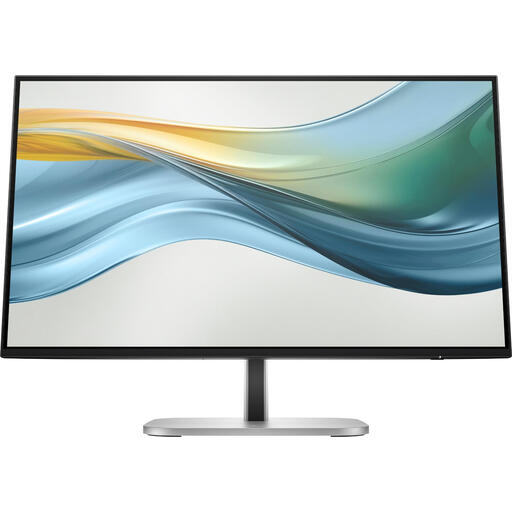 No image available
A more compact option to compare if sRGB and connectivity to a compatible laptop are important to you.
The product description lists a 23.8-inch screen, Full HD, 100% sRGB and USB-C power delivery of up to 100 W. The power adapter or charger isn’t included, according to the description.
 No image available
A 27-inch 4K option to compare if you’re mainly looking for a larger screen and stated DCI-P3 and Display P3 coverage.
The product description lists 3840 × 2160 pixels, IPS Black, 99% DCI-P3 and Display P3 coverage, and an ambient light sensor. These colour spaces don’t indicate Adobe RGB coverage.
 No image available
A model to compare if a 27-inch screen with sRGB coverage and USB-C suits your workflow.
The product description lists 2560 × 1440 pixels, 100% sRGB, factory calibration with Calman verification and USB-C Power Delivery of up to 65 W.
 No image available
A model to compare if you want to assess stated DCI-P3 coverage and USB-C power delivery as well as sRGB.
The product description lists 2560 × 1440 pixels, 100% sRGB, 95% DCI-P3, Calman verification and USB-C Power Delivery of up to 90 W.
No, a wide colour gamut alone isn’t enough for predictable prints. Adobe also emphasises monitor calibration, ambient lighting, paper and suitable colour profiles. An Adobe RGB specification on its own doesn’t confirm that a print will match what you see on screen.
You can if your laptop’s USB-C port supports video, the charging power is sufficient and you use a suitable cable. BenQ lists DisplayPort Alt Mode and 90 W power delivery for the SW242Q; LG lists up to 96 W for the 27UP850K-W.AEU. These figures apply to the models mentioned, not every monitor from those brands.
Use a suitable monitor profile and take the lighting you work in into account. Adobe explains that monitor, document and output profiles each serve different purposes; when printing, the printer and paper also matter.
According to the Dutch government, when you buy at a distance, the seller must provide information about matters including the product and the cancellation period, which is usually 14 days. You’re also entitled to a product that meets the terms of the contract. The Dutch government states that the Netherlands has no fixed statutory warranty period; distinguish between your statutory rights and any manufacturer’s warranty.
The European Commission states that energy labelling and ecodesign rules also apply to computer monitors, with some exceptions under the regulations. Check the product information and energy consumption for the exact model; you don’t need to arrange certification yourself as a buyer.