
Developer working with multiple windows
You want to view code, the browser preview and testing tools at the same time. Use your own window layout to decide how much screen space you need and what text size feels comfortable.


Choose a monitor that lets you view code, the lending portal preview and testing tools side by side, then compare its adjustability and connections with your computer. A USB-C hub or Ethernet port can simplify your desk setup, but it won’t speed up a slow internet connection. MDN Web Docs describes latency as the time it takes data to travel from source to destination.
You want to view code, the browser preview and testing tools at the same time. Use your own window layout to decide how much screen space you need and what text size feels comfortable.
You investigate delays and resource-heavy page elements. A monitor helps you view your test environment, but it won’t change visitors’ network connections.
You’re weighing up an adjustable screen and a simple laptop connection against hub features you may not need. Check what your own laptop supports before choosing USB-C.
Start with the screen space your everyday window layout requires. Then consider extra pixel detail, adjustability and connections; these features won’t solve network delays.
A good fit if: you regularly use code, the portal preview and testing tools side by side.
Bear in mind: a 27-inch 4K model has more pixels; consider whether that extra detail is worth it for your preferred text size.
A good fit if: your laptop supports the required video connection and you want a wired connection at your workspace.
Bear in mind: the hub may simplify your connections, but it won’t speed up the portal or an external connection.
A good fit if: extra pixel detail matters to you and you can set a comfortable text size.
Bear in mind: check the exact model and its connection options for your laptop; higher resolution won’t solve network delays.
A good fit if: you have limited desk space or don’t need several large windows side by side all the time.
Bear in mind: the stated Full HD resolution has fewer pixels than the QHD and 4K models in this comparison.
| What to consider | What should you look for? | Who is this important for? |
|---|---|---|
| Space for windows | Try your usual windows side by side and compare screen size, resolution and readability at your chosen text size. | If you want to see code, a portal preview and tools at the same time, usable screen space comes first. Around 36% of consumers put room for multiple windows at the top of their list. |
| Testing slow connections | Use browser tools to investigate delays and page behaviour; don’t choose a screen feature expecting it to speed up users’ connections. | If you want to know how the portal responds to a slow connection, you need to test the network and the page itself. Around 29% of consumers put this investigation first. |
| Adjustable workspace | Check how adjustable the screen is and whether it suits your desk and viewing position. If you’re employed, assess any applicable workplace requirements separately. | For extended periods of work, you’ll want to position the screen to suit your workspace. Around 21% of consumers give adjustability top priority. |
| Connecting a laptop | Compare your laptop’s video connection and charging requirements with the specifications of the exact monitor model; also check whether you need Ethernet. | If you want to connect your laptop easily, the monitor’s features need to suit your computer. Around 14% of consumers put connectivity first. |
An Ethernet port gives you a wired connection option for your workspace. It won’t automatically change delays or the size of page elements visitors load over their own connections.
Test the portal under slow network conditions, and choose Ethernet only if you need that wired connection yourself.
Features and charging power vary by model. A USB-C connection will only provide video and power if both the monitor and laptop support them.
Compare the full model number, your laptop’s video output and its charging requirements with the specifications of the exact monitor.
Resolution doesn’t tell you whether on-screen text will be comfortable to read at your chosen scale or whether you can position the screen to suit you.
Consider text size and adjustability in relation to your desk and working posture.
The P2725D and P2725DE are 27-inch QHD monitors to compare if you’re looking for a work monitor with or without hub features.
The LG 27UP850K-W is a 27-inch 4K model to compare if you’re looking for extra pixel detail and an adjustable stand.
The 27E1N5600AE/00 is a 27-inch QHD USB-C model to compare if you have a compatible laptop.
The 24P3CW and Q27B3CF2 are two different options: a more compact Full HD model and a 27-inch QHD model.
These monitors are suited to working with code, a portal preview and testing tools, with options for extra screen space, 4K detail and laptop connectivity. None of these monitors will speed up a slow internet connection.
 No image available
The wide workspace may suit you if you want to use code, the portal preview and testing tools side by side; check that you have enough desk space.
34.1 inches, 3440 × 1440 pixels and a 21:9 aspect ratio. The product description lists USB-C up to 90 W, RJ45, a USB hub and a KVM switch.
 No image available
A 27-inch 4K screen is worth comparing if extra pixel detail matters to you; check whether code and portal text are comfortable to read at your chosen scaling setting.
27 inches, IPS and 3840 × 2160 pixels. The product description lists USB-C with 90 W Power Delivery, PIP/PBP and an adjustable stand.
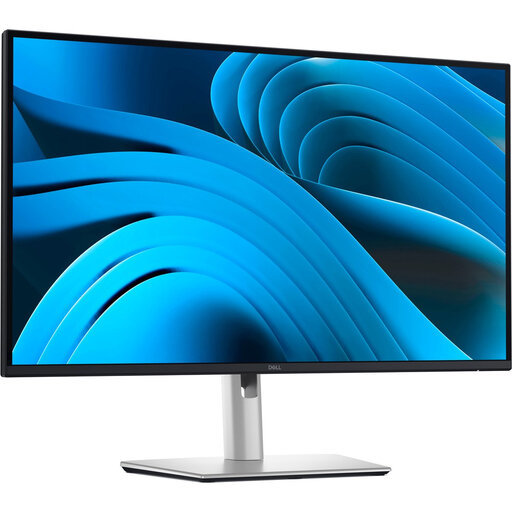 No image available
Consider this hub model if you want to connect a compatible laptop via USB-C and need Ethernet at your desk; the port won’t speed up the portal.
27 inches and 2560 × 1440 pixels. Dell Netherlands lists 90 W USB-C power delivery and a 1 GbE port for the P2725DE.
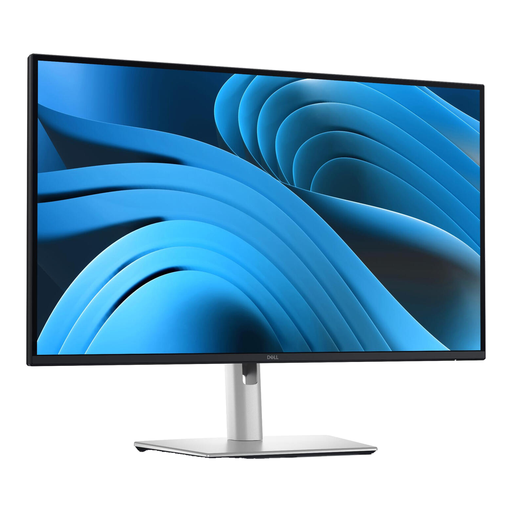 No image available
A 27-inch QHD screen is worth comparing if you want to view several work windows without needing the extra hub and Ethernet features of the P2725DE.
27 inches and 2560 × 1440 pixels. The product description lists HDMI, DisplayPort and USB-C; check which connections and features work with your computer.
 No image available
The wide workspace may suit you if you want to see lots of windows at once; bear in mind how much desk width you’ll need.
44.5 inches and 5120 × 1440 pixels. The product description lists a KVM switch, USB-C dock, RJ45 and a height-adjustable stand.
No, a monitor won’t speed up visitors’ internet connections. Use browser tools to investigate network delays and page elements; according to web.dev, deferring the loading of images outside the initial visible area can reduce simultaneous demand on the connection in certain circumstances. That’s an adjustment to the portal, not the monitor.
No, it depends on the monitor and laptop. Dell Netherlands lists 90 W USB-C power delivery and a 1 GbE port for the P2725DE, but your laptop must support the required video connection and the power delivery must meet its needs. Check the specifications of both devices.
The applicable requirements depend on your working arrangements. According to the Dutch Arboportaal, rules apply to employees who work at a screen for more than two hours a day, covering areas including the screen and keyboard when using a laptop and the layout of the workspace. These aren’t general product specifications for every private buyer.
Compare the energy label for the exact monitor; the European Commission states that energy labelling rules apply to electronic displays. For online consumer purchases in the Netherlands, you generally have up to 14 days after delivery to change your mind, with some exceptions, according to ACM ConsuWijzer. The Netherlands Authority for Consumers and Markets also makes clear that there is no fixed, general statutory warranty period; any manufacturer’s warranty offered is separate.