
Editor working with multiple tracks
Wants to view waveforms, the timeline and editing windows at the same time when finishing a spoken-word recording. Adobe Audition offers audio playback in the Waveform Editor for this purpose.


Start by choosing a screen that gives you a clear view of your timeline, waveform and editing windows. For example, Dell specifies a 27-inch QHD (2560 × 1440) display for the P2725D, but that isn’t a requirement for every editing setup. 4K is mainly relevant if you also review fine portfolio details, while USB-C power delivery is only useful if it matches your laptop’s connection and power requirements. For listening back, you’ll need suitable audio output: Adobe treats speakers and headphones as separate audio output devices.
Wants to view waveforms, the timeline and editing windows at the same time when finishing a spoken-word recording. Adobe Audition offers audio playback in the Waveform Editor for this purpose.
Wants to connect an external screen and, if the laptop and monitor are compatible, combine display and power over USB-C. Check the capabilities of both devices.
Wants to position the monitor comfortably during longer editing and review sessions. Arboportaal recommends placing the screen directly in front of you, with its top edge just below eye level.
| What to consider | What should you check? | Who should pay particular attention? |
|---|---|---|
| Clear, usable editing space | Check the screen size and resolution. Make sure the timeline and text are comfortable to read from your usual viewing distance. | If I want to see the waveform, timeline and editing windows at the same time, I need a workspace that remains easy on the eyes. Around 50% of consumers prioritise editing space. |
| Laptop connection and power | Check whether your laptop can output video over USB-C and compare its power requirements with the monitor’s power delivery. | If I want to connect and power my laptop through a single connection, I need to check both video support and charging power. Around 30% of consumers prioritise the laptop connection. |
| Workspace adjustability | Check which adjustments the stand offers and whether you can position the monitor directly in front of you. | For longer editing sessions, I want to be able to position the screen comfortably. Around 20% of consumers prioritise workspace adjustability. |
A monitor displays the visual editing interface; screen resolution doesn’t determine how accurately you hear a recording. Adobe describes speakers and headphones as separate audio output devices.
First decide whether you want to improve your visual workspace or assess the audio playback. For the latter, use suitable audio output, such as headphones or speakers.
Whether a single cable will work depends on the capabilities of both the laptop and the specific monitor model.
Compare your laptop’s video output and power requirements with the monitor’s USB-C specifications.
Depending on your laptop, you may also need an adapter or a separate power connection alongside USB-C.
Philips lists the 27E1N1600AE/00 at 120 Hz, while the Joybuy listing states 100 Hz.
Ask for confirmation of the specification for the exact version being offered before taking that figure into account; a matching model name doesn’t resolve the discrepancy.
Dell documents both a QHD model for an editing workspace and a 4K USB-C model for anyone who also works on visual portfolio projects.
The LG 27UP850K-W is a 27-inch 4K USB-C model for anyone who wants to review fine portfolio details as well as their recording.
The Philips 27E1N1600AE/00 is a 27-inch QHD USB-C model that could be a useful reference for a laptop workspace.
The SW272QN is worth considering if you review photos or video as well as recordings.
The Joybuy options below are computer monitors for visually editing a spoken-word recording. Compare each model’s size, resolution, adjustability and connections with your workspace and computer.
 No image available
A good fit if you want to review fine portfolio details on a 4K screen as well as edit recordings.
27 inches; 4K UHD (3840 × 2160); IPS; 60 Hz; HDMI and DisplayPort; height-adjustable stand.
 No image available
A 27-inch 4K option if you also want to review extra image detail for your portfolio on screen.
3840 × 2160; IPS; 120 Hz; USB-C 90 W PD; height-adjustable stand.
Check that the USB-C video connection and charging power meet your laptop’s requirements.
 No image available
A potential fit for an editing workspace where you want QHD display and an adjustable screen position.
27 inches; QHD 2K; IPS; Mini LED; height, tilt and swivel adjustment.
 No image available
The larger screen could be a good fit if you want to view several editing windows at once.
31.5 inches; 3840 × 2160; 4K Ultra HD LCD.
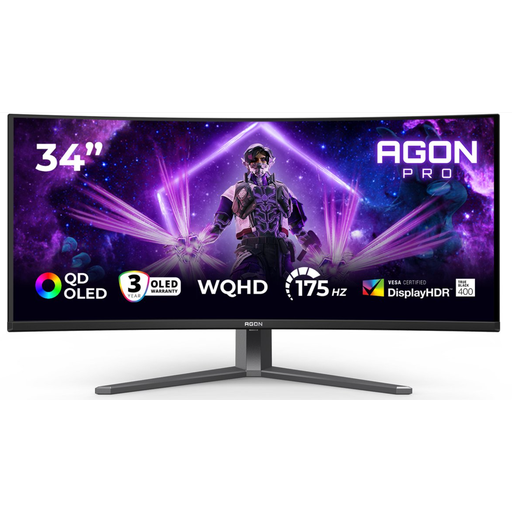 No image available
The wide 34-inch display could be a good fit if you want to view editing windows side by side.
3440 × 1440; 21:9; DisplayPort up to 175 Hz and HDMI up to 100 Hz; height, swivel and tilt adjustment.
Use the screen for visual editing and suitable audio output, such as headphones or speakers, to listen back. Adobe describes speakers and headphones as separate audio output devices; screen resolution doesn’t determine audio quality.
Place the screen directly in front of you, with its top edge just below eye level. Arboportaal recommends tilting the screen so you look straight at it; this is positioning advice, not a guarantee against discomfort.
According to the Dutch Government, distance purchases generally come with a 14-day cooling-off period in many cases. You’re also entitled to a product that works as it should; contact the seller if there’s a problem. Check the terms that apply to your purchase, and distinguish your statutory rights from any additional manufacturer’s warranty.
The European Commission describes an energy label for electronic displays, with ratings from A to G. Check the official EPREL database for the listing of the exact model; don’t compare energy ratings that don’t apply to the specific version.
The legal obligations for screen work described by Arboportaal apply to employers. Whether they apply to your project depends on your employment relationship, so don’t treat them as a general purchase requirement for every portfolio project.