
Photo book maker preparing colours
You edit photos with the print in mind and want to know whether your screen settings and any colour profiles from your photo book supplier suit your workflow.


Choose a monitor to suit the way you work: colour management matters if you prepare photos for printing, while workspace, adjustability and connections are also important when you’re laying out pages together. A wide colour gamut alone won’t predict how a photo book will print. Match your screen settings and any soft proofing to the instructions and profile provided by your chosen supplier, as Saal Digital Nederland explains.
You edit photos with the print in mind and want to know whether your screen settings and any colour profiles from your photo book supplier suit your workflow.
You look at photos and page layouts together and want to be able to adjust the screen for different viewing positions.
You connect different laptops to the same workstation and want to check that the video connection, USB functions and charging power are suitable for those devices.
First decide whether colour preparation for printing is your main priority, or whether you’ll mainly be laying out pages together. Then compare the adjustability and connections with your workspace and the laptops you use.
| What to consider | What should you check? | Who is this important for? |
|---|---|---|
| Assessing colour before ordering | Check the colour space and calibration options of the exact model. Ask the photo book supplier for colour instructions or an ICC profile for your chosen product. | If I want to assess colours for a print, I want to be able to match my screen settings to the specific photo product. Around 31% of consumers give colour preparation top priority. |
| Sharing the screen | Compare height, swivel and tilt adjustment, viewing angles and the amount of desk space taken up by the stand. | When we look at pages from different positions, I want to be able to position the screen comfortably. Around 25% of consumers prioritise adjustability for shared use. |
| Viewing pages and photos at a glance | Consider the combination of screen size, resolution, preferred display scaling and available desk space. | If I want to view photos and the page layout at the same time, I’m looking for a screen layout that fits on my desk. Around 25% of consumers prioritise seeing the page layout at a glance. |
| Connecting different laptops | Check each laptop’s video output, cable, USB functions and required charging power. | If I connect laptops used by different people, I want to know which functions work with each device. Around 19% of consumers give laptop connectivity top priority. |
What you see on screen also depends on the settings and preparation of the photo product you choose.
Ask the supplier which colour instructions and any ICC profiles apply to your photo book.
Colour settings, soft proofing or a test print may require extra preparation time.
A USB-C port doesn’t automatically mean that every laptop you use can send video through it or receive enough power to charge.
Check the video and charging support for each laptop, as well as the cable specifications.
Depending on the combination, you may need a different cable, an adapter or a separate laptop power supply.
The manufacturer’s warranty and your statutory rights are not the same. The Dutch government states that there is no fixed statutory warranty period in the Netherlands and that the retailer is your point of contact if a product is faulty.
Read the terms of any manufacturer’s warranty and remember to consider your statutory rights if there’s a problem.
The ColorEdge CS2740 is worth considering if you’re looking into a colour-managed workflow for photos.
According to ASUS, the ProArt PA279CRV combines features for colour-focused work with connectivity and an adjustable setup.
The SW272U is a PhotoVue model for photographers comparing features for matching their screen to their prints.
The Dell Plus S2725QS is a general-purpose 27-inch 4K option to compare for viewing page layouts at a shared desk.
The 27E1N1800A/00 is a general-purpose 4K IPS model to compare for screen space and design.
This selection focuses on colour-oriented photo work and viewing and laying out photo book pages together. Check that the connections and adjustability of each model suit your shared workspace.
 No image available
An option to consider if you’re looking for a screen for colour-focused photo work. Check that the connections and features suit your laptop and photo book workflow.
The product name lists 26,5 inch, 3840 × 2160, OLED and 120 Hz.
 No image available
This model may suit you if you’d like to compare a larger screen size for viewing photo book pages together. Check that the setup and connections work for your workspace.
The product name lists 31,5 inch and 2560 × 1440 pixels (Quad HD).
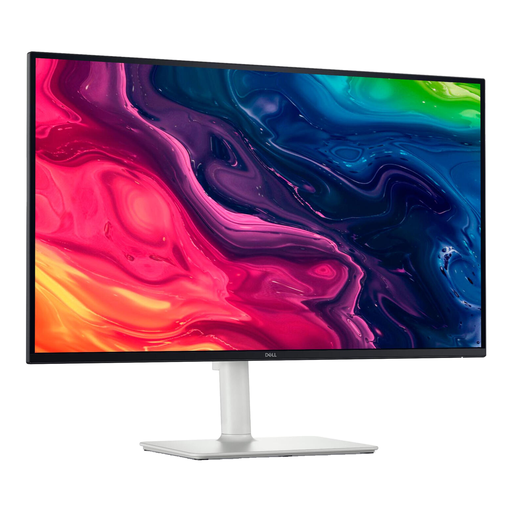 No image available
This model is worth comparing for viewing and laying out pages together. Dell lists an IPS screen and height adjustment for the S2725QS. Check that the connections suit the computers you use.
The product name lists 27 inch and 3840 × 2160 pixels (4K UHD).
 No image available
A model to compare if you’re looking for a screen for photo editing. Check the exact connections and adjustability for the laptops and viewing positions at your desk.
The product name lists 27 inch and 2560 × 1440 pixels (Quad HD).
 No image available
This model may suit you if you’re comparing screens for photo editing at a shared desk. Check that the connections and stand work for the way you use it together.
The product name lists 27 inch and 2560 × 1440 pixels (Quad HD).
No, 4K isn’t essential for making a photo book. Compare resolution with screen size, readability and the space available on your desk. A Dutch photo retailer recommends Full HD as a minimum in its buying advice and says 4K is useful for more professional editing, but this isn’t a legal requirement.
Set up your monitor and lighting carefully, and follow the instructions from your chosen photo book supplier. If they provide an ICC profile for your photo product, you can use it for soft proofing according to their instructions. Saal Digital Nederland explains how to do this for its own products. Don’t assume that a profile from one supplier will also work with another.
No, check this for each laptop and monitor. Compare the laptop’s video and charging support with the port and power rating of the exact screen: ASUS lists USB-C with DisplayPort and 96 W Power Delivery for the PA279CRV; EIZO lists power delivery of up to 60 W for the CS2740.
When you buy as a consumer, you’re entitled to a product that meets expectations, and the retailer is your point of contact if there’s a problem. According to the Dutch government, there’s no fixed statutory two-year warranty period in the Netherlands. Any manufacturer’s warranty is in addition to your statutory rights.
According to the Dutch government, when you buy at a distance you’ll often have a 14-day cooling-off period. Check the retailer’s information and applicable terms before ordering. Any longer returns period offered is voluntary and isn’t the statutory standard.