What should you consider when choosing?
First decide what you need to see on screen at the same time. Then compare the screen layout with your desk, check the connection to your computer and make sure text and map details remain readable at your chosen scaling.
27-inch QHD
A good fit if: you want to combine map work, software panels and study materials on a relatively compact screen.
The trade-off: you get fewer horizontal pixels than with the 34-inch ultrawide models compared here, and fewer pixels overall than with the 4K monitor compared here.
34-inch ultrawide
A good fit if: you often want to place a map next to a report or data overview and have enough desk space.
The trade-off: the larger screen needs more space. Also check that your computer supports the resolution through the connection you plan to use.
27-inch 4K
A good fit if: you mainly want more pixel detail on a compact screen and your computer can output 3840 × 2160.
The trade-off: more pixels do not make the screen wider. Check that text and the interface remain comfortable to read at your chosen scaling.
| What to consider |
What should you check? |
Who is this important for? |
| Maps and study materials at the same time |
Compare the screen width, aspect ratio and resolution with your usual window layout; measure your desk too. |
If I want to view a map, layers or a document side by side, I consider both the room for windows and the space the screen takes up. Around 33% of consumers say their main concern when buying is how to arrange multiple windows. |
| Detail and readability |
Compare the resolution with the screen size you have in mind, and check text and the interface at your preferred scaling. |
If you want to view fine map details and study materials on a compact screen, remember to consider the scaling setting too. Around 27% of consumers prioritise detail and readability. |
| Laptop connection |
Check video output, monitor connections, any DisplayPort Alt Mode support, charging power and the cable. |
If I want to connect using my laptop’s existing port and possibly charge it at the same time, I check that both devices support the same features. Around 20% of consumers say laptop compatibility is their main concern when buying. |
| Workspace and screen space |
Measure the available space, including the monitor stand, and check adjustability, lighting and reflections. |
If you want a screen that physically fits your study space, consider your desk and screen position. Around 20% of consumers prioritise their workspace and the room available. |
Monitors at Joybuy
These Joybuy monitor picks cover the 27-inch QHD and 4K options, as well as the 34-inch ultrawide option, for viewing maps and study materials on one screen.
 No image available
MSI Modern MD272UPHG 27-inch 4K monitor
A good fit if you prioritise the stated 4K resolution for map detail and study materials on a 27-inch screen.
3840 × 2160 pixels; the product description lists USB-C with DP Alt Mode, PIP/PBP and a height-adjustable stand. Check that your computer’s video output and your preferred text scaling are suitable.
View at Joybuy
 No image available
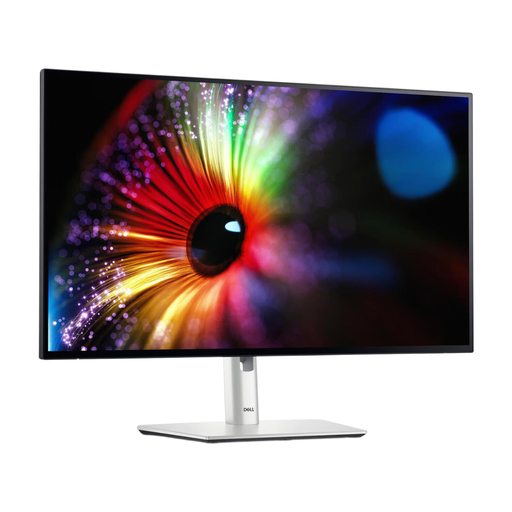
Dell UltraSharp U2724D 27-inch QHD monitor
A good fit if you want to combine map work and study materials on a more compact screen with QHD resolution.
2560 × 1440 pixels; the product description lists an IPS Black panel and a height-adjustable stand.
View at Joybuy
 No image available
Philips E Line 346E2CUAE/00 34-inch ultrawide monitor
A good fit if you want to place a map alongside a report or data overview and have enough desk width.
3440 × 1440 pixels and a 21:9 aspect ratio. The product description lists USB-C for data, video and laptop charging; check compatibility with your laptop.
The 34-inch ultrawide format needs more desk width than the 27-inch options listed here.
View at Joybuy
Frequently asked questions
Can you use maps and tables without a second screen?
Yes. GIS software can show maps alongside panels for layers and tables. How much remains readable at once depends on your window layout, resolution and scaling, so don’t choose a monitor based on its size in inches alone.
Does every USB-C monitor provide video and power to your laptop?
No. Check your laptop’s video mode as well as the monitor’s features and charging power. BenQ specifies USB-C with DisplayPort Alt Mode, data and 65 W Power Delivery for the GW2790QT; this alone does not confirm that the monitor will work with your laptop.
How should you set up a screen for longer study sessions?
Set text and symbols to a readable size, reduce reflections and adjust the screen position to suit your workspace. Arboportaal also recommends varying your activities, regularly looking away and taking short breaks. This does not prove that a specific monitor model prevents discomfort.
What are your rights when buying a monitor online in the Netherlands?
For eligible distance purchases, you generally have a 14-day cooling-off period, according to the Dutch government. You are also entitled to a product that is in good working order. If it is faulty, you can ask the seller for a solution, even if a manufacturer’s warranty is also available. Check the terms that apply to your purchase.
Are students legally required to use a particular type of monitor?
No. Dutch regulations on display screen work do not require every student to buy a particular type of monitor for personal use. Arboportaal outlines employers’ obligations for employees who work with display screens for more than two hours a day. That is different from a student choosing a monitor for personal use.


