
Editor with a small desk
Wants to see the timeline and footage without the monitor stand and cables taking over the workspace. Consider the screen width, stand depth and mounting options.


Start with the space on your desk and how you want to assess the film. A compact 24-inch screen could be a good fit if colour checking is your priority, while a 27-inch 4K monitor gives you more pixels for your footage and editing timeline on one screen. Then check that the colour mode suits your SDR or HDR output, that the stand or clamp fits your desk, and that the connection supplies your laptop with video, data and enough power.
Wants to see the timeline and footage without the monitor stand and cables taking over the workspace. Consider the screen width, stand depth and mounting options.
May be working with a variety of historical footage and wants to assess the output colour space with care. Look at the colour mode and calibration options, not just a high colour gamut percentage.
Wants to use a laptop, monitor and peripherals with as few cables as possible. Check that the laptop port supports video and data, and that the charging power is right for your laptop.
Choose this if: desk space and colour checking matter more to you than viewing 4K footage at its native pixel resolution.
Bear in mind: the lower resolution and the space taken up by the timeline and other editing panels.
Choose this if: you want space for both footage and the timeline on one screen.
Bear in mind: the physical width and depth; a DCI-P3 colour gamut does not automatically mean the monitor meets the Rec.709 specification.
Consider this if: a larger image is your priority and your desk can accommodate a suitable clamp mount, with enough space to sit at a comfortable viewing distance.
Bear in mind: the clamp requirements and laptop power; a clamp does not make the screen itself any narrower.
| What to consider | What should you check? | Who is this important for? |
|---|---|---|
| Will the monitor fit on your desk? | Measure the available width and depth; compare them with the stand dimensions or check that there is room for a clamp. | If you also need to fit your keyboard and editing equipment on a small desk, prioritise physical fit. Around 33% of consumers say desk space is their main consideration. |
| Can you assess the colours you need to? | First decide whether you are outputting in SDR or HDR, then check the exact model’s colour mode and calibration options. | If you want to assess colour carefully, look beyond the coverage percentage alone. Around 27% of consumers put colour checking first. |
| Is there enough usable space for editing? | Compare the resolution with your preferred window layout and check that text remains legible at your usual viewing distance. | If you want to see the footage and timeline side by side, consider the available screen space and resolution. Around 20% of consumers prioritise editing space. |
| Will the laptop connection work as you need it to? | Check that the laptop port supports video and data, and compare the USB-C charging power with your laptop’s power requirements. | If you want to use as few cables as possible, check that one connection provides all the functions you need. Around 20% of consumers put connectivity first. |
The monitor stand and connecting cables also take up space; a clamp arm, in turn, needs a suitable desk edge.
Measure the available width and depth where you plan to put the monitor. For a monitor with a stand, check the dimensions including the stand; for a clamp arm, check the mounting requirements.
You may need a different stand or a suitable arm.
Colour gamut and the selected output colour space answer different questions.
First decide whether you are outputting in SDR or HDR, then check the colour mode and calibration options. Don’t treat manufacturers’ claims as a measurement of the specific unit you receive.
Additional calibration or checks may be needed for colour assessment.
The monitors mentioned have different power outputs; a USB-C connection does not guarantee that every laptop will receive enough power.
Check that your laptop port supports video and compare the stated power output with your laptop’s power requirements.
You may also need your laptop’s power supply or an extra cable.
The PD2705U is a 27-inch 4K option for anyone looking for Rec.709 and USB-C in one monitor.
The ColorEdge CS2400S is a more compact, colour-focused option if colour assessment matters more than 4K resolution.
The Pro Plus P2725QE is a 27-inch 4K USB-C hub option for editing alongside general computer work.
The 27U730A-B is a 27-inch 4K option for laptop users; the larger 32UN880K-B comes with an adjustable desk clamp.
The ProArt PA279CRV is a 27-inch 4K option if its stated colour gamuts and adjustable setup are important to you.
These Joybuy products are 27-inch 4K monitors for anyone who wants to view footage and an editing timeline on one screen. Check the connection for each model and make sure its other features suit your colour workflow.
 No image available
A 27-inch 4K format for anyone who wants to view footage and an editing timeline on one screen.
27 inch; 4K; IPS.
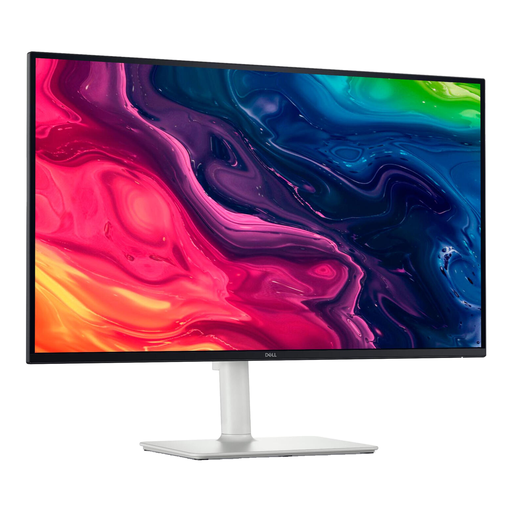 No image available
A 27-inch 4K format for anyone who wants to view footage and an editing timeline on one screen.
27 inch; 3840 × 2160; 4K UHD; LCD.
 No image available
A 27-inch 4K format for anyone who wants to view footage and an editing timeline on one screen.
27 inch; 3840 × 2160; 4K UHD; LCD.
 No image available
A 27-inch 4K format for anyone who wants to view footage and an editing timeline on one screen.
27 inch; 3840 × 2160; 4K UHD; LCD.
 No image available
A 27-inch 4K format for anyone who wants to view footage and an editing timeline on one screen.
27 inch; 3840 × 2160; 4K UHD; LCD.
No. The subject alone does not make an HDR monitor necessary. First decide on your intended output format: Adobe describes separate SDR/Rec.709 and HDR settings for editing sequences. An HDR label in a monitor’s specifications does not prove that the screen is suitable for every kind of HDR assessment.
Check how adjustable the screen is and whether reflections could be distracting in your workspace. For employees who work at a screen for more than two hours a day, the Dutch Arboportaal sets out specific workplace requirements; these do not automatically apply to every hobbyist.
For many online distance purchases from a business, you have a 14-day cooling-off period, according to the Dutch government; a purchase from a private individual does not fall under the same definition of a distance purchase. A product supplied must be complete and undamaged, and have the qualities stated by the seller. Before you buy, check who the seller is and what information is provided about additional costs.
Compare the EU energy label and the model information in EPREL on the same basis. The European Commission states that electronic displays have an A-to-G label, which can also show information about HDR energy consumption. To compare running costs, also take your hours of use and the applicable electricity tariff into account.