
Photo editor checking image edges
You want to assess straight lines and distortion around the edges while applying lens profiles or manual corrections in software.


You correct lens distortion in photo-editing software; a monitor won’t adjust the geometry of the image file itself. Choose a screen that lets you assess lines and image edges clearly, and make sure its colour capabilities, adjustability and connections suit the shared workspace and the laptops used there.
You want to assess straight lines and distortion around the edges while applying lens profiles or manual corrections in software.
Once you’ve corrected the geometry, you may also want to check colour or how an image might look in print. Colour space and calibration are worth considering too.
You share a screen, desk or peripherals, so an adjustable stand and connections that suit the computers in use may also influence your choice.
First, check that your editing software supports the lens you use. Then consider screen detail, colour management, and the connections and adjustability you need for a shared workspace.
| What to consider | What should you check? | Who is this important for? |
|---|---|---|
| Lines and image edges | Check that your software supports the lens you use, and that the screen size and resolution are comfortable to view from your usual distance. | I mainly want to assess straight lines and image edges after applying software correction; around 33% of consumers put geometry first. |
| Colour reproduction | Decide whether you use sRGB, Adobe RGB or P3, and check the colour space and calibration options separately. | If I’m checking colour or print output as well as geometry, I want to know which colour space and calibration workflow suit my work; around 27% of consumers prioritise checking colour. |
| Adjustability | Look at the available height, tilt, swivel and pivot adjustments, and check whether the stand will fit on the shared desk. | I want to adjust the screen easily to suit different working positions; around 20% of consumers put adjustability at a shared desk first. |
| Connections | For each laptop, check whether the port supports video, how much power is needed, and which peripheral connections you want. | If several laptops use the screen, I want suitable connections without paying for features I won’t use; around 20% of consumers make connectivity and total cost their main priority. |
Lens correction is done in editing software, not on the monitor. Upgrading your screen won’t, by itself, solve a problem with your correction workflow.
First check whether the software recognises your lens and whether your current screen makes it difficult to assess the result.
Adobe RGB or P3 coverage, factory calibration and hardware calibration describe different features. Hardware calibration may also require a measuring device.
Choose the colour space you use, then check separately how to calibrate the screen and what equipment you’ll need.
Your calibration workflow may require extra equipment, such as a measuring device.
The USB-C power output varies between monitors, and the features you need depend on your laptop. Having the same connector shape doesn’t guarantee that video and power will work as required.
For each laptop, check whether its port supports video and how much power it needs.
Depending on the laptop and connection, you may also need a separate power adapter.
The ProArt PA279CRV is a 27-inch 4K option for anyone combining image checking with a wide colour space and an adjustable stand.
The PhotoVue SW272U is a 27-inch 4K option for photographers who are considering a wide colour gamut and hardware calibration.
The ColorEdge CS2740 is a 27-inch 4K option for a colour-management workflow where hardware calibration is important.
The UltraFine 27UP850K-W is a 27-inch 4K IPS option for a shared desk where USB-C and an adjustable stand are useful.
The UltraSharp U2725QE is a Thunderbolt hub monitor to consider if connectivity is a priority in a shared workspace.
These Joybuy monitors are for viewing photos and image edges; you’ll need suitable editing software to correct lens distortion.
 No image available
The 32-inch 4K screen gives you a large viewing area for checking photos and image edges.
VA panel; 3840 × 2160 at 60 Hz; 300 cd/m²; 2 HDMI connections and DisplayPort; tilting stand; speakers.
 No image available
The 27-inch 4K resolution could suit checking lines and image edges at a shared desk.
27 inches; 4K resolution; IPS panel.
 No image available
The 4K resolution is useful if you want to check image edges; also make sure the connections suit the computers at your shared desk.
26.5 inches; 3840 × 2160; OLED; 120 Hz. The product description lists 99% DCI-P3, 97.5% Adobe RGB and USB-C power delivery up to 98 W.
 No image available
This 31.5-inch 4K screen is an option for assessing photos and image edges; lens correction is still a job for editing software.
31.5 inches; 3840 × 2160; QD-OLED; Thunderbolt 4; height adjustment.
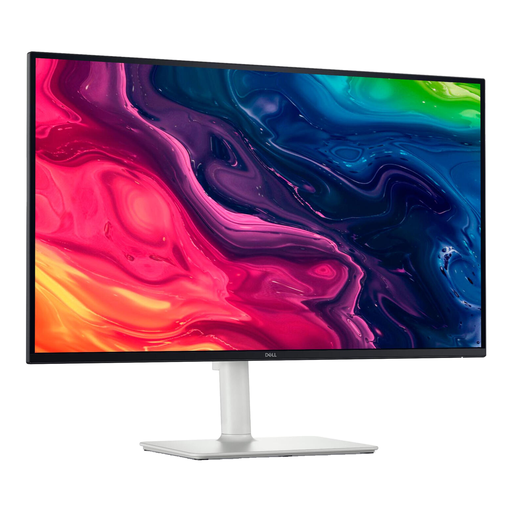 No image available
The 27-inch 4K resolution could suit checking image edges, while the adjustable stand lets you change your viewing position.
27 inches; 3840 × 2160; IPS panel; HDMI and DisplayPort; height and tilt adjustment.
No. Apply the correction in photo-editing software. Adobe describes lens profiles for correcting distortion and vignetting, among other things; Lightroom Classic can automatically correct lens-related distortion when it recognises a supported lens. Use the monitor to assess the result.
For each laptop, check whether its port supports video over USB-C and how much power the laptop needs. The specified USB-C power output varies by model; having the same connector shape doesn’t, on its own, confirm that the features you need will work.
That depends on the monitor and your calibration workflow. EIZO lists a measuring device for the ColorEdge CS2740 as a recommended optional accessory for hardware calibration. Check which device and software are compatible with the model you choose.
The European Commission states that energy labelling rules also apply to computer monitors, so check the label for the specific model. According to ACM ConsuWijzer, consumer purchases are also covered by a statutory guarantee against the seller: the product must meet the standard you can reasonably expect with normal use. A manufacturer’s warranty doesn’t replace this right.
For an employee workspace, Arboportaal says the employer must ensure that screen work doesn’t pose a risk to health and safety. This doesn’t require a specific monitor model and doesn’t automatically apply to a shared desk at home.