
For people who work with two windows side by side
If you want to view two editors, or an editor and a preview, at the same time, a 21:9 screen is a useful layout to compare. Philips lists this aspect ratio for the 346E2CUAE/00.


The right screen layout depends on where you need more workspace. A 21:9 monitor gives you more width for two windows side by side, while a 3:2 screen prioritises height for long files or stacked windows. A standard 27-inch 4K monitor is another option if you’d prefer a more familiar screen format and sharp text. Also check that its dimensions, connections and adjustability suit your workspace.
If you want to view two editors, or an editor and a preview, at the same time, a 21:9 screen is a useful layout to compare. Philips lists this aspect ratio for the 346E2CUAE/00.
If you’d like to see more lines or stack windows vertically, compare a taller 3:2 screen with a 16:9 monitor. BenQ and Dell list these formats for the RD280U and P2725QE respectively.
If you regularly connect a laptop, the video connection, charging power and physical setup matter just as much as the screen layout. Features vary by model. BenQ and Dell, for example, list USB-C power delivery, while Arboportaal outlines considerations for applicable workplaces.
| What to consider | What to look for | Who is this important for? |
|---|---|---|
| Windows side by side | Compare the aspect ratio and usable width, and measure the space available on your desk. | If you want to keep two wide work windows open at once, horizontal space matters most. Around 29% of consumers say this is their top priority. |
| Extra screen height | Compare the aspect ratio and physical height, and consider whether you want to stack windows. | If you work with long files or want to see more lines at once, height may matter more than extra width. Around 23% of consumers prioritise vertical workspace. |
| Text readability | Consider the resolution alongside the screen size, and check which scaling setting feels comfortable. | If you work with lots of small text and interface elements, you’ll want to be able to read them at a practical scale. Around 18% of consumers name readability as their top consideration. |
| Positioning and adjustability | Measure the space for the screen and stand, and check which adjustment options the model offers. | If screen positioning is your main practical concern, desk height and viewing position are key. Around 18% of consumers prioritise adjustability. |
| Connecting and powering a laptop | Check video output over USB-C, the power delivery required and which cable is suitable. | If you mainly connect a laptop, you’ll want to know whether the connection carries video and supplies enough power. Around 12% of consumers prioritise laptop connectivity. |
A 21:9 screen divides up workspace differently from a taller 3:2 screen. Philips lists a resolution of 3440 × 1440 pixels for the 346E2CUAE/00, while BenQ lists 3840 × 2560 pixels for the RD280U.
First, sketch out whether you want to use windows side by side or stacked, then compare the aspect ratio and dimensions.
The monitor’s capabilities don’t automatically tell you what your laptop, port and cable support.
Before choosing, compare your laptop’s output, the power it needs and the monitor’s port. You may also need a different cable, an adapter or a separate laptop charger.
According to the Dutch government, there is no fixed statutory warranty period in the Netherlands. If a product is faulty, the seller is responsible for putting things right.
Read any additional warranty terms, and contact the seller if you have a problem with a faulty product.
The E Line 346E2CUAE/00 is an example of a 34-inch ultrawide screen for working with windows side by side.
The RD280U is worth considering if extra screen height and features for coding are important to you.
The Pro Plus P2725QE is a 27-inch 16:9 monitor for anyone looking for a standard 4K layout and a range of connections.
The ViewFinity S6 S65UC, model LS34C652UAUXEN, is another 34-inch 21:9 example.
The DualUp 28MQ780-B shows how an almost square 16:18 layout can stack windows vertically.
These monitors are suited to working with editors side by side, or to comparing a wider screen with a standard 4K layout.
 No image available
The 21:9 layout suits anyone who wants to use two windows side by side.
34 inches; WUHD resolution of 5120 × 2160 pixels; USB-C up to 140 W.
The screen is curved. Check that the curve, your computer and cable suit your setup.
 No image available
The wide layout suits anyone who wants to arrange several work windows side by side.
Dual QHD resolution of 5120 × 1440 pixels; KVM switch, USB-C dock and LAN.
The screen is curved. Check that the curve and connections suit your workspace.
 No image available
The 21:9 layout is worth comparing if you’re looking for a wide workspace for your editors.
3440 × 1440 pixels; 100 Hz.
The screen is curved, so consider whether it suits your setup.
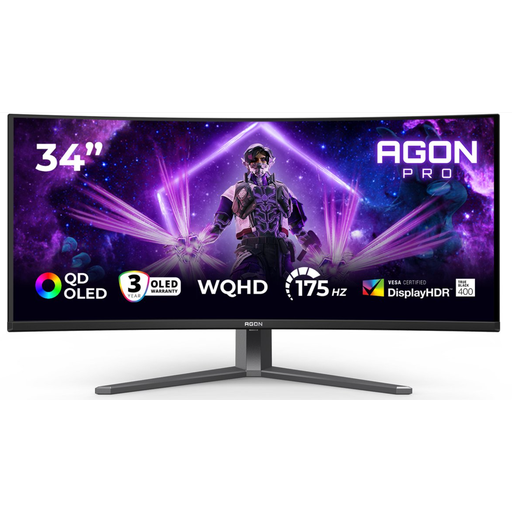 No image available
The 21:9 layout gives you a wide workspace for windows side by side.
3440 × 1440 pixels; DisplayPort up to 175 Hz and HDMI up to 100 Hz.
The title lists height, swivel and tilt adjustment.
 No image available
This 16:9 monitor is an option to compare if a more familiar 4K format matters more to you than extra width for two windows.
3840 × 2160 pixels; PIP/PBP, KVM and USB-C up to 98 W.
Check that USB-C video and power are compatible with your computer.
Yes, if your operating system and applications support placing windows side by side. Philips describes MultiView as a feature for displaying multiple devices at once. That’s not automatically the same as placing two windows from one computer side by side.
Check whether your laptop can output video through that USB-C port, how much power it needs for charging and which cable is suitable. BenQ lists DisplayPort Alt Mode and 90 W Power Delivery for the RD280U; Dell lists 90 W power delivery for the P2725QE. These specifications don’t prove compatibility with every laptop.
Position the screen so its height and viewing position suit your workspace, and watch out for glare. Arboportaal outlines considerations for applicable employee workplaces; these rules don’t automatically apply as purchase requirements for every private buyer.
According to the Dutch government, online consumer purchases often come with a 14-day cooling-off period. You’re also protected by statutory rights if a product is faulty: the Netherlands has no fixed statutory warranty period, and the seller is your point of contact. Any additional manufacturer or retailer terms are separate from these rights.