Which factors matter most?
For interview indexing, the layout that works for you depends on your text magnification, the windows you need open at the same time and how the monitor connects to your laptop.
| What to consider |
What to look for |
Who is this important for? |
| Readability of enlarged text |
Test your usual text size or scaling, and check sharpness, line length and whether timecodes remain visible. |
When I enlarge transcripts, I want to be able to read the text while still seeing the recording and timecodes. Around 36% of consumers prioritise being able to read enlarged text. |
| Space for several windows |
Try the window layout you want and check that the recording, transcript and indexing controls all remain visible. |
When I switch between transcript and index notes while listening, I want to be able to use the windows I need at the same time. Around 29% of consumers prioritise having space for these windows. |
| Adjustable workstation |
Check the height adjustment, tilt, desk space and reflections where you plan to place the monitor. |
When I regularly work at a screen, I want to be able to position it on my workstation and assess any distracting reflections. Around 21% of consumers prioritise their workstation setup. |
| Connections and features you need |
Compare your laptop’s video output and any USB-C video mode and charging requirements with the specifications of the exact model. |
When I connect a laptop, I only want to pay for connections and features that work with my computer. Around 14% of consumers prioritise compatibility and avoiding unnecessary extra features. |
Joybuy products for this workstation
This selection includes 27-inch QHD and 4K monitors, plus a 34-inch UWQHD model. Test with your own text magnification to see whether you can use the windows you need at the same time.
 No image available
Philips 27E1N1800AE/00 27-inch 4K UHD monitor
The 27-inch 4K resolution gives you an option to test enlarged text and indexing windows in your own software.
The product information lists 3840 × 2160, IPS, 60 Hz, 4 ms, HDMI, DisplayPort and a height-adjustable stand.
Joybuy
 No image available
INNOCN CB27U1 27-inch 4K UHD monitor
The product description mentions PIP and PBP; check whether these features suit your preferred window layout with your own software.
The product name lists 3840 × 2160, IPS, 120 Hz, HDR500, FreeSync and 90 W USB-C power delivery. The description also mentions a height-adjustable stand.
Joybuy
 No image available
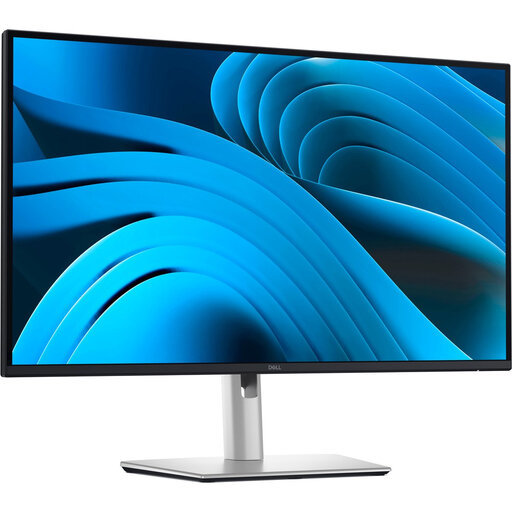
Dell Pro Plus P2725DE 27-inch QHD monitor
This QHD model gives you an option to test whether your preferred text magnification and window layout work for you.
The product name lists 2560 × 1440. The product description mentions 90 W USB-C power delivery, RJ45 and an adjustable stand.
Joybuy
 No image available
Dell S2725QC 27-inch 4K monitor
The stated 4K resolution gives you an option to try out your preferred text scaling and window layout.
The product information lists 3840 × 2160, IPS, HDMI and 65 W USB-C power delivery. The description mentions height and tilt adjustment.
Joybuy
 No image available
iiyama ProLite 34-inch UWQHD curved monitor
The 34-inch size gives you an option to try several windows side by side; check the layout with your own text magnification.
The product information lists 3440 × 1440, a USB-C dock with up to 95 W power delivery, KVM, RJ45 and 15 cm of height adjustment.
Joybuy
Frequently asked questions
Does 4K automatically make text larger?
No. Set the text size or display scaling separately, then check how much space remains for your transcript and other windows. Microsoft Support warns that text may look blurry at a resolution lower than the native resolution.
How can you place playback and transcript windows side by side?
In Windows, you can drag windows to the edge of the screen or use a snap layout. Then check that both windows are still usable with your own text magnification.
Can you use a second screen instead of one larger monitor?
Yes, if your computer supports a second screen. You can arrange the displays in Windows and spread your windows across them; check the available video connection and the space on your desk first.
What rules apply to employees who work at a screen for long periods?
Arboportaal states that when employees work at a screen for more than two hours a day, the screen and keyboard must not be attached to each other. This rule applies to the stated working situation and isn’t a general product specification for every private buyer.
What if the monitor doesn’t suit your workstation after you’ve bought it online?
ACM ConsuWijzer states that you have 14 days to change your mind after delivery of an online purchase; check the applicable terms and exceptions. If a product is faulty, the seller is responsible for the statutory guarantee, which includes free repair or replacement.


