Who is this choice relevant to?

Home worker who also enjoys puzzles

Reads a lot of text during the day and wants to look for clues in games after work without having to rearrange the workspace. The Dutch Arboportaal recommends height adjustment and avoiding distracting reflections when working with a screen.

Fan of dark mysteries

Mostly plays atmospheric games and wants to weigh up black levels and shadow detail against everyday office work. The panel type and the specific model’s features matter more than general assumptions about an entire product range.

User with a work computer and a gaming computer

Switches between devices at one desk, so pays close attention to video connections, USB-C and switching options. Which features are useful also depends on the connections and requirements of your own devices.

What should you look for when choosing?

IPS LCD for work and gaming

A good fit if: readable text, an adjustable workspace and an all-round screen matter more than the deepest possible blacks.

Bear in mind: USB-C alone doesn’t tell you which video mode or power output is available; check the specifications for the exact monitor and your laptop.

VA LCD for dark scenes

A good fit if: contrast in dark gaming environments matters and you want to stick with LCD. LG lists a VA panel and a typical contrast ratio of 3000:1 for the curved 27GS60QC-B.

Bear in mind: LG marks this particular model as discontinued; its features don’t automatically apply to other VA monitors.

OLED for cinematic gaming

A good fit if: dark images and motion handling are priorities, and the screen won’t mainly be showing the same work windows for long periods.

Bear in mind: static interface elements displayed for long periods can pose a burn-in risk with OLED. Dell specifies a 26,7-inch 4K 240 Hz QD-OLED panel for the AW2725Q; these specifications aren’t a measure of its lifespan.

What to consider What to look for when buying Who will value this?
Dark scenes Compare the panel type and model-specific contrast figures, and check which picture settings are available. If I want to spot small clues in dark scenes, I’ll factor in contrast and picture settings. Around 31% of consumers put dark gaming images at the top of their list.
Readability and adjustability Check the resolution for the screen size you’re considering, height adjustment, reflections and the space available on your desk. If you read a lot of text during the day, you’ll want a screen that fits comfortably into your workspace and is also suitable for gaming in the evening. Around 31% of consumers prioritise readability and workspace adjustment.
Connections and switching Compare the ports on the monitor and your devices, the supported video mode and any USB-C power delivery. If I use a work computer and a gaming computer at one desk, I want to know whether the connections and switching options suit both. Around 23% of consumers prioritise connecting their devices.
Smooth motion Check the resolution, refresh rate, connection and what your computer can handle; consider response time separately. If smooth motion is your main priority, check whether your computer can handle the resolution and refresh rate you want. Around 15% of consumers put speed at the top of their list.

Pitfalls to avoid

  • Focusing only on the quoted response time in milliseconds

    A response time figure on its own doesn’t tell you how text, contrast or moving images will look in practice. Figures can also depend on the selected mode.

    Compare the measurement method or picture mode used, and assess resolution, contrast and comfort at work separately.

  • Choosing OLED without considering your everyday work

    OLED can suit dark gaming images, but displaying the same interface elements for long periods can pose a burn-in risk. That risk doesn’t predict when an individual screen might develop a problem.

    Consider your working hours and the kind of windows you use, and check the care instructions and warranty terms for the exact model.

  • Assuming every USB-C port charges your work laptop

    The presence of USB-C doesn’t automatically tell you what power output is available. Depending on the devices, you may need a separate laptop charger or adapter.

    Compare the monitor’s USB-C video function and specified power output with your laptop’s requirements.

Brands to consider

LG

LG offers different LCD options in its UltraGear range; the specifications of a particular model don’t automatically apply to the whole range.

  • LG specifies QHD and 200 Hz for the 27G610A-B.
  • The 27GS60QC-B is a separate curved VA model that LG Netherlands lists as discontinued.

Dell

Dell’s S2725DC is a QHD screen for work and leisure; check the connection requirements of your own laptop.

  • Dell lists a 27-inch QHD display, 144 Hz and USB-C for this model.
  • USB-C alone doesn’t confirm that the video mode and power output required by every laptop are available.

BenQ

BenQ positions the MOBIUZ EX271Q as a QHD gaming monitor with connections and a built-in KVM for switching between devices.

  • BenQ lists USB-C, HDMI 2.1, DisplayPort 1.4 and KVM for this model.
  • BenQ’s claim that it improves detail in dark scenes is a manufacturer claim, not an independently measured result.

Alienware

Dell specifies the AW2725Q as a 26,7-inch 4K 240 Hz QD-OLED gaming monitor.

  • This model offers a different panel and resolution option from the QHD LCD models mentioned above.
  • For long periods of static office work, consider the OLED risk and warranty terms; this isn’t a lifespan measurement for the AW2725Q.

Philips

Philips describes the Evnia 27M2N5500/00 as a 27-inch QHD 180 Hz Fast IPS gaming monitor.

  • Philips lists adjustable game profiles, including a mode for dark scenes.
  • Philips’ claim that this mode reveals hidden objects isn’t an independently tested result.

Monitors at Joybuy

These monitors offer a range of options for working from home and gaming, from compact portable screens to larger QHD and ultrawide models.

MSI MAG 272QPF E20 27-inch WQHD gaming monitor

MSI MAG 272QPF E20 27-inch WQHD gaming monitor

A 27-inch WQHD screen for anyone who wants to use the same desk for text and gaming.

WQHD (2560 × 1440), Rapid IPS and 200 Hz.

View at Joybuy

AOC Gaming Q27G42XNE 27-inch Quad HD monitor

AOC Gaming Q27G42XNE 27-inch Quad HD monitor

A 27-inch VA monitor for anyone looking for a Quad HD gaming screen who also wants to consider the panel type for dark scenes.

Quad HD (2560 × 1440), 180 Hz, 1 ms, FreeSync Premium and HDR10.

Connections: 2 × HDMI 2.0 and 1 × DisplayPort 1.4.

View at Joybuy

TECLAST V16H 16-inch portable monitor

TECLAST V16H 16-inch portable monitor

A portable screen for anyone looking to combine laptop use and gaming in a compact format.

FHD IPS, 16:10 and 144 Hz.

With 2 USB-C ports, Mini HDMI and a built-in stand.

View at Joybuy

Gawfolk 34-inch curved UWQHD gaming monitor

Gawfolk 34-inch curved UWQHD gaming monitor

An ultrawide screen for anyone who wants to combine office work and gaming on one monitor.

UWQHD (3440 × 1440), 144 Hz, 1500R curvature and Fast VA panel.

This model has no speakers.

View at Joybuy
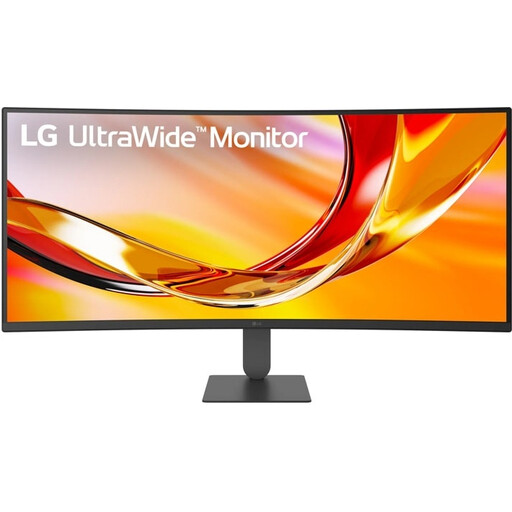
LG UltraWide 34U640B-B 34-inch curved WQHD monitor

LG UltraWide 34U640B-B 34-inch curved WQHD monitor

An ultrawide screen for anyone who wants to combine work and gaming and values height adjustment.

WQHD (3440 × 1440), 144 Hz and VA panel.

USB-C with 65 W Power Delivery and height adjustment.

View at Joybuy

Frequently asked questions

How can you set up the same monitor for working from home and gaming?

Adjust the height, position, lighting and contrast to suit your workspace. The Dutch Arboportaal recommends, among other things, height adjustment and avoiding distracting reflections when working with a screen; this doesn’t mean every home gamer needs to buy a particular monitor model.

What should you bear in mind when caring for an OLED monitor?

Factor in windows and taskbars that remain unchanged for long periods, and consult the care instructions for your chosen model. Persistently static elements can pose a burn-in risk with OLED, but don’t predict when an individual monitor might develop a problem.

What warranty and cooling-off period apply when buying online in the Netherlands?

According to ACM ConsuWijzer, when you buy as a consumer online, you generally have 14 days from delivery to change your mind, subject to applicable exceptions. You’re also covered by the statutory guarantee if a product doesn’t meet reasonable expectations under normal use; a manufacturer’s warranty doesn’t replace this right.

Does a monitor need an energy label in the Netherlands?

The European Commission states that computer monitors are covered by the energy labelling rules for electronic displays. Check the energy label and product information sheet for the specific model; the scale runs from A to G and the label provides information about energy consumption.
