
Portal builder with lots of windows open
You regularly keep source material, admin pages and a preview of the portal on screen at the same time. Horizontal workspace is an important factor in your choice.


Choose an ultrawide monitor if you mainly want to see source pages, the editor and a preview side by side. A 4K screen is a better fit if you also want to examine scans and images in detail. A 27-inch QHD monitor is a middle-ground option if you’re looking for a standard work monitor. Also check that text is easy to read at your chosen scaling setting, that you have enough desk space and that your computer supports the desired resolution through the connection you plan to use.
You regularly keep source material, admin pages and a preview of the portal on screen at the same time. Horizontal workspace is an important factor in your choice.
You read a lot of text and look at scans, maps or photos. Check image sharpness at a scaling setting that still keeps text comfortably readable.
You work on the portal for long periods or regularly connect a laptop. Screen positioning and suitable connections are important too.
For a history portal, your choice mainly depends on how much room you need for windows, how much detail you want to assess and how you plan to connect the monitor.
| What to consider | What should you check? | Who should give this more weight? |
|---|---|---|
| Multiple browser windows | Compare the horizontal resolution, aspect ratio and screen size with the space available on your desk. | If I want to keep source pages, the editor and the preview in view at the same time, horizontal space is a major consideration. Around 33% of consumers put window space first. |
| Text and images | Check text at your preferred scaling setting and compare the resolution for scans, maps and photos. | If I’m reading or viewing historical scans and maps, I want to assess small details without making text uncomfortably small. Around 27% of consumers prioritise source readability. |
| Screen positioning | Check the height adjustment or mounting options, glare and the screen’s position in relation to light sources. | If I’m working on the portal for long periods, I want to position the screen appropriately and read text clearly. Around 20% of consumers put working posture first. |
| Connecting a laptop | Check video output, the right cable and, if you want to charge your laptop, the power it needs and the power supplied. | If I want to connect and charge my laptop with one cable, the monitor must suit my laptop’s port and power requirements. Around 20% of consumers prioritise laptop connectivity. |
A larger screen doesn’t automatically tell you how much room you’ll have for windows or how clearly source material will appear. Screen size and resolution work together to determine what you can display.
Compare the native resolution and measure the space where the monitor will go before choosing a size.
A screen that doesn’t fit your desk or window layout may take up extra space or prove less practical for your work.
The monitor, laptop port and cable all need to support video, data transfer and power. With the Philips 346B1C/00, the resolution and refresh rate supported over USB-C also depend on the USB hub setting.
Compare your laptop and monitor ports, and check how much charging power your laptop needs.
If the connection or power supply isn’t suitable, you may need a separate charger, a different cable or an adapter.
A manufacturer’s or retailer’s warranty is separate from your legal rights if a product is faulty.
Keep your proof of purchase and contact the retailer if there’s a fault.
Dell’s product range includes a 27-inch QHD work monitor and a 34-inch monitor with a USB-C hub.
The LG 27UP850K-W is a 27-inch 4K monitor for anyone who values fine image detail and USB-C.
The Philips 346B1C/00 is a 34-inch ultrawide monitor with USB-C, ideal for a wide browser setup.
This Joybuy selection includes ultrawide monitors for viewing windows side by side, as well as 4K options for examining detailed source material. Check which screen size, resolution and connection are right for your workspace and computer.
 No image available
The wide screen may suit a workspace where you want to view several windows side by side.
34 inches; WUHD mode: 5120 × 2160 at 120 Hz; WFHD mode: 2560 × 1080 at 240 Hz.
Product information lists USB-C power delivery of up to 140 W, KVM and Ethernet.
 No image available
This wide screen may suit you if you want to use lots of browser windows side by side; bear in mind how much desk space you’ll need.
49 inches; 5120 × 1440 pixels; USB-C power delivery of up to 90 W and KVM.
The listed product width is 121,49 cm.
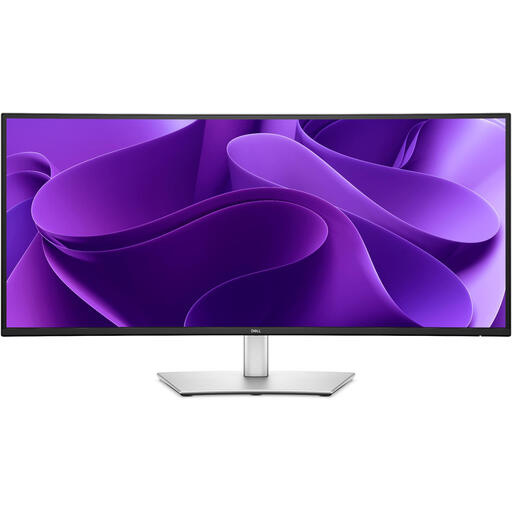 No image available
The ultrawide screen layout may suit you if you want to keep a source page, the editor and the preview side by side.
3440 × 1440 pixels; USB-C power delivery of up to 90 W; height and tilt adjustment.
 No image available
The ultrawide resolution may suit a permanent workspace where you use several applications side by side.
3440 × 1440 pixels; USB-C dock with power delivery of up to 95 W, RJ45 and KVM.
According to the product information, the stand offers 15 cm of height adjustment.
 No image available
The 4K resolution may suit you if you want to examine scans, maps or photos in detail as well as browse the web.
27 inches; 3840 × 2160 pixels; USB-C power delivery of up to 98 W.
Product information lists a stand with height adjustment, tilt and swivel.
Only if your laptop port supports video, the cable is suitable and the power supplied is right for your laptop. LG lists up to 96 W for the 27UP850K-W; check your own laptop’s requirements.
Adjust the screen and your workspace to suit your body, make sure text is easy to read, and minimise glare and light sources in your field of view. Arboportaal recommends varying your screen-based work and taking short breaks; no specific monitor model can guarantee that discomfort will be prevented.
Yes. Your legal rights when buying as a consumer are separate from a manufacturer’s or retailer’s warranty. ACM ConsuWijzer advises contacting the retailer if there’s a fault; the product’s expected lifespan also depends on the product and the circumstances.
The European Commission states that electronic displays are covered by energy labelling rules. Compare the label or model information for the monitor you’re considering; the energy class alone doesn’t tell you how much power the screen will use in your situation.
That depends on your working situation. Arboportaal outlines obligations for employers and employees’ workplaces, including specific rules for more than two hours of screen-based work a day. This doesn’t automatically mean there’s a legal requirement for a particular monitor for every personal hobby project.