
Writers who want to keep sources alongside their text
You compare a draft with source documents and want to be able to read both windows at once. Microsoft Support explains how to arrange windows side by side or in a layout.


A 27-inch QHD monitor is a practical starting point if you regularly need to read a draft and source document side by side. An ultrawide gives you more horizontal space, but takes up more room on your desk. A more compact screen may suit you if you usually work on one document at a time or already have a second screen. Try your window layout at your preferred text size, and check that your laptop supports the resolution and connections.
You compare a draft with source documents and want to be able to read both windows at once. Microsoft Support explains how to arrange windows side by side or in a layout.
You need to fit document work onto a limited desk and want a screen that’s easy to position without taking up unnecessary width. Arboportaal highlights readability, reflections and screen placement as factors to consider when working with a display.
You switch between working on your laptop and at your desk, and want to check in advance that the display, peripherals and, if needed, charging will work through your chosen connection. Compare your laptop’s connection options with the specifications of the exact monitor model.
A good fit if: you have limited desk space, usually work with one document in front of you or already use a second screen for sources.
Trade-off: Full HD has fewer horizontal pixels than QHD or ultrawide. Try viewing two windows at your preferred text size.
A good fit if: you regularly want to place two documents side by side and have enough desk space. Tweakers names 27-inch WQHD as a starting point for all-round use.
Trade-off: consider the space needed for the stand, text scaling and your laptop’s resolution output.
A good fit if: you regularly keep a source, contents page or notes open alongside your draft, and have room for a wide screen.
Trade-off: check the dimensions, viewing distance and video compatibility. The stated USB-C power output may not be enough for every laptop.
A good fit if: you want to keep your sources permanently separate from your text and your computer supports two external displays. Windows has settings for arranging multiple displays.
Trade-off: allow space for two stands and check the available video outputs or your dock’s connections.
First, set up your two example windows at your preferred text size. Then compare the screen space with the room on your desk and your laptop’s connections.
| What to consider | What should you check? | Who is this important for? |
|---|---|---|
| Space for two documents | Compare the aspect ratio and resolution, then place two example windows side by side at the text size you want to use. | If you often switch between a draft and a source while writing, you’ll want both windows to remain usable at once. Around 40% of consumers prioritise space for two documents. |
| Readability and positioning | Assess the text size at your viewing distance, any reflections, height adjustment and where the monitor will sit. | When writing for long periods, you’ll want to be able to read the text and position the screen comfortably, not just have extra window width. Around 30% of consumers give readability and positioning top priority. |
| Connecting to your laptop | Check the video output, supported resolution and, if you want to charge via USB-C, the power required in watts. | If your laptop is your main work computer, you’ll want to know in advance whether the display and, if needed, charging will work through your chosen connection. Around 20% of consumers start by checking laptop compatibility. |
| Desk space and additional equipment | Measure the available space and compare the screen’s dimensions with the stand. Work out which accessories your setup needs. | On a small desk, the available space or need for extra equipment can be decisive. Around 10% of consumers prioritise desk space or the total equipment needed. |
More pixels won’t help if your draft and source aren’t comfortable to read at the scaling you’ve chosen. Small characters and reflections can affect readability.
Try your intended window layout and text scaling, and assess the screen position at your workstation.
The stated USB-C power output varies by model, and your laptop must support the required video output through that connection.
Compare your laptop’s video and power requirements with the specifications of the exact monitor model, and check which cables you’ll need.
If the connections or power output don’t match, you may need a separate charger, compatible cable or dock.
A wide screen and the position you want it in both need space, which you can’t work out from the diagonal measurement alone.
Measure the width and depth of your desk, and leave room for documents and input devices.
You may need a different stand, monitor arm or additional connection if your existing setup doesn’t fit.
A manufacturer’s warranty doesn’t, by itself, determine how long a product must meet reasonable expectations in the Netherlands. The Dutch government explains that there is no fixed statutory warranty period of exactly two years.
Raise any problem with the seller, and keep your proof of purchase and the product description.
The Dell Pro Plus P2725DE we looked at combines a 27-inch QHD screen with USB-C hub features.
The LG UltraWide 34WR55QC-B we looked at is a wide screen for anyone who wants to keep documents side by side.
The models we looked at include both a more compact Full HD screen and a 34-inch ultrawide.
This selection includes monitors from 24 to 34.1 inches for placing document windows side by side, with QHD, 4K and ultrawide resolutions among the options. Compare the dimensions and resolution with your desk, preferred text size and laptop connection.
 Image unavailable
A 27-inch high-resolution screen for arranging two document windows on one monitor. Check that your computer supports 4K.
3840 × 2160; IPS; 120 Hz; USB-C with 90 W Power Delivery; PIP and PBP; height-adjustable stand.
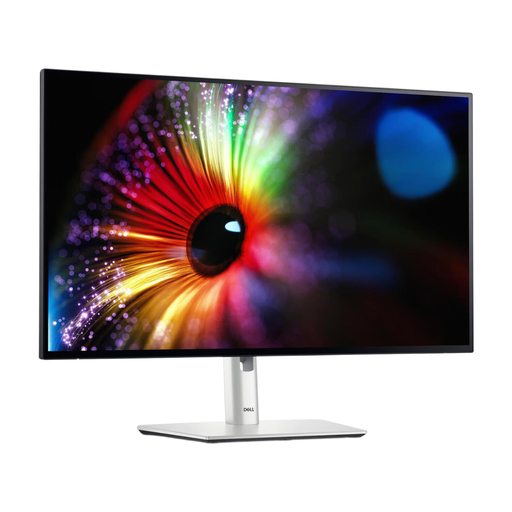 Image unavailable
A 27-inch QHD screen for placing a draft and source side by side. Try the window layout at your preferred text size.
27 inches; 2560 × 1440; Quad HD LCD.
 Image unavailable
A more compact 24-inch screen with QHD resolution. Check that the text remains comfortable to read at your viewing distance.
24 inches; 2560 × 1440; Quad HD LCD.
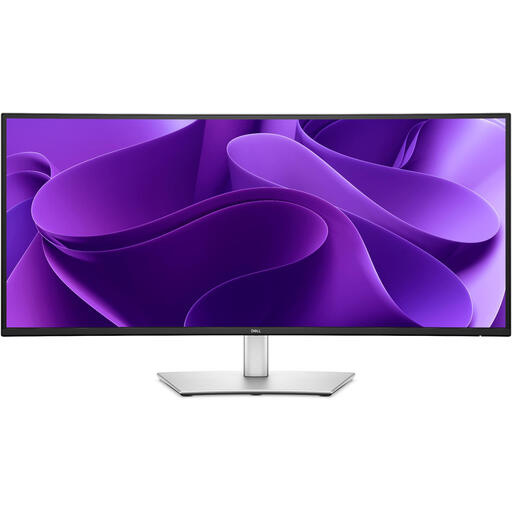 Image unavailable
A 34.1-inch ultrawide for working with multiple windows side by side. Measure your available space before choosing a wide screen.
34.1 inches; 3440 × 1440; Wide Quad HD LCD.
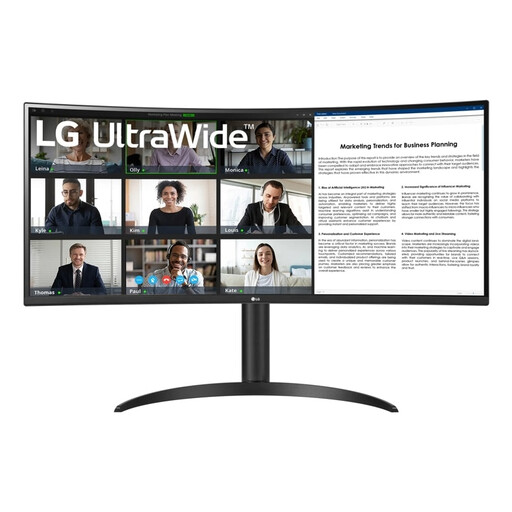 Image unavailable
A 34-inch ultrawide for viewing documents side by side. Check the dimensions and that the resolution is compatible with your computer’s video output.
34 inches; 3440 × 1440; Wide Quad HD.
In Windows, you can drag windows to the left and right edges of the screen or choose a snap layout. Then adjust the window widths and text size so that both documents remain easy for you to read.
Only if your laptop supports the required video output through that connection and the power output of the exact monitor model is sufficient. Dell lists 90 W for the P2725DE; LG lists 65 W for the 34WR55QC-B. Check your own laptop’s requirements.
For employees, Arboportaal describes employers’ responsibilities for safe display screen work. If you work with a screen for more than two hours a day, requirements apply to the workstation setup, including a separate screen or keyboard when using a laptop and a height-adjustable screen. These are not general product requirements for every personal buyer.
For a consumer purchase in the Netherlands, contact the seller if the product doesn’t meet reasonable expectations. The Dutch government explains that there is no fixed statutory warranty period of exactly two years in the Netherlands; a manufacturer’s warranty is separate from your legal rights.
Check who the seller is, which terms and conditions apply, and whether the electronic product has a CE marking. The Dutch government warns that, when buying from a webshop outside the EU, you may not always be able to establish whether a product meets European safety requirements, and your rights may differ.