
Map comparison enthusiast
You want to view historical map layers and notes side by side, so a clear, readable workspace is a priority. The Dutch Land Registry provides access to historical Dutch maps through Topotijdreis.


If you’ll be working at the same table throughout the weekend workshop, start by choosing a desktop monitor with plenty of physical screen space and an adjustable stand. If you’ll be taking your screen with you, a portable second monitor may be a better fit, but check your laptop’s video connection and power supply first. A higher resolution or USB-C connection alone doesn’t guarantee that your setup will work or that map labels will be easy to read.
You want to view historical map layers and notes side by side, so a clear, readable workspace is a priority. The Dutch Land Registry provides access to historical Dutch maps through Topotijdreis.
You’re taking a laptop with you and want to set up a second screen when you arrive. Portability, video over USB-C and the power supply you’ll need are all important things to check; Philips lists specific connection requirements for the 16B1P3302D/00.
You have limited table space and want to be able to adjust the screen for reading maps and text. Arboportaal identifies small symbols, reflections and poor lighting as factors that can make text harder to read.
First decide whether you need a fixed workstation with more physical screen space or a monitor you can take with you. Then check your laptop’s connection and make sure you can read map labels from your usual viewing distance.
| What to consider | What to look for when buying | Who should prioritise this? |
|---|---|---|
| Space for maps and documents | Compare screen size and resolution together, and test map labels from your usual working distance. LG and Dell list a resolution of 2560 × 1440 pixels for the QHD models mentioned; this specification doesn’t guarantee that every map scan will be sharp and easy to read. | I want to view map details, a legend and source notes at the same time; around 28% of consumers say readable screen space is their top buying priority. |
| Taking it to the workshop | Check the dimensions, stand and space available on the workshop table. Philips lists a 15.6-inch diagonal and Full HD resolution for the 16B1P3302D/00. | If I’m taking my laptop, I also want to be able to set up a second screen; around 22% of consumers say portability is their top priority. |
| Laptop connection and power | Check your laptop’s specifications and the cable you’ll need. For USB-C video, Philips requires DP Alt Mode for the 16B1P3302D/00; LG lists up to 65 W USB-C power delivery for the 27BA65QB-B, while Dell lists 90 W for the P2725DE. | I want to know in advance whether my laptop can output video and power the monitor; around 22% of consumers put a reliable connection and power supply first. |
| Adjustability and viewing comfort | Check the height adjustment, screen position, light levels and text size at the table where you plan to work. Arboportaal identifies small symbols, reflections and poor lighting as factors that can affect readability. | For a long study session, I want to position the screen comfortably and read text without strain; around 17% of consumers make adjustability and viewing comfort their top priority. |
| How you’ll use it after the weekend | Decide whether you’ll use the monitor at a fixed workstation or take it on the go again. Also check which cables and power supply your planned setup will need. | I want the monitor to suit my everyday needs after the workshop too; around 11% of consumers say future use is their top priority. |
For video over USB-C, Philips requires a laptop with DP Alt Mode for the portable 16B1P3302D/00.
Check the specifications for your exact laptop port, and test the monitor, cable and power supply before the workshop.
More pixels don’t automatically make small historical labels comfortable to read. Arboportaal also points to small symbols, reflections and insufficient contrast as potential readability issues.
Consider the screen diagonal, text scaling and lighting together, and try viewing one of your own maps.
The Philips monitor in this guide is 15.6-inch Full HD; the desktop monitors considered are 23.8 or 27 inches and QHD. Portability and physical workspace involve different trade-offs.
First decide whether portability or studying maps and sources at a fixed table matters more to you.
ACM ConsuWijzer distinguishes between statutory warranty and warranties offered by a manufacturer or seller.
Check what additional cover includes, and remember that it’s separate from your statutory rights.
The 27BA65QB-B considered here is an option for a fixed QHD workstation with USB-C.
The P2725DE is a fixed QHD option considered here, with a USB-C hub; the P2725QE is a separate 27-inch 4K model.
The 16B1P3302D/00 considered here is a portable second screen for taking your laptop to the workshop.
The Q24P2Q considered here is a compact fixed option if you’re looking for QHD resolution in a smaller workspace.
These models are suited to fixed workstations and portable second screens for studying maps and notes.
 Image unavailable
A good fit if you want to take a second screen to the workshop; its 16-inch screen gives you less physical space for maps than the 27-inch desktop monitors considered here.
16 inches; 2.5K; IPS; 16:10; 144 Hz; two USB-C ports; Mini HDMI; built-in kickstand.
 Image unavailable
A good fit for a fixed workstation if you’re looking for a 4K display; check text scaling and map labels from the distance you’ll be working at.
27 inches; 3840 × 2160 pixels; IPS; 60 Hz; HDMI; DisplayPort; height-adjustable stand.
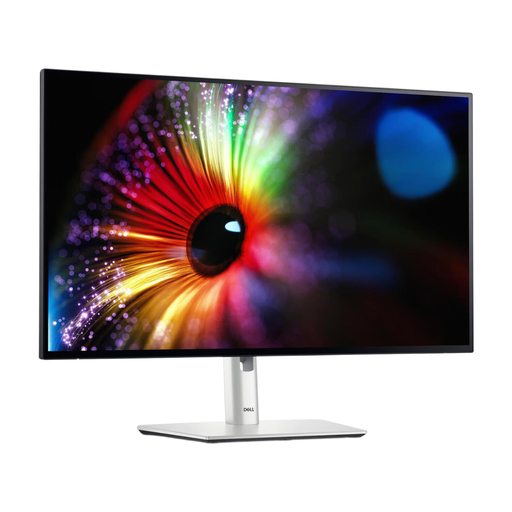 Image unavailable
A good fit if you want to view maps and notes on a 27-inch screen at a fixed table; check the screen position and text size for your own workspace.
27 inches; 2560 × 1440 pixels; Quad HD LCD.
 Image unavailable
A good fit for a fixed workstation with limited table space; the smaller physical display means you’ll need to check that map labels are easy to read.
24 inches; 2560 × 1440 pixels; Quad HD LCD.
 Image unavailable
A good fit if you want to take a second screen with you and are happy with less physical space for maps than a desktop monitor offers. Before buying, check that your chosen connection supports video and power from your laptop.
15.6 inches; 1920 × 1080 pixels; Full HD; LED.
No, 4K isn’t essential for every workshop participant. The 27-inch QHD models and 27-inch 4K model considered here have different stated pixel resolutions; screen size, viewing distance and text scaling matter too. Try your own maps and labels with the settings you plan to use.
Not without checking first. Philips says the 16B1P3302D/00 requires a laptop with DP Alt Mode for video over USB-C, and that the monitor is powered via USB. Check your laptop’s specifications and test the setup before the workshop.
Adjust the screen position, text size, contrast and lighting to suit your table and viewing distance. Arboportaal identifies small symbols, reflections and poor lighting as factors that can make text harder to read. The specific rules for display screen workstations on the government page consulted apply to employees and employers, and don’t automatically apply as requirements for someone attending a private workshop.
For a distance purchase from a business, consumers generally have 14 days to change their mind, according to the Dutch government. ACM ConsuWijzer explains that statutory warranty is separate from any manufacturer’s or additional warranty. If a product used normally doesn’t meet what you could reasonably expect, the seller is responsible for providing an appropriate solution.