
Audio editor with a small desk
You mainly work with waveforms or spectral displays and want to see your editing panels without the screen taking over your desk. Adobe explains how waveforms and spectral displays show different aspects of audio.


If you mainly edit audio, choose a monitor based on its physical fit and the space you need for waveforms, spectral displays and control panels. A wide colour gamut is not a deciding factor for this. If you also edit video, compare the resolution and colour modes with your intended output. For every model, check the stand dimensions, laptop connections and cables required too: published specifications are not an independent measurement of the colour reproduction on your particular unit.
You mainly work with waveforms or spectral displays and want to see your editing panels without the screen taking over your desk. Adobe explains how waveforms and spectral displays show different aspects of audio.
You combine recordings with footage and want to consider resolution and colour modes as well as your timeline. BenQ and ASUS list colour modes and resolutions for their specific models.
You want a compact workspace, so you check whether the monitor, stand and connections are suitable for your laptop. The listed connections and power features vary by model.
Start with the space you have and the panels you want to see at the same time while editing. Consider colour options and video features only if you also edit the footage.
| Buying concern | What to look for | Who is this most important for? |
|---|---|---|
| Space for audio timelines and panels | Compare your software layout with Full HD (1920 × 1080), 1920 × 1200 and QHD (2560 × 1440). Dell, ASUS and BenQ list these resolutions for the U2424HE, PA248QV and PD2506Q. | If I want to see waveforms, spectral displays and controls side by side, I prioritise the available screen space. Around 40% of consumers in this guide put visibility of the timeline and panels first. |
| Fit on a small desk | Measure the available width and depth, allowing for the stand and other equipment. Compare dimensions with the stand included. | On a shallow desk, I want to know how much space the stand takes up before choosing a monitor. Around 30% of consumers prioritise physical fit and adjustability. |
| Colour and detail for video | First decide whether you edit video and which colour space you need. Then compare the listed modes and resolution of the exact model; manufacturer specifications are not an independent colour measurement. | If I also edit coastal footage, I want to match the colour mode to my intended output. Around 20% of consumers put colour reproduction for possible video work ahead of other buying concerns. |
| Laptop connections and cables | Check your laptop’s video output, the monitor’s display and power features, and which cables you need. A USB hub does not automatically mean that video and power run through a single cable. | If I want to connect my laptop with as few loose cables as possible, I check the features of both devices separately. Around 10% of consumers let connection convenience decide. |
The stand takes up space too. BenQ lists a depth of 256,9 mm including the stand for the PD2506Q.
Measure the available width and depth, then compare them with the monitor’s dimensions including the stand.
Video, data and power over USB-C depend on the features of both the monitor and the laptop.
Check the ports on both devices, the required charging power and the cable separately. You may need a separate video or power connection.
A listed feature alone does not tell you how the picture will look in your chosen mode and working environment.
First decide what output you need, then check the relevant colour mode and, if your work calls for it, the calibration options on the exact model.
The PD2506Q is worth considering if you combine audio and video and want QHD on a 25-inch screen.
ASUS describes the ProArt PA248QV as a 24.1-inch 16:10 monitor for tasks including video and photo editing, offering extra vertical space in a compact screen size.
Dell describes the U2424HE as a compact hub monitor for a laptop setup.
EIZO says the ColorEdge CS2400S is designed for photo, video and graphics work, and may be worth considering if calibratable colour reproduction is a priority.
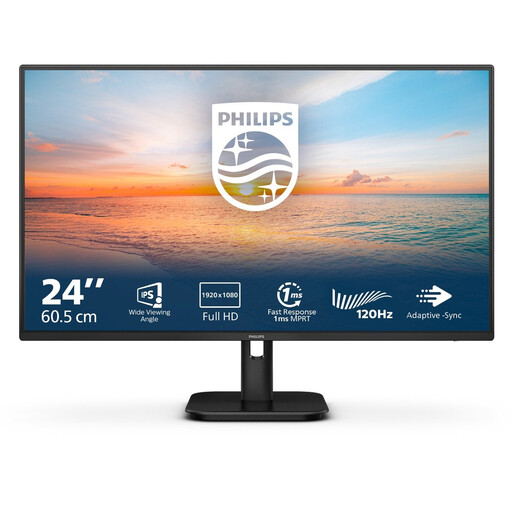
The 24BA550-B is a 23.8-inch Full HD IPS monitor with an adjustable stand, worth comparing for a setup focused mainly on audio.
These Joybuy products are compact monitor options for a setup focused mainly on audio editing.
 No image available
The 24-inch size may suit a compact audio setup; check whether Full HD gives you enough room for the panels you use at the same time.
The product name lists Full HD, an IPS panel, 100 Hz and built-in speakers.
 No image available
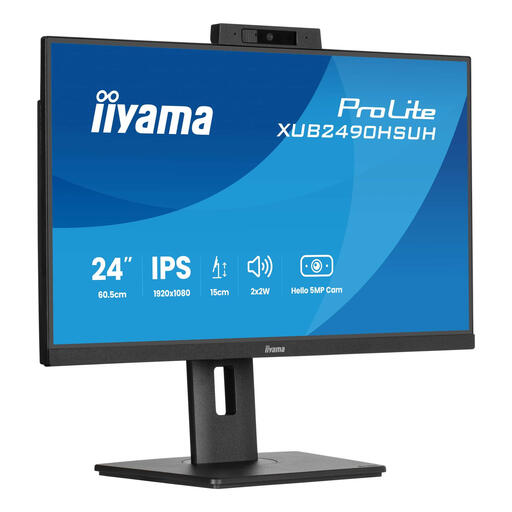
The 24-inch size may suit a compact workspace; measure the available space, including room for the stand and other equipment.
The product name lists an IPS panel, a built-in camera and a microphone. Check which video and power connections your laptop and monitor require before you buy.
Not for editing an audio waveform or spectral display on its own. If you also edit video, compare the colour modes with the image processing you intend to do.
Measure the monitor including its stand, and allow for the other equipment on your desk. For example, BenQ lists a stand depth of 256,9 mm for the PD2506Q; check the dimensions of the model you are considering.
That depends on the video and power features of both devices and on the cable. Check your laptop’s video output, the USB-C specifications of the exact monitor model, the charging power required and which cables are included.
According to the European Commission, computer monitors are covered by energy labelling rules for electronic displays, with a scale from A to G. Check the label for the specific model; do not assign an energy class based only on the brand or model name.
The Dutch government states that the Netherlands has no fixed statutory guarantee period: you are entitled to a product that works properly and can contact the seller if there is a problem. For a distance purchase from a business, you will often have 14 days to change your mind, with some exceptions; this is separate from your rights if a product is faulty.