For two wide windows side by side, a 34-inch ultrawide is an obvious choice. On a narrower desk, a 27-inch 4K monitor may be more appealing if text clarity is your priority. Check that your code and index remain readable at your preferred text scaling, and, if you use a laptop, make sure its specific USB-C port supports both video and sufficient charging power.
Which monitor is right for you?
Two-editor user
You keep code and a pattern index open at the same time, so plenty of width for both windows is your main priority. LG and Philips specify a 21:9 aspect ratio and 3440 × 1440 pixels for the ultrawide models mentioned here; check that both windows fit at your preferred text size.
Code reader with limited desk space
You read a lot of text but don’t want an extra-wide screen. Compare the 27-inch 4K Dell P2725QE with the 28.2-inch 3:2 BenQ RD280U, and see how text and lines look at your preferred scaling. Arboportaal highlights small characters and insufficient contrast as factors to consider when working with screens.
Laptop user with a dedicated workspace
You regularly connect a laptop and want to handle video, charging or peripherals with as few cables as possible. Dell, BenQ and Lenovo list different USB-C features and power outputs for specific models; compare these with the capabilities of your laptop and cable.
What should you look for when choosing?
34-inch ultrawide
A good fit if: you want to place two editors side by side and have enough desk space and viewing distance.
The trade-off: the extra space is mainly horizontal; 3440 × 1440 does not provide more vertical pixels than a QHD screen with 1440 lines of resolution.
27-inch 4K widescreen
A good fit if: you’re weighing up a less wide format and sharp text against the physical space needed for two windows.
The trade-off: the 16:9 format offers less physical width for two editors than a 34-inch ultrawide; try your preferred scaling.
Taller 3:2 screen
A good fit if: you mainly want to see long code files or index lines stacked vertically.
The trade-off: this format prioritises height over an ultrawide layout; check that two editors fit side by side at your preferred text size.
27-inch QHD with docking
A good fit if: laptop and peripheral connections matter more than maximum horizontal or vertical resolution.
The trade-off: 2560 × 1440 pixels gives you less room for two editors than the 4K and ultrawide options mentioned here.
| Consideration |
What should you check? |
Who should pay particular attention? |
| Space for two windows |
Compare the aspect ratio, resolution and dimensions; test the window width at your usual text size. |
If I keep code and a pattern index open at the same time, I want to be able to read both windows at my usual text size; around 36% of consumers prioritise space for two editors. |
| Readable code and vertical space |
Check the text at your preferred scaling and compare how many lines remain visible. |
When I read a lot of code, I want characters to be clear without having too few lines on screen; around 29% of consumers prioritise text readability. |
| Adjustability and reflections |
Check the height adjustment, stand footprint and reflections where you work. |
If I spend a long time in front of a screen, I want to adjust the setup to suit my workspace and reduce distracting reflections; around 21% of consumers prioritise their workspace setup. |
| Laptop connection |
Check video, data, power delivery and the cable for the specific laptop and monitor port. |
If I want to connect my laptop with as few separate cables as possible, I want to know whether the connection also supports charging and peripherals; around 14% of consumers make the laptop connection their top priority. |
Common mistakes when choosing
-
Comparing only the screen size or resolution
A 3:2 screen, a 16:9 4K screen and a 21:9 ultrawide distribute their pixels differently. A higher resolution alone doesn’t tell you how much usable space each editor will have after text scaling.
First, decide on your preferred text size and window layout. Then compare the aspect ratio and dimensions, and, where possible, try the layout you use every day.
-
Assuming USB-C guarantees single-cable docking
USB-C features vary by model and port. The connector alone doesn’t tell you whether the connection supports video, data and the required charging power.
Check the laptop, the specific monitor port and the cable together. Don’t assume it will charge your laptop just because it has a USB-C connection.
-
Ignoring your workspace when choosing a monitor
Reflections and small characters can affect how easy it is to read on-screen. The right monitor setup also depends on where you work and how much desk space you have.
Check the height adjustment and positioning in relation to windows in the workspace where you plan to use the monitor. Take breaks from screen work.
-
Confusing the manufacturer’s warranty with your statutory rights
A commercial warranty does not necessarily determine how long you can claim under Dutch statutory guarantee rules. According to ACM ConsuWijzer, the seller remains responsible for providing an appropriate solution if a product is faulty.
Keep your proof of purchase and product specifications, and contact the seller if the product is faulty.
Brands to compare
LG
The LG 34BA75QE-B is a 34-inch ultrawide option for two windows. LG lists USB-C with 90 W Power Delivery for this model.
- LG specifies a 21:9 aspect ratio and 3440 × 1440 resolution; the extra space is mainly horizontal.
- More efficient working is a manufacturer claim, not an independent measurement for this coding task. Check the width of both editors at your preferred text size.
Dell
The Dell P2725QE combines a 27-inch 4K screen with USB-C hub features for those who want both clear text and laptop connectivity.
- Dell specifies 3840 × 2160 pixels, 90 W USB-C and height adjustment for this model.
- Check the text scaling and the remaining width for each editor; these features apply to the P2725QE and don’t automatically apply to other Dell monitors.
BenQ
The BenQ RD280U is a 28.2-inch 3:2 screen for those who need vertical space for code and index lines.
- BenQ specifies 3840 × 2560 pixels, a matte coating and USB-C video with 90 W power delivery.
- Decide for yourself whether there’s enough width for two editors. Claims about concentration or reduced eye strain are not treated here as proven effects.
Philips
The Philips 34B2U3600C/00 is a 34-inch ultrawide option with connectivity features for a laptop workspace.
- Philips specifies 3440 × 1440 pixels, a VA panel, USB-C, ethernet and Smart KVM for this model.
- Check the connections and your intended window layout for the specific model before making your choice.
Lenovo
The Lenovo ThinkVision P27h-30 is a 27-inch QHD model for those who prioritise docking and peripheral connections.
- Lenovo specifies 2560 × 1440 pixels, USB-C docking, ethernet and KVM for this model.
- Its resolution offers fewer pixels for your window layout than the 4K and ultrawide models mentioned here.
Joybuy monitors for editors side by side
This Joybuy selection includes wide ultrawide and Dual QHD models for editors side by side, plus a 27-inch 4K monitor for those considering a narrower format.
 No image available
Philips 34B2U5900C/00 34-inch Dual-Mode monitor
A 34-inch 21:9 screen for those who want to arrange two windows side by side across a wide display.
The product description lists Dual Mode: 5120 × 2160 at 120 Hz or 2560 × 1080 at 240 Hz. USB-C, KVM and ethernet are also listed. The curved screen needs enough desk space.
View at Joybuy
 No image available
iiyama G-MASTER 45-inch Dual QHD VA
The wide Dual QHD layout is designed for those who want to use several windows side by side and value laptop and peripheral connections.
The stated resolution is 5120 × 1440. The product name lists a KVM switch, USB-C dock, RJ45 and a height-adjustable stand. The 44.5-inch screen needs a wide workspace.
View at Joybuy
 No image available
LG 34WR50QK-B 34-inch ultrawide monitor
A 21:9 model for code and a pattern index you want to place side by side across a wide display; bear in mind the desk space required.
The product name lists 3440 × 1440 pixels. The product description mentions 100 Hz and Picture-by-Picture.
View at Joybuy
 No image available
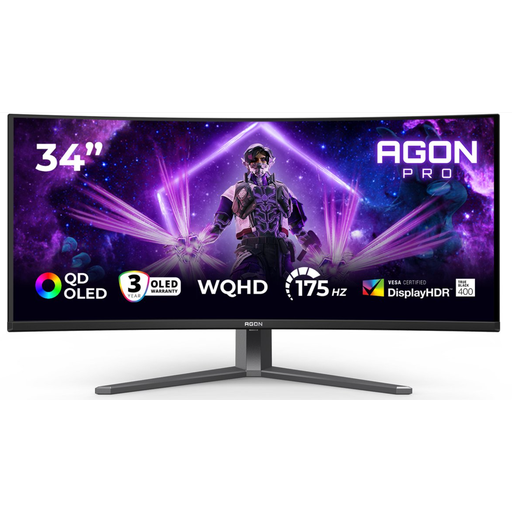
AOC AGON PRO AG346UCD 34-inch monitor
The 34-inch 21:9 layout gives you room to place editors side by side; consider how much width you have on your desk.
The product name lists 3440 × 1440 pixels, two HDMI connections and DisplayPort. The stated refresh rates are 175 Hz via DisplayPort and 100 Hz via HDMI. The description mentions height, swivel and tilt adjustment, as well as a USB hub.
View at Joybuy
 No image available
Philips 27E1N1800AE/00 27-inch 4K UHD IPS monitor
A 27-inch option to consider if you’re looking for a 4K screen in a less wide format; test whether two editors fit at your preferred scaling.
The product name lists 3840 × 2160 pixels, 60 Hz, 4 ms, HDMI, DisplayPort and a height-adjustable stand.
View at Joybuy
Frequently asked questions
Do you need 4K to place two editors side by side?
No, don’t choose based on pixel count alone. Also compare the physical width and aspect ratio, and see how much space remains for each window after applying your text scaling. The 34-inch ultrawide models mentioned here have a 21:9 aspect ratio and 3440 × 1440 pixels; the Dell P2725QE has a 16:9 aspect ratio and 3840 × 2160 pixels.
How do you set up a monitor for reading code for long periods?
Adjust the text size and workspace to suit your needs, reduce reflections and take breaks from screen work. These are practical considerations, not a guarantee that a particular screen will prevent discomfort. Arboportaal highlights small characters and a lack of contrast as factors to consider when working with screens.
Will every USB-C monitor charge your laptop?
No. USB-C features and power outputs vary by model. Before relying on a single cable, compare the video and charging specifications of the specific monitor port with those of your laptop and cable.
What cancellation period and guarantee apply to an online purchase in the Netherlands?
For online purchases from a business, you generally have a 14-day cooling-off period, according to the Dutch government; check the terms and exceptions that apply to your purchase. You also have statutory guarantee rights if a product is faulty. ACM ConsuWijzer points out that the seller is responsible for providing an appropriate solution.


