If you’ll be working at one table for most of the workshop, a desktop monitor is the obvious choice. If you’ll be moving between locations, a portable second screen is a better fit. Only prioritise colour-focused features if colour assessment is genuinely part of your task, and check in advance that your laptop, cable, power supply and workspace are compatible with the monitor.
Who is this guide for?
Map researcher working at a fixed desk
Wants to view the map and layer overview side by side during the workshop. Screen space and an adjustable setup matter more than portability. QGIS Documentation describes the map view and layers panel; Dell Netherlands lists the features of the P2725DE.
Workshop attendee who moves between locations
Brings a laptop to different tables and wants a portable second screen, provided the laptop and connection support it. ASUS Netherlands lists the specifications of the ZenScreen MB16ACV.
Designer who assesses colour
Compares colours in maps or visualisations and wants to assess documented colour modes and calibration information. BenQ lists these features for the PD2705Q.
What should you consider when choosing?
Desktop monitor for a fixed workspace
Choose this option: if you’ll be looking at maps and layers at the same table for an extended period; a 27-inch QHD model gives you a fixed screen setup to assess.
Bear in mind: you’ll need enough desk space, and this type of screen is less convenient to move between workshop locations.
Portable second screen
Choose this option: if you move between tables and want to extend your laptop screen.
Bear in mind: it offers less physical map space than a 27-inch desktop monitor; also check the video connection and power supply.
Monitor with colour-focused features
Choose this option: if you’ll be deliberately assessing colour differences in maps or design visualisations.
Bear in mind: manufacturer information about colour is not an independent measurement of your individual monitor or working conditions.
4K desktop monitor
Choose this option: if you want to see extra pixel detail at a fixed workstation and your computer supports the display you need.
Bear in mind: more pixels don’t automatically mean more usable space; scaling settings and readability still matter.
For this workshop, the main considerations are an overview of the map, portability, a working laptop connection and whether colour assessment is part of the task.
| Consideration |
What to look for |
Best suited to |
| Map and layers overview |
Compare screen size, resolution, readable scaling and the space needed for the stand. |
If I want to see the map, legend and layers panel at the same time, usable screen space matters more than portability. Around 36% of consumers are mainly concerned with having a good overview of the map. |
| Moving between locations |
Check the dimensions and weight, the support or stand, and how the screen is powered. |
Anyone moving between tables during the workshop will want to take the screen with them and should expect less map space. Around 29% of consumers prioritise portability. |
| Connecting a laptop |
Check the video capabilities of the laptop port, the cable, the monitor input and the power required. |
I want to know before the workshop starts whether my laptop can output video and whether the setup can be powered. Around 21% of consumers are mainly concerned with connection reliability. |
| Assessing colour |
Check the stated colour gamut and modes for the exact model; decide whether you also need to assess another display or a printout. |
If colour differentiation is part of my task, I want to be able to assess the model’s colour information. Around 14% of consumers prioritise colour assessment. |
Common mistakes when choosing
-
Assuming every USB-C port carries video and power
A matching connector doesn’t automatically mean that the laptop can output video through that port or that the monitor can be powered through it.
Check the laptop output, cable, monitor port and power requirements together, and test the setup before the workshop.
-
Choosing based on resolution alone
A larger screen can give you more room for maps and panels, but it also needs more desk space. Native resolution alone doesn’t tell you whether text and map details will be comfortable to read at your chosen scaling.
Compare resolution alongside screen size, scaling settings, portability and the space available in your workspace.
-
Treating the manufacturer’s colour information as an independent test
The colour coverage and calibration report listed by BenQ for the PD2705Q are not measurements of your individual monitor or working conditions.
First decide whether accurate colour differentiation is part of your task, then assess the information for the exact model.
Brands and models to consider
Dell
The P2725DE is a 27-inch QHD desktop monitor with a USB-C hub, designed for a fixed workspace.
- Dell lists a resolution of 2560 × 1440 pixels, USB-C with up to 90 W of power delivery and height adjustment for this model.
- Check that your laptop and cable are compatible, and that you have enough desk space.
ASUS
The ZenScreen MB16ACV is a portable second screen for workspaces that change throughout the day.
- ASUS lists a 15.6-inch Full HD screen, a net weight of 0.9 kg and USB-C with DisplayPort Alt Mode.
- According to the specifications, this model has no height adjustment; also check that it connects to your laptop.
BenQ
The PD2705Q is a 27-inch QHD monitor with design-focused features.
- BenQ lists 100% sRGB, a CAD/CAM mode, a factory calibration report and USB-C with 65 W Power Delivery.
- This colour and calibration information comes from the manufacturer; it doesn’t prove how colours will look in your conditions.
EIZO
The FlexScan EV2740X is a 27-inch 4K desktop monitor for a fixed setup.
- EIZO lists a resolution of 3840 × 2160 pixels and USB-C with up to 94 W of power delivery.
- Check on your own laptop that scaling settings keep text and map details readable.
Philips
The Business Monitor 27B1U5601H/00 combines a 27-inch QHD screen with USB-C docking.
- Philips lists a built-in 5 MP webcam for this model, which may be useful if the workshop also includes online meetings.
- The webcam alone is no proof of colour performance or of the suitability of the complete workshop setup.
Monitors at Joybuy
This selection includes portable second screens and desktop monitors, with QHD and 4K options for map and design work.
 No image available
TECLAST V16H 16-inch portable monitor
A portable second screen to consider if you’ll be moving between locations during the workshop; its 16-inch screen offers less physical map space than the 27-inch desktop monitors in this selection.
The product name lists Full HD, an IPS screen, two USB-C ports, Mini HDMI and an integrated kickstand.
View at Joybuy
 No image available
AOC G4 Q27G4ZR 27-inch QHD monitor
A 27-inch QHD screen to consider for viewing maps and panels at a fixed desk.
The product name lists a resolution of 2560 × 1440 pixels, Quad HD and an LED screen.
View at Joybuy
 No image available
MSI Modern MD272UPHG 27-inch 4K monitor
A desktop monitor to consider if you’re looking at a 27-inch 4K screen for map or design work.
The product name lists a resolution of 3840 × 2160 pixels and 4K Ultra HD.
View at Joybuy
 No image available
INNOCN CB27U1 27-inch 4K monitor
A fixed-workspace option to consider if you want to view extra pixel detail or multiple image sources.
The product name lists a resolution of 3840 × 2160 pixels, an IPS screen, USB-C with 90 W Power Delivery, HDMI, DisplayPort and a height-adjustable stand.
View at Joybuy
 No image available
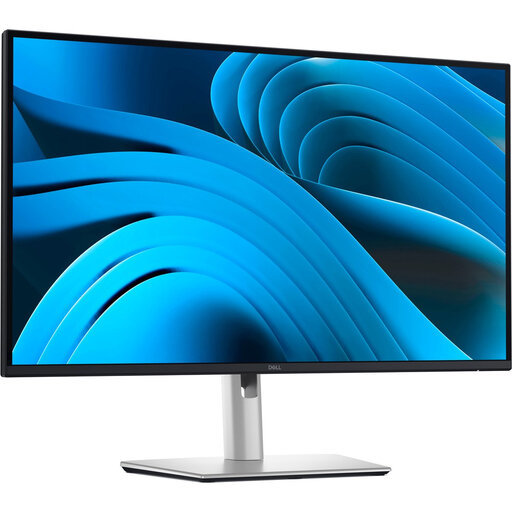
Dell Pro Plus P2725DE 27-inch QHD monitor
A desktop monitor to consider if you want to view maps and panels at a fixed desk.
Dell lists a resolution of 2560 × 1440 pixels, a USB-C hub with up to 90 W of power delivery and a height-adjustable stand. Check that your laptop and cable are compatible with the connection.
View at Joybuy
Frequently asked questions
Should you go straight for a 4K monitor for map work?
No, not automatically. First work out how much space maps and panels take up at a scaling level you find readable. The Dell P2725DE is a 27-inch QHD monitor; the EIZO EV2740X is also 27 inches but has 4K resolution. The extra pixels don’t mean that 4K is the better choice for every workshop attendee.
Can you use a portable screen with any USB-C port?
Don’t assume so. ASUS lists a USB-C input with DisplayPort Alt Mode for the ZenScreen MB16ACV. Check that the laptop output, cable and available power are compatible with the connection, and test them together before the workshop.
How should you set up a fixed workstation for extended screen use?
Position the screen for comfortable viewing, reduce distracting reflections, and adjust the lighting and contrast to suit your workspace. Where possible, take breaks from screen work. Arboportaal sets out employers’ legal responsibilities towards employees who work with display screen equipment; these workplace rules do not automatically mean that every workshop attendee has a personal obligation to buy something.
What are your rights when buying a monitor online in the Netherlands?
For online consumer purchases, you generally have a statutory cooling-off period that ends 14 days after delivery, subject to applicable exceptions. You’re also entitled to a product that is of satisfactory quality; this is separate from the cooling-off period for a purchase made by choice. ACM ConsuWijzer explains these consumer rights. Check the terms that apply to your order.
What should you do with an old monitor, and how can you compare energy consumption?
Take discarded electrical equipment to an appropriate collection point. If you buy a similar new product, the Dutch government also describes a take-back scheme for old-for-new exchanges. The European Commission says that computer monitors are covered by the energy labelling rules for electronic displays. Compare the labels for the exact models rather than relying only on letter ratings across different screen sizes.


