
Form designer who works with multiple windows
You want to view your design, browser and reference materials side by side. Also check that the form layout works well on narrow screens; the W3C describes reflow as a separate accessibility check.


Choose a monitor to suit your main priority: room for multiple windows, colour assessment, an adjustable workstation or the right connection for your laptop. A larger screen is no substitute for testing your form at narrow screen widths. Also check the space available on your desk and the ports on the exact model.
You want to view your design, browser and reference materials side by side. Also check that the form layout works well on narrow screens; the W3C describes reflow as a separate accessibility check.
You also assess colours and visual consistency. The stated sRGB coverage of the ASUS PA278QV and BenQ PD2705Q may be relevant, but it doesn’t tell you how the form will appear on every other screen.
You combine form work with other tasks and want to adapt your screen position, desk space and laptop connection to your workspace. Whether employee regulations apply depends on your working situation.
Start with the limitation you notice most often in your work, then check that the size, connections and adjustability suit your desk and laptop.
| What to consider | What should you check? | Who is this important for? |
|---|---|---|
| Workspace for design and browser | Compare the screen width, resolution and your usual window layout. Also test the form at a narrow screen width. | If I want to see my design, browser and references at the same time, I need room to arrange windows side by side; around 33% of consumers say workspace is their main purchasing need. |
| Colour and visual assessment | Check the stated sRGB coverage and any factory calibration for the exact model. Also assess text and controls separately from colour. | If I assess brand colours and visual elements, I want to know which colour space the model specifies; around 25% of consumers say colour assessment is their main purchasing need. |
| Adjustability for a home workspace | Measure the available space and check the height adjustment, stand dimensions and position in relation to windows. | If I work from home regularly, I want to be able to position the screen to suit my desk; around 25% of consumers say posture is their main purchasing need. |
| Laptop connection | Check whether your laptop outputs video through the port you plan to use and how many watts of charging power it needs. | If I want to use my laptop with as few separate connections as possible, I check that the monitor, laptop and cable support the same functions; around 17% of consumers say laptop connectivity is their main purchasing need. |
Extra screen width can help you display windows side by side, but it won’t automatically show how labels and fields behave at a narrow screen width.
Check the form layout separately at a narrow viewport and with magnification. The W3C describes reflow at a width equivalent to 320 CSS pixels.
The video functionality and charging capacity you need vary depending on the monitor and laptop combination.
Compare your laptop’s requirements with the port specifications and charging power of the exact monitor model. Also check which cable you need.
A stated sRGB coverage figure alone doesn’t tell you whether form labels, instructions and controls will be usable for visitors.
Assess colour reproduction separately, and also check the labels and form behaviour on narrow screens.
According to ACM ConsuWijzer, your statutory rights exist alongside a manufacturer’s or seller’s warranty.
Read the terms of any additional cover and compare them with your statutory rights.
These models illustrate different considerations. Brand mentions are not recommendations for an entire range or statements about availability.
The Pro Plus P2725DE is an example of a fixed 27-inch QHD workstation with USB-C.
ASUS says the ProArt PA278QV is designed for visual design work, with QHD resolution and sRGB coverage.
According to BenQ, the Creative Pro PD2705Q combines a 27-inch QHD screen with USB-C.
The 27E1N5600AE/00 is a QHD model with USB-C for a compatible laptop.
The 34WR55QK-B illustrates a wide 21:9 layout for arranging windows side by side.
This selection includes wide ultrawide monitors for arranging windows side by side, as well as 27-inch QHD options for a fixed workstation. For a wide model, check that your desk has enough space.
 No image available
For anyone looking for a wide monitor layout and wanting to connect a laptop using a compatible USB-C connection.
34.1 inches, WQHD, IPS, USB-C hub, webcam, 100 Hz and 90 W Power Delivery, according to the product name.
 No image available
An option to compare if you’re looking for a curved 34-inch monitor for a wide workspace layout.
34 inches, curved, dual-mode and business monitor, according to the product name. Bear in mind the desk space you’ll need.
 No image available
A 27-inch QHD option to compare if you’re looking for a fixed workstation monitor and colour coverage is a consideration.
The product name lists 2560 × 1440 pixels, 99% sRGB, Adobe RGB 99%, 275 Hz, 1 ms and a height-adjustable stand.
 No image available
For anyone wanting to arrange multiple windows on one wide screen; check that it will fit on your desk first.
49 inches, 5120 × 1440 pixels and LCD, according to the product name.
 No image available
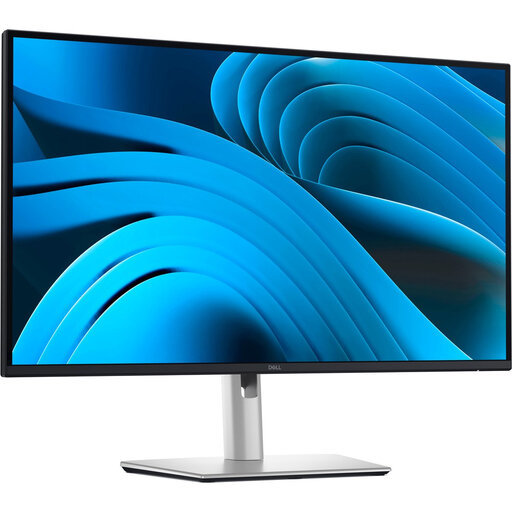
A fixed 27-inch option for anyone wanting to view their design and browser side by side. Check that your laptop supports the connection you need.
27 inches and 2560 × 1440 pixels. Dell specifies USB-C with 90 W Power Delivery for this model.
No. Check the form layout separately at a narrow screen width too. The W3C describes reflow at a width equivalent to 320 CSS pixels and recommends labels for form fields; a monitor can’t guarantee these design checks.
This only works if the monitor, laptop and cable support the video, data and power functions required. BenQ lists DisplayPort Alt Mode, data and 65 W Power Delivery for the PD2705Q; check which functions and charging capacity your laptop needs.
Check that you can position and adjust the screen to suit your workspace, and watch out for distracting reflections. Arboportaal outlines regulations for employees who work with display screens for more than two hours a day; whether these apply depends on the working situation. The Dutch government also outlines an employer’s duty of care to provide a safe home workspace.
According to ACM ConsuWijzer, consumers making an online purchase generally have a statutory cooling-off period of up to 14 days after delivery, subject to legal exceptions. The statutory guarantee is separate from any manufacturer’s warranty; in the Netherlands, there is no fixed general two-year period for the statutory guarantee.
No. Your choice depends on your workspace layout, colour assessment, desk and laptop. Official guidance on display screen work concerns applicable employee workspaces, not a specific required brand or a universal resolution for contact forms.