
Simulation developer
You view contact points, objects and settings side by side, and want a clear workspace for debugging. Unity documents separate views for collision geometry and contact data.


Start with what you want to view. For debugging contact points across multiple windows, readability and screen space matter most, while a higher refresh rate can be useful for fast-moving visuals. It won’t make a simulation or recording itself more accurate. Also check that your computer and connection support the picture settings you want, and consider the noise and adjustability of your complete workstation.
You view contact points, objects and settings side by side, and want a clear workspace for debugging. Unity documents separate views for collision geometry and contact data.
You follow fast-moving simulations or recordings and want to know whether a higher screen refresh rate helps with what you see. Just don’t confuse it with a recording’s frame rate or the simulation’s calculation speed.
You work for long periods at a compact, quiet desk and pay attention to screen position, connections and potential sources of noise across your whole setup. Connection and adjustability specifications alone don’t tell you whether a product will make audible noise.
First decide whether readable debugging details, moving images or a practical desk setup is your priority. Then check that your computer’s connections and settings are compatible with the monitor.
| What to consider | What should you check? | Who is this important for? |
|---|---|---|
| Readable collision details | Check the screen size, resolution, scaling settings and available desk space. A 27-inch QHD screen is one possible option, not a fixed minimum. | If I want to view contact points and settings at the same time, readable details and room for multiple windows are useful. Around 33% of consumers prioritise readability as their main need. |
| Fast-moving visuals | Compare the stated refresh rate with what your computer, cable, connection and video source can deliver. Only compare response-time claims if they use the same measurement definitions. | If I follow fast-moving test visuals, I look at how the screen displays them, not just at a high number. Around 27% of consumers prioritise motion handling as their main need. |
| Quiet, adjustable workspace | Check the height and tilt adjustments, the space on your desk and any specific noise information for the exact model. If possible, assess the complete setup in a quiet room. | If I work for long periods at a quiet desk, I want to position the screen comfortably and take account of any audible components in the whole setup. Around 20% of consumers prioritise a quiet workspace as their main need. |
| Connections and everyday use | Check that your computer supports video through the port you plan to use, and that the power delivery is suitable for your laptop. Also check the energy label and distinguish between the manufacturer’s warranty and your statutory rights. | If I want to use my laptop with as few separate connections as possible, I check video support and power delivery together. Around 20% of consumers prioritise suitable connections as their main need. |
A monitor doesn’t add physical measurement data to a recording. Unity distinguishes between displaying images and the fixed time steps used to update a physics simulation.
First decide whether you’re viewing a simulation or recording a physical collision. Then check the settings or recording equipment relevant to that task.
AOC lists 180 Hz and an MPRT response time of 0.5 ms for the Q27G4XF. These model specifications don’t automatically tell you what the picture will look like with your source and settings.
Check how the response time is defined, and whether your computer and connection support your chosen resolution and refresh rate.
Video capabilities and power limits vary by model, and need to be suitable for your laptop. A one-cable setup may also require a compatible cable.
Compare the specifications of both devices and check the cable before relying on one connection for video and charging.
According to ACM ConsuWijzer, statutory consumer rights in the Netherlands apply alongside any warranty from the retailer or manufacturer. There is no fixed general period for these statutory rights.
Keep your proof of purchase and, if something goes wrong, contact the retailer about your statutory rights.
The UltraSharp U2724D is a QHD work monitor for anyone looking to combine plenty of workspace with a higher refresh rate.
The AGON by AOC Q27G4XF is aimed at anyone who values a higher stated refresh rate.
According to EIZO, the FlexScan EV2795 combines QHD with USB-C docking and a LAN connection.
The PD2705Q is a QHD monitor for anyone who values work-focused features and USB-C.
The ProArt Display PA278QV offers QHD and a range of adjustment options for a desk that’s also used for design work.
The models below are monitors with stated refresh rates for viewing fast-moving simulations. The screen refresh rate doesn’t change the task’s measurement or calculation frequency.
 No image available
For viewing fast-moving visuals; the product information lists a 27-inch QHD screen (2560 × 1440) and 180 Hz refresh rate.
Connections listed in the product information: 2× HDMI 2.0 and 1× DisplayPort 1.4.
 No image available
For fast-moving visuals; the product information lists a 27-inch QHD screen (2560 × 1440) with a native 240 Hz refresh rate, overclockable to 260 Hz.
The product information lists HDMI 2.0, DisplayPort 1.4 and height, tilt, swivel and pivot adjustment.
 No image available
For detailed, fast-moving visuals; the product information lists a 26.5-inch QD-OLED screen, QHD (2560 × 1440) and 240 Hz.
The product information lists HDMI 2.1, DisplayPort 1.4, a USB hub and an adjustable stand.
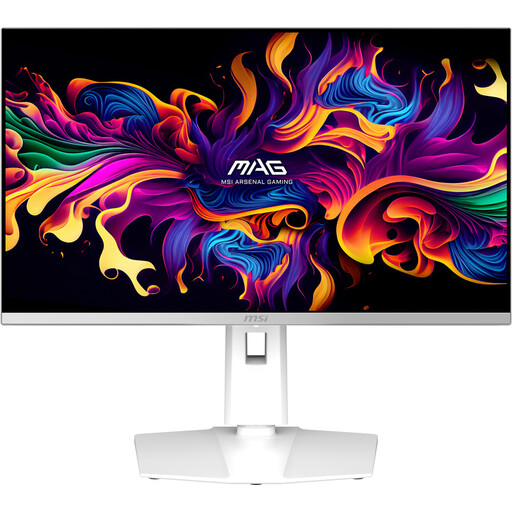 No image available
For detailed, fast-changing visuals; the product information lists a 27-inch QHD screen (2560 × 1440) and 280 Hz.
The product information lists USB-C with DisplayPort Alt Mode and up to 15 W power delivery, plus height, tilt, swivel and pivot adjustment.
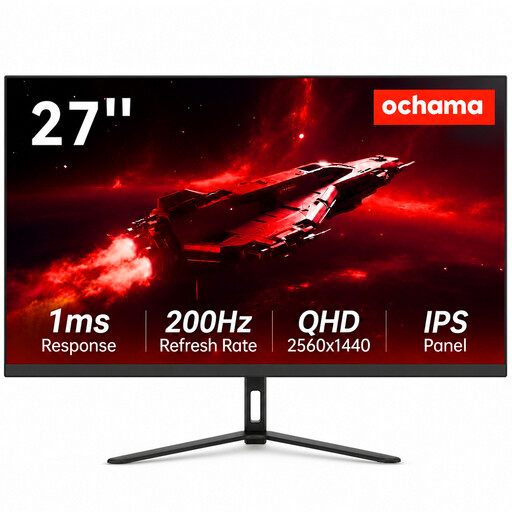 No image available
For viewing fast-moving visuals; the product title lists a 27-inch screen, 2K Ultra HD and a 200 Hz refresh rate.
No, not by itself. The monitor refreshes the image on screen; Unity describes the physics calculation as updates at fixed time intervals. A higher screen refresh rate may be a different choice for how the image is displayed, but it doesn’t replace checking the simulation settings.
Only if your laptop’s USB-C port supports video and provides suitable power delivery. BenQ lists DisplayPort Alt Mode and 65 W Power Delivery for the PD2705Q; EIZO lists up to 70 W via USB-C for the EV2795. Check which cable you’ll need, too.
Use the available height and tilt adjustments to position the screen to suit your workspace, and follow the chosen model’s instructions for cleaning. Arboportaal notes that working at a screen for long periods can lead to health problems.
For a standard online consumer purchase, you generally have a statutory 14-day cooling-off period after delivery, although exceptions may apply depending on the purchase. ACM ConsuWijzer states that Dutch statutory consumer rights have no fixed general duration: what you could reasonably expect from the product and how it is normally used are what matter. These rights are separate from any manufacturer’s warranty that may be listed.
According to the European Commission, computer monitors use the energy labels for electronic displays, on a scale from A to G. Compare the label for the exact model; the refresh rate alone doesn’t tell you how much energy it uses.