
Developer juggling multiple windows
You want to keep an eye on your recipe interface, code and test output while you work. Consider whether you mainly need more width, more height or a standard screen size.


A 27-inch QHD screen is a practical starting point for code, test output and a browser window. Choose 3:2 if you mainly want more vertical space, or ultrawide if you want to arrange windows side by side. BenQ specifies the RD280U as a 28.2-inch 3:2 screen with a resolution of 3840 × 2560 pixels, while LG lists 3440 × 1440 pixels for the 34WR55QC-B. If you use a laptop, check its video output and charging capacity: a monitor displays test results, but it doesn’t run automated tests or replace checks on other screen sizes.
You want to keep an eye on your recipe interface, code and test output while you work. Consider whether you mainly need more width, more height or a standard screen size.
You want to connect an external screen and perhaps charge your laptop over the same USB-C connection. What that connection can do for your workspace depends on your laptop, cable and exact monitor model.
You review text, images and the layout of recipe pages, and also want to check how the interface works on other screen sizes.
A good fit if: you want to view code, test output and a browser window on a standard desktop-sized screen. Dell Netherlands lists a resolution of 2560 × 1440 pixels for the P2725DE; Philips Netherlands gives the same resolution for the 27E1N1600AE/00.
Bear in mind: the models mentioned have fewer horizontal pixels than the LG 34WR55QC-B, with its 3440 × 1440 pixels, and fewer pixels than the 4K models mentioned.
A good fit if: you mainly want to see more lines of code, tests or documentation vertically. BenQ specifies the RD280U as a 28.2-inch screen with a 3:2 aspect ratio and a resolution of 3840 × 2560 pixels.
Bear in mind: this aspect ratio doesn’t give you the same emphasis on horizontal space as an ultrawide screen.
A good fit if: extra detail in images or text matters to you. LG lists a resolution of 3840 × 2160 pixels for the 27UP850K-W.
Bear in mind: check that your computer supports the resolution you choose and that text and the interface remain comfortable to read at your preferred scaling setting.
A good fit if: you want to place your editor, test output and a browser preview side by side, for example. LG lists a resolution of 3440 × 1440 pixels for the 34WR55QC-B.
Bear in mind: compare the external dimensions with your desk, and think about how many windows you’ll actually use at once.
| What to consider | What to look for | Who is this most important for? |
|---|---|---|
| Room for windows | Sketch out the windows you use at the same time, then compare the aspect ratio, resolution and external dimensions. | If I want to see my editor, browser and test output at the same time, I first look at the screen layout and width; around 33% of consumers prioritise room for multiple development windows. |
| Text readability | Compare the resolution and check how code and test output look at the scaling setting you want to use. | If I read long passages of code or test text, I want them to remain comfortable to read at my preferred scaling; around 27% of consumers prioritise code and test text readability. |
| Laptop connection | Check video output through your laptop’s port, the power required, the exact screen’s Power Delivery and the cable. | If I want to use my laptop with as few separate connections as possible, I first check that the port supports video and provides enough power; around 20% of consumers prioritise connection convenience. |
| Screen position | Check the height adjustment and the dimensions of the screen and stand; also consider your viewing position and the light in the room. | If the monitor stays in the same workspace for long periods, I want to be able to adjust its position to suit my desk; around 13% of consumers prioritise screen position and placement. |
| Images and interface | Compare the resolution and scaling. Also check responsive layouts using different viewport settings and, where necessary, real devices. | If I’m reviewing recipe images and interface examples, I focus on visible detail and test the mobile layout separately; around 7% of consumers prioritise image quality assessment. |
A desktop monitor won’t automatically show you how a recipe page works on a phone. Chrome for Developers describes device mode as an initial approximation of the display; simulation doesn’t always replace checking on a real device.
Use the monitor to get an overview and review your work, then also plan checks on different screen sizes and, where necessary, real devices.
You’ll still need time to check the interface on other screen sizes.
A USB-C port doesn’t automatically mean your laptop can output video through it or receive enough power. Capabilities and stated charging capacity vary by monitor model.
Before buying, compare your laptop’s video output, the cable, and the features and charging capacity of the exact screen.
Depending on the connections available, you may need a different cable, power adapter or connection.
According to ACM ConsuWijzer, statutory consumer rights in the Netherlands apply alongside any guarantee offered by the retailer or manufacturer. What you can reasonably expect from a product is also taken into account when assessing a claim.
Keep your proof of purchase and contact the retailer first if there’s a fault.
According to Dell Netherlands, the P2725DE is a 27-inch QHD USB-C hub monitor for a laptop workspace.
According to Philips Netherlands, the 27E1N1600AE/00 is a 27-inch QHD model with USB-C.
According to BenQ, the RD280U is a 28.2-inch coding monitor with a 3:2 aspect ratio.
The LG models mentioned offer different formats: 27-inch 4K and ultrawide.
This selection includes QHD and 4K models, as well as ultrawide monitors for viewing code, test output and your recipe interface.
 No image available
A 27-inch QHD screen for a standard desktop layout with development windows.
Listed as 2K WQHD, 200 Hz and Rapid IPS.
 No image available
A 27-inch QHD model for code, test output and a browser window on one screen.
Listed as 2560 × 1440 pixels, 180 Hz, 1 ms, FreeSync Prem. and HDR10.
 No image available
A 27-inch 4K model for viewing code and interface examples when extra image detail matters to you.
Listed as having a 4K IPS panel.
 No image available
An ultrawide model for anyone who wants to place their editor, test output and a browser preview side by side.
The product name lists a USB-C hub, webcam, 100 Hz and 90 W Power Delivery.
 No image available
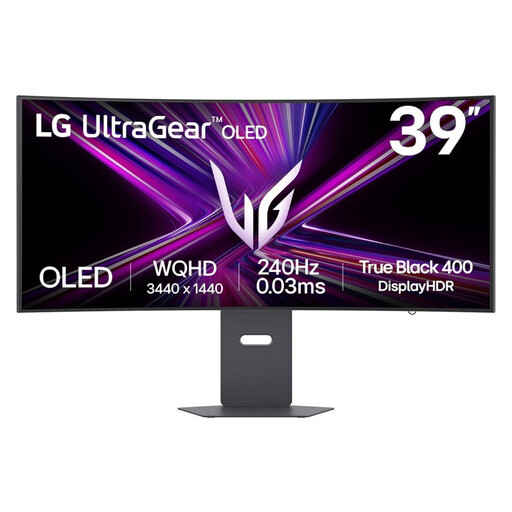
An ultrawide model for a workspace where you want to view several development windows side by side.
The product name lists a screen size of 39 inches.
No, not on its own: a monitor displays the test output, while test software runs the checks. Playwright describes, among other things, how to set screen sizes and viewports; simulation doesn’t always replace checking on a real mobile device.
Check whether your laptop can output video through the port you plan to use, compare the power it needs with the exact screen’s Power Delivery, and use a suitable cable. Dell Netherlands lists 90 W for the P2725DE, BenQ Netherlands lists 90 W for the RD280U, and LG Netherlands lists 65 W for the 34WR55QC-B.
Check the page using mobile viewport settings and, where necessary, test it on a real mobile device too. Chrome for Developers describes device mode as an initial approximation of the display, not a complete substitute for checking on a device.
Adjust the screen position and lighting to suit your workspace, and alternate screen-based work with tasks that don’t require a screen. Arboportaal also describes regulations for employees’ screen workstations; these aren’t the same as a general legal purchasing rule for every individual user.
In the Netherlands, employers must follow regulations for screen workstations. Arboportaal lists requirements including adjustability and reflections; these aren’t a single legal purchasing requirement for every individual buyer.