What should you look for when buying?
Start by comparing greyscale performance and calibration options, then decide how much weight to give to print work, 4K detail and sharing the workspace.
Specialist photography monitor
Best if: you regularly assess subtle gradations of grey or prepare portraits for printing. EIZO lists an integrated calibration sensor for the ColorEdge CG2700S; BenQ lists hardware calibration for the SW272U.
Trade-off: according to EIZO, the CG2700S has a resolution of 2560 × 1440 on a 27-inch screen, compared with 3840 × 2160 on the 27-inch BenQ SW272U, according to BenQ. Calibration won’t correct uneven display uniformity.
Flexible creative 4K monitor
Best if: you value a 4K workspace, a compact stand and a laptop connection. ASUS lists factory calibration and 96 W USB-C power delivery for the ProArt PA279CRV.
Trade-off: the factory specification doesn’t prove how greys or uniformity will look in your lighting. Also check that your laptop’s USB-C port supports video.
Workspace monitor with hub features
Best if: switching quickly between computers and having an adjustable 4K workspace are your priorities. Dell positions the UltraSharp U2725QE as a 27-inch 4K Thunderbolt hub monitor.
Trade-off: the listed hub features don’t, in themselves, tell you anything about a specialist calibration workflow. Assess greyscale gradients and reflections separately before choosing this screen for critical portrait retouching.
| Consideration |
What should you check? |
Who should prioritise this? |
| Greys and shadows |
Compare calibration options and uniformity; view neutral greyscale gradients and dark details in your intended workspace. |
I want to assess skin, shadows and neutral greyscale gradients reliably, even after the monitor has been reset. That’s why around 33% of consumers put reliable greys at the top of their list. |
| A shared desk |
Check height adjustment, stand dimensions, reflections and ports; make sure the laptop can output a picture through the connection you plan to use. |
If I share my workspace, I want to adjust the viewing position quickly and connect my laptop easily. Around 27% of consumers give a shared workspace top priority. |
| Print workflow |
Check that screen calibration and profiling suit your paper, printer settings and viewing light. |
I print portraits and want to match my screen settings to that workflow. Around 20% of consumers put print matching first. |
| Room for detail |
Compare the resolution of the exact model and check that the screen size and scaling work for your desk. |
I want to work with details and tool panels comfortably, while checking greyscale performance separately. Around 20% of consumers give room for detail top priority. |
Joybuy products for this workspace
This selection focuses on 4K monitors for portrait editing and a shared workspace. Resolution alone doesn’t tell you how evenly the screen displays greys.
 No image available
LG UltraFine 27U711B-B 27" 4K IPS monitor
An option if you’re looking for 4K detail for photo editing.
27 inches; 4K resolution; IPS panel.
View at Joybuy
 No image available
INNOCN CB27U1 27-inch 4K UHD monitor
An option if you want to combine 4K detail with an adjustable laptop workspace.
3840 × 2160; IPS; USB-C with 90 W power delivery; 150 mm height adjustment. Check that your laptop’s USB-C connection supports video.
View at Joybuy
 No image available
BenQ PD3225U 32-inch 4K monitor
An option if screen space and switching between computers are important to you.
3840 × 2160; Thunderbolt 3 with 85 W power delivery; KVM; height adjustment; Calman verification.
View at Joybuy
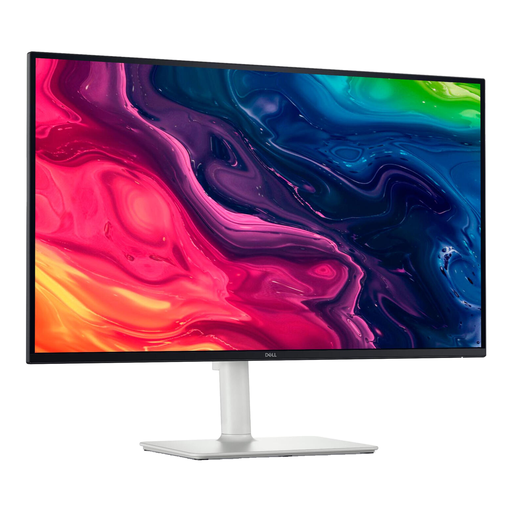 No image available
Dell Plus S2725QS 27-inch 4K monitor
An option if you’re looking for 4K resolution and an adjustable viewing position.
3840 × 2160; IPS panel; height and tilt adjustment.
View at Joybuy
 No image available
Dell Plus S2725QC 27-inch 4K monitor
An option if you want to combine 4K detail with a USB-C connection and an adjustable stand.
3840 × 2160; USB-C with 65 W power delivery; height and tilt adjustment. Check that your laptop supports video through the USB-C port you plan to use.
View at Joybuy
Frequently asked questions
Is a black-and-white mode enough for accurate portrait editing?
No, a black-and-white mode alone isn’t enough to assess the display. BenQ lists this mode for the SW272U, but you should also check neutral whites, greyscale gradients and panel uniformity; calibration can’t correct unevenness.
What should you readjust when someone else uses the desk?
Readjust the screen height and position, and check for reflections and ambient light. If the other person uses a different computer, also check the active monitor profile and screen mode. According to EIZO, in supported ColorEdge workflows, ColorNavigator can link profiles to modes.
Who can help if a monitor bought in the Netherlands turns out to be faulty?
For your statutory guarantee, the Dutch government says you should contact the seller. The Netherlands doesn’t have one fixed statutory guarantee period for every product; a manufacturer’s guarantee is separate from your statutory rights. For online purchases from a business, you’ll also have a 14-day cooling-off period in many cases, subject to legal exceptions.
Does a monitor at a shared workspace have to be adjustable by law?
For a Dutch employee’s screen-based workstation, the Dutch Working Conditions Portal (Arboportaal) describes requirements including a height-adjustable, non-reflective screen. These workplace rules don’t automatically apply as a general buying requirement for a privately used shared desk; check which type of work situation applies.


