
Vandaag of morgen in huis

Kwaliteit gegarandeerd

Welkomstaanbiedingen ontgrendelen: GRATIS bezorging | Tot 80% korting | Gratis 30 dagen JoyPlus-proefperiode
Download de app
Buying a moisturising cream seems simple until you have to choose between a face cream, body cream, hand cream, repairing cream or barrier cream. Marketing terms such as “72-hour hydration”, “intensive repair” and “anti-ageing” also do not always tell you enough about the formula or how to use the product.
The right choice mainly depends on three things: where you use the cream, what your skin needs and which ingredients your skin can tolerate. Below, you will find practical guidance to help you choose, including popular options for different uses.
A face cream is usually formulated for the thinner skin on the face. A body cream may be richer, oilier or available in a larger pack. A hand cream is often designed to absorb quickly and withstand frequent hand washing.
A cream for dry skin on the body is therefore not automatically suitable for an acne-prone face. Always check the product category, the stated skin types and the instructions for use.
Claims about long-lasting hydration, reducing wrinkles or soothing the skin are product claims. According to NIVEA’s own research, for example, the Repair & Care Urea Body Cream claims 72-hour hydration based on a self-assessment by 41 volunteers, measured after two weeks of use. This is relevant product information, but it is not a guarantee for every user.
With an anti-wrinkle cream or a cream containing hyaluronic acid, it is sensible to check the full ingredients list and instructions for use rather than relying solely on the promise on the packaging.
A cream for sensitive skin is not necessarily fragrance-free. Therefore, check the ingredients for terms such as Parfum and known fragrance allergens. A fragrance-free formula may be a sensible choice for skin that reacts easily, but even then, a patch test is advisable.
Commonly used humectant ingredients include:
A cream with glycerine is not automatically richer than a cream with ceramides. The overall formula, texture and concentration determine how the product feels.
A lightweight gel cream can feel comfortable under make-up or on oilier skin. A rich cream containing shea butter, mineral oils, petroleum jelly or silicones may be better suited to tight-feeling skin or dry areas of the body. Consider the balance between comfort and ease of use: a very oily formula may be impractical during the day, while a lightweight cream may not provide enough comfort for rough elbows.
Compare the volume with how the product will be used. A 400 ml tub is practical for daily use on the body, while 30 to 50 ml is more usual for a face cream. Check the expiry date on the packaging and, after opening, look for the symbol showing the period of use, such as 6M or 12M.
Test a new product on a small area of skin first. Stop using it if irritation, redness or an allergic reaction occurs. For a cream for eczema and psoriasis, follow the leaflet. Lucovitaal Eczema Psoriasis Intensive Cream is offered as a medical device; use it according to the instructions provided and seek advice from a doctor or pharmacist if symptoms persist.
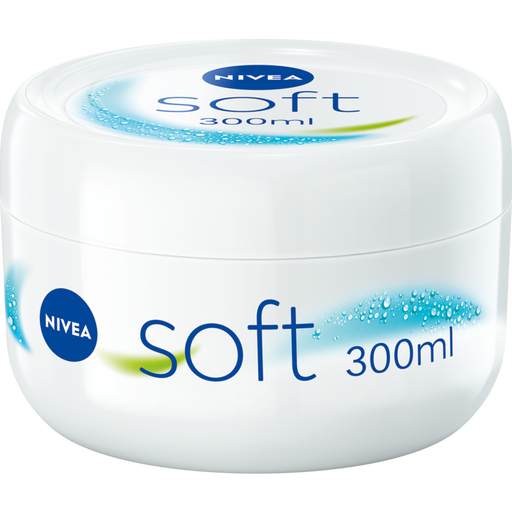
Why it suits this profile: A versatile cream for the face and body, suitable for daily use when you are looking for one simple all-round formula.
The product description clearly states its uses, volume and ingredients, so you are less likely to expect a specialised face or hand cream.
300 ml; glycerine, vitamin E and jojoba oil; according to the product description, a lightweight texture and quick absorption.
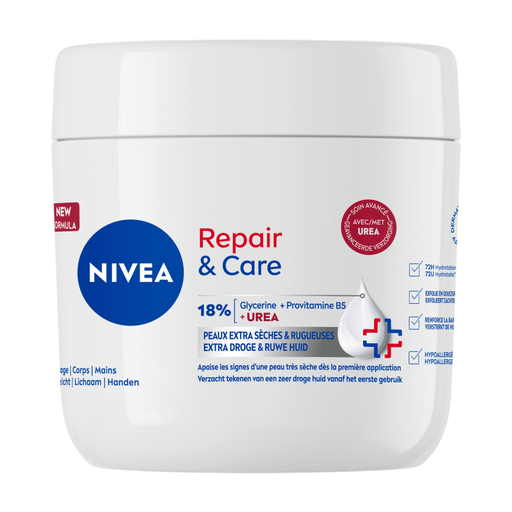
Why it suits this profile: Designed for very dry, rough areas of the body where a larger pack and richer formula are preferred.
The packaging states the intended area of use and the combination of 18% glycerine, urea and provitamin B5, rather than making only a general moisturising claim.
400 ml; urea, glycerine and panthenol; according to NIVEA’s own research, skin hydration lasts for up to 72 hours under the stated test conditions.
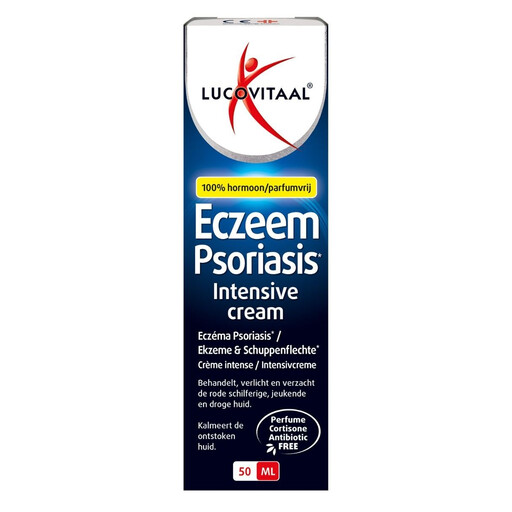
Why it suits this profile: Intended for adults looking for a product to address specific dry, flaky or itchy skin concerns.
Its status as a medical device and the instructions for daily use are clearly stated. Read the leaflet before applying the product.
50 ml; fragrance-free formula according to the product information; contains DDS5 minerals from the Dead Sea and MDS17.
We have put together a complete, up-to-date list of products that fully meet these strict selection criteria and the applicable European safety regulations.
A face cream is generally developed for use on the face and may have a lighter texture. Body cream is often used in larger quantities and may be richer. Always check whether the product is suitable for your skin type and intended use. For acne-prone skin, a non-comedogenic face cream may be more practical.
This depends on the formula and your skin’s needs. Many products are applied once or twice a day to clean skin. Ideally, apply body cream after showering, while the skin is still slightly damp. For a repairing cream or medical device, follow the instructions on the packaging.
Check the expiry date and the symbol showing the period after opening. For example, a product marked 12M is intended for use for up to twelve months after opening. Store the cream in a cool, dry place away from direct sunlight. A change in smell, colour or texture may be a reason to stop using the product.
