What should you look for when choosing?
First, establish whether the moisture is only affecting stored clothes or the whole room. Then compare the technology with the temperature, noise and maintenance you can manage.
| What to consider |
What should you check? |
Who should consider this? |
| Damp around clothes storage |
Check that the absorber fits securely and that the collection tray and refill stay safely away from fabrics. |
If my wardrobe is the only damp area, I want to tackle that storage space without immediately buying a device for the whole room. Around 36% of consumers with this buying question prioritise keeping clothes dry in a confined space. |
| Persistent damp in the room |
First assess ventilation and possible leaks; then compare the room size, temperature, capacity and tank or drainage options. |
If windows or walls also stay damp, I want to consider the wider source of moisture rather than just treating the wardrobe. Around 28% of consumers with this buying question make tackling damp in the room their top priority. |
| Noise while sleeping |
Compare the stated noise level and settings of the exact model; where available, also look for an independent assessment of its sound profile. |
If the device would be next to my bed, I want to know how noticeable it is in a quiet room. Around 18% of this group prioritise quiet operation while sleeping. |
| Cool room and running costs |
Check the usual room temperature and compare the suitable operating temperature, energy consumption and any replacement refills. |
If my room is often cold or I want to factor in ongoing costs, the technology needs to suit those conditions. Around 18% of consumers with this buying question prioritise temperature or running costs. |
According to Consumentenbond, compressor or condensation dehumidifiers work best above 15 °C; their suitability decreases in cooler rooms. Consumentenbond describes desiccant dehumidifiers as an option for cold rooms, although they use more electricity than condensation models. A device is no substitute for ventilation: Milieu Centraal describes ventilation as bringing in fresh air and removing stale air.
Electric dehumidifiers at Joybuy
This selection features electric dehumidifiers for use in a room. Compare the stated room size and capacity with your own room, and also consider the tank capacity, drainage and noise while you sleep.
 No image available
Comfee' MDDO-10DEN7 dehumidifier, 10 L per 24 hours
Worth comparing if you are looking for an electric room dehumidifier and the stated room size suits your needs.
The product information lists a 2.5-litre tank, a sleep mode, a laundry-drying mode and a room size of around 40 m³ (16 m²).
View at Joybuy
 No image available
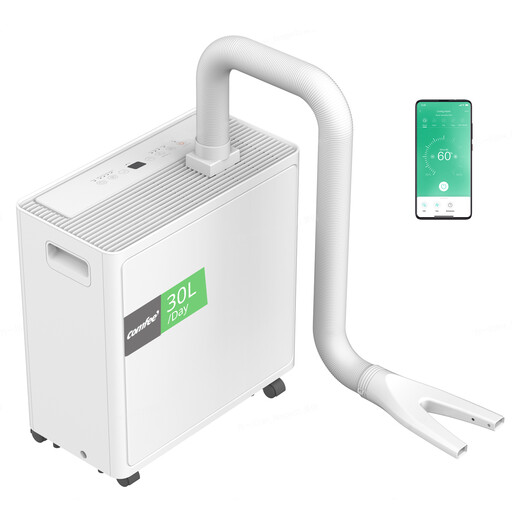
Comfee' MDDA-30DEN7-SD dehumidifier, 30 L per day
Compare the stated room size with your room before choosing a model with this capacity.
The product information lists a 3.2-litre tank, continuous drainage, app control and a laundry-drying mode. The stated room size is around 130 m³ (73 m²).
View at Joybuy
 No image available
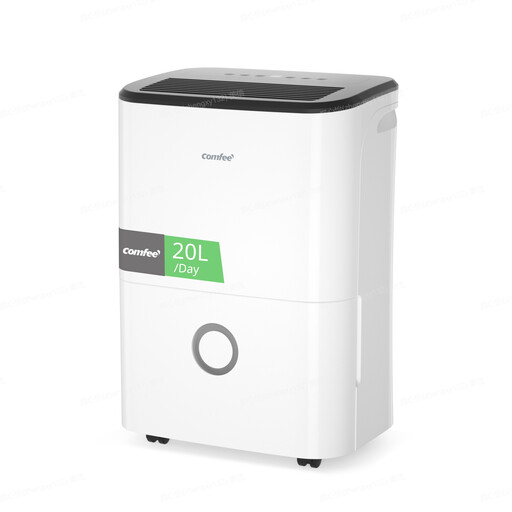
Comfee' MDDF-20DEN7 dehumidifier, 20 L per day
Worth comparing if you are looking for a room dehumidifier and the stated room size matches your needs.
The product information lists a 3-litre tank, a humidity setting of 45–55% and a stated room size of around 100 m³ (40 m²). According to the product description, a hose for continuous drainage is not included.
View at Joybuy
 No image available
CONOPU 16L dehumidifier
The product description mentions a clothes-drying function; check that the stated room size is suitable for your room.
The product information lists a 2.5-litre tank, continuous drainage and adjustable humidity from 40% to 70%.
View at Joybuy
 No image available
ELECCI 12L/D dehumidifier
The product information mentions a clothes-drying mode; compare the stated room size with your room's dimensions.
According to the product information, the device has a 3.8-litre tank, continuous drainage and a stated coverage area of up to 25 m².
View at Joybuy
Frequently asked questions
When should you avoid choosing a dehumidifier straight away?
First, address any possible causes if you suspect a leak, mould or inadequate ventilation. Consumentenbond says a dehumidifier may help if humidity stays consistently above 65% after the causes have been addressed.
Should a dehumidifier go inside the wardrobe?
Not without checking the placement instructions for your chosen model. A room dehumidifier and a small moisture absorber are different solutions; place an absorber with a collection tray on a stable surface and keep clothes away from the collected salt solution.
How can you factor in maintenance and running costs?
For an electric model, check how to empty the tank or connect a drainage hose, and compare its energy consumption for your intended use. For a passive absorber, check which refill it needs and how to empty the collection tray.
What should you do if you are a tenant dealing with damp, leaks or mould caused by poor maintenance?
As the Rijksoverheid advises, report poor maintenance to your landlord in writing first and keep a copy. Depending on the circumstances, the local authority, Huurcommissie or court may then be able to help with serious defects; a dehumidifier is no substitute for reporting the issue.
Does a dehumidifier replace ventilation?
No. Milieu Centraal describes ventilation as bringing in fresh air and removing stale air. A dehumidifier removes moisture from indoor air, but it does not replace that exchange of air.


