First, choose a lens with a mount that fits your camera, then decide whether you mainly want to photograph entire trains or small details. For close-ups, the exact model’s magnification and the space available around your setup matter. For a stationary model, focus stacking can help keep more depth in focus, but it requires extra shots and post-processing.
Who is this buying guide for?
Sellers of complete model trains
If you want to show locomotives and carriages clearly, consider your framing and how much of the model needs to be in focus; maximum magnification isn’t necessarily the main priority. CameraNU lists macro lenses as one option for close-ups in product photography.
Sellers of miniature details
If you want to show lettering, components or finishes in close-up, compare the maximum magnification of the exact lens model and the space available for lighting. Nikon, Canon and Laowa publish magnification specifications for their individual models.
Sellers with a dedicated photography space
When photographing stationary models repeatedly, you’ll need to consider the camera mount, the space around your setup and how much depth needs to be in focus. Canon Europe describes focus stacking as a way to combine shots taken at different focus points.
What should you look for when buying?
First, check the mount on the exact version of the lens. Then consider the framing you need, the working distance and the depth of field required for your photography setup.
Shorter lens for wider shots and close-ups
Best for: anyone who wants to frame a whole train in a limited space and occasionally photograph a detail.
Keep in mind: maximum magnification varies by model. Canon specifies up to 0.5× for the RF 35mm, while Nikon lists 1:1 for the Z MC 50mm. When shooting close-ups, the front of the Nikon lens may come close to the subject.
Lens of around 90–105 mm
Best for: anyone who wants to isolate details and can position the camera further away from the train.
Keep in mind: you’ll generally need more distance to frame the whole train. Sony specifies 1:1 for the FE 90mm and Canon up to 1.4× for the RF 100mm; make sure the mount fits your camera.
Specialist 2:1 macro lens
Best for: anyone who wants to show very small components in close-up with a suitable APS-C setup.
Keep in mind: Laowa specifies up to 2:1 for the 65mm f/2.8 2X. This doesn’t guarantee that a whole train will fit in the frame or be in focus from front to back.
| What to consider |
What to check before buying |
Who is this important for? |
| Compatible camera mount |
Check the mount on the exact version and the sensor format specified by the manufacturer. |
I want to make sure the lens fits my existing camera before comparing focal lengths or magnification. Around 33% of consumers put compatibility first. |
| Showing small details clearly |
Compare the maximum magnification of the exact model; it may be, for example, 0.5×, 1:1 or 2:1. |
If I want to photograph lettering and small components separately, magnification is my main consideration. Around 27% of consumers give detail reproduction top priority. |
| Framing a complete train |
Check whether the train will fit in the frame from the camera distance available; compare focal lengths using your own camera. |
I want to show locomotives and carriages clearly in one wide shot, without making maximum magnification my starting point. Around 20% of consumers prioritise this type of framing. |
| Keeping the model in focus |
Check whether your camera and post-processing workflow support a series of shots taken at different focus points. |
When photographing stationary models, I want to keep the depth in focus and am prepared to take and process extra shots. Around 20% of consumers prioritise this workflow. |
Common buying mistakes
-
Assuming ‘macro’ always means 1:1 magnification
The term doesn’t tell you the maximum magnification of a specific model. Canon lists up to 0.5× for the RF 35mm; Nikon specifies 1:1 for the Z MC 50mm.
Compare the maximum magnification listed for the exact version with the details you want to show separately.
-
Confusing focusing distance with the space in front of the lens
Sony lists a minimum focusing distance of 0.28 m for the FE 90mm; Laowa lists a distance of 17 cm at 2× for the 65mm. These figures aren’t the same as the clear space between the front of the lens and the model.
Check how much working space you’ll have in front of the lens at the magnification you need, with room for lighting.
You may need to adjust your setup or lighting to leave enough space around the model.
-
Expecting a small aperture to keep the whole train in focus
Canon Europe explains that stopping down further for macro photography doesn’t always provide enough depth of field across the whole image.
For a deeper stationary model, plan to take shots at different focus points if needed, and allow time to combine and edit them.
Focus stacking requires extra shots and post-processing.
-
Assuming business purchases come with the same terms as consumer purchases
KVK explains that business buyers generally have less consumer protection. Protections for small businesses may apply in some circumstances, but they aren’t automatic.
Before paying, check whether you’re buying as an individual or a business, and read the seller’s applicable terms and conditions.
Brands to compare
Nikon
The Z MC 50mm f/2.8 is a shorter 1:1 macro lens for Nikon Z cameras; the Z MC 105mm f/2.8 VR S is a longer alternative in the same range.
- Nikon specifies a maximum magnification of 1:1 for the Z MC 50mm.
- Nikon says the front of the lens may come close to the subject when shooting close-ups. Check that you have enough room for your lighting; this applies to the model mentioned.
Canon
The RF 35mm F1.8 MACRO IS STM and RF 100mm F2.8L Macro IS USM are lenses for Canon RF cameras.
- Canon specifies up to 0.5× for the RF 35mm and up to 1.4× for the RF 100mm.
- The RF 35mm doesn’t achieve 1:1. The RF 100mm’s higher maximum magnification doesn’t automatically make it a better choice for a wide shot of a complete train.
Sony
The FE 90 mm F2.8 Macro G OSS is an option for a camera with a Sony E mount.
- Sony specifies a maximum magnification of 1.0×, optical stabilisation and a minimum focusing distance of 0.28 m for the SEL90M28G.
- The minimum focusing distance doesn’t tell you how much clear space there is between the front of the lens and the model.
Sigma
According to Sigma, the 105mm F2.8 DG DN MACRO | Art is available in versions for Sony E and L-Mount.
- Sigma specifies a maximum magnification of 1:1 for this model.
- These specifications and image quality claims come from Sigma; they aren’t an independent comparison for model train photography. Check that you choose the correct mount version.
Laowa
The 65mm f/2.8 2x Ultra Macro APO is designed for a suitable APS-C setup when very small details are a priority.
- Laowa specifies up to 2:1 and lists versions for Fujifilm X, Sony E, Nikon Z and Canon RF, among others.
- Laowa lists a minimum focusing distance of 17 cm at 2×; this isn’t the clear space in front of the lens and doesn’t tell you whether a whole train will fit in the frame.
Lenses at Joybuy
These Sony E lenses are suited to wider framing and close-up photography. Compare their limited maximum magnification with your need to capture small details, and check that the version you choose fits your camera.
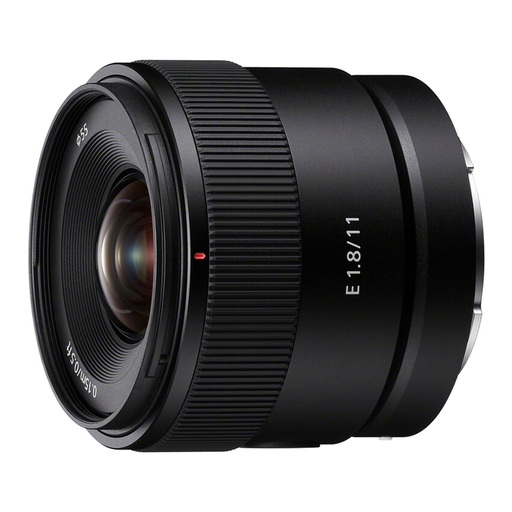 Image unavailable
Sony E 11mm F1.8 APS-C Wide Angle Prime Lens (SEL11F18)
This ultra-wide-angle lens is designed for wider framing; its listed magnification is limited if you want to show very small details in close-up.
Focal length: 11 mm. Mount and format: Sony E, APS-C.
Listed angle of view: 104°. Minimum focusing distance: 0,15 m.
Maximum magnification: 0,13× with AF and 0,20× with MF.
Joybuy
 Image unavailable
Sony E 50mm f/1.8 OSS Black
The product description mentions product, close-up and macro photography; maximum magnification is limited if you want to show very small details in close-up.
Focal length: 50 mm. Mount: Sony E.
Aperture: f/1.8. Weight: 202 g.
Maximum magnification: 0,16×.
Joybuy
Frequently asked questions
Do you need 1:1 magnification for every model train photo?
No. For a wider shot, framing may matter more than 1:1 magnification. For individual small details, maximum magnification is more relevant: Canon specifies up to 0.5× for the RF 35mm, while Nikon specifies 1:1 for the Z MC 50mm.
How can you keep both the front and back of a model in focus?
If needed, take several shots of the stationary model, each with a different focus point, and combine them using focus stacking. Canon Europe notes that simply stopping down further for macro photography doesn’t always provide enough depth of field across the whole image. Also check which steps your camera and editing software support.
What purchase terms should you check when buying a lens for your online shop?
Check whether you’re buying as an individual or a business, and read the applicable returns and warranty terms. KVK explains that business buyers generally have less consumer protection; protections for small businesses may apply only in certain circumstances and aren’t automatic.
Can you use someone else’s photos in your Dutch online shop?
According to the Dutch Government, you need the creator’s permission to use someone else’s copyright-protected photos. A private copy for personal use must not be distributed or made public, so take your own photos or arrange the necessary usage rights.
What should you consider when taking product photos for consumers?
Make sure your photos and product description accurately reflect what you’re selling. The Netherlands Authority for Consumers and Markets describes misleading information that could influence consumers to make a different choice as an example of an unfair commercial practice.


