What should you look for?
Compact camera with close-up mode
When to choose it: If you want to photograph small details without a separate lens; according to OM SYSTEM, the OM SYSTEM Tough TG-7 has a microscope mode that can focus from 1 cm away.
Trade-off: That short focusing distance doesn’t necessarily tell you how much of your subject will fill the frame, and it may leave little room to light the scene in front of the camera.
Mirrorless camera with versatile zoom lens
When to choose it: If you often switch between a full train shot and medium-sized details; Canon lists a maximum magnification of 0.59× at 35 mm for the RF-S 18-150mm, with manual focusing.
Trade-off: This magnification applies to this lens at this setting, not to every Canon EOS R50 kit; check exactly which lens is included in the bundle.
Mirrorless camera with a dedicated macro lens
When to choose it: If couplings, lettering or paintwork will take up a large part of your photo, compare a suitable macro lens with your camera’s mount.
Trade-off: A macro lens isn’t automatically included. At high magnifications, you’ll also need to consider the available depth of field and the space you have for lighting.
Your current camera with an adjusted setup
When to choose it: If your current lens already gives you the crop you want, but you mainly want to deal with shadows, glare or camera shake.
Trade-off: A different setup won’t change your lens’s maximum magnification; focus stacking requires several shots and combining them afterwards.
For each option, consider five things: detail magnification, keeping the whole scene in focus, lighting, switching between wide shots and details, and the complete kit you’ll need.
| What to consider |
What should you check? |
Who should pay particular attention? |
| Magnifying small details |
Compare the maximum magnification of the exact lens, the mount and the crop you want. Canon Netherlands lists a maximum magnification of 0.26× at 45 mm for the RF-S 18-45mm, with manual focusing. |
If I want to capture small lettering or couplings so they fill the frame, I look at the lens, not just the body. Around 29% of consumers say magnifying details is their main purchasing concern. |
| Keeping several layers of depth in focus |
Check whether you can focus manually and whether your chosen camera and lens combination supports focus bracketing; manually combining several focus points is another option. |
If I want the train and its surroundings to be in focus, depth of field in a single shot is my first consideration. Around 23% of consumers prioritise keeping the whole scene in focus. |
| Shadows and reflections |
Check the space in front of the lens in your own setup and plan for diffused light. A very short focusing distance doesn’t guarantee there’ll be enough room to light the train properly. |
If I’m photographing paintwork details, I want to be able to control distracting shadows and glare. Around 18% of consumers put control over lighting first. |
| Switching between wide shots and details |
Compare a photo of the entire train with the smallest detail crop you want, and check exactly what’s included in the kit. Also check the lens mount. |
If I switch between a full train and larger details in my portfolio, I want to know whether one kit can handle both crops. Around 18% of consumers value versatile crops most. |
| Putting together a complete kit |
Consider the body, the exact lens included and any extra accessories as one complete setup. A standard zoom doesn’t automatically offer the magnification of a dedicated macro lens. |
If I don’t want to discover that I need another lens for my smallest details, I compare the complete kit. Around 12% of consumers say the cost of a complete kit is their main concern. |
Cameras at Joybuy
This selection features cameras whose product names indicate that they’re designed for photography, video or vlogging. For model train photos, check that the lens gives you the close-up crop you want; the stated zoom alone doesn’t tell you anything about macro magnification.
 No image available
DJI Osmo Pocket 4 Standard Combo
A compact camera for photography and vlogging; check that the lens can capture the smallest crop you want of your model train.
1″ CMOS sensor, 2× zoom, 4K/240fps, 3-axis stabilisation and a 2-inch rotating screen.
View at Joybuy
 No image available
Osmo Pocket 4 Creator Combo
A camera for anyone looking for a compact photo and video kit; check that the lens gives you the close-up crop you want before choosing it for small model details.
1″ CMOS sensor, 2× zoom, 4K/240fps, 14-stop dynamic range, 107 GB of built-in storage and a handle with a 1/4″ thread.
View at Joybuy
 No image available
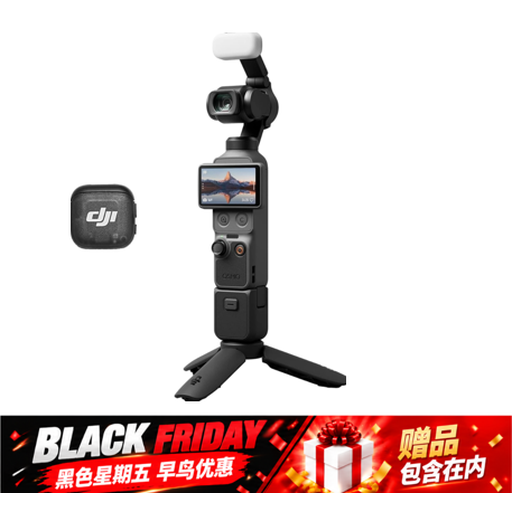
DJI Osmo Pocket 3 Creator Combo
A vlogging camera whose product name also mentions photography; check that the camera and lens suit the crops you need for your portfolio.
1″ CMOS sensor, 4K/120fps, 3-axis stabilisation, fast focusing and an included microphone.
View at Joybuy
 No image available
DJI Osmo Pocket 3
A compact camera for photography and video; for model trains, check that the lens can capture the details you want from close enough.
1″ CMOS sensor, 4K/120fps, 3-axis stabilisation, fast focusing and a 2-inch rotating screen. SD card and adapter/charger not included.
View at Joybuy
 No image available
Sony ZV-E10 + 16–50mm Zoom Black
A camera with a zoom lens for trying out different angles; check that the lens can also capture the smallest model details you want.
Includes a 16–50mm zoom lens. SD card and adapter/charger not included.
View at Joybuy
Frequently asked questions
Do I need a 1:1 macro lens for model train details?
Not if your current or included lens already gives you the crop you want. First, compare the magnification of that exact lens. A 1:1 macro lens is one option for small details that fill the frame, not a must-have for every portfolio.
How can I get a stationary train sharp from front to back?
Set the camera up steadily and choose your focus point carefully. If a single shot doesn’t give you enough depth of field, you can take several shots at different focus points and combine them. Check whether your camera and lens combination supports the automatic method you want to use.
How can I reduce glare and shadows when taking photos?
Try soft, diffused light and a reflector. At a short focusing distance, check that there’s still enough room for lighting; with stationary models, a tripod can help when using a longer shutter speed.
What if the camera I bought online is faulty or I change my mind?
According to the Dutch government, if a product is faulty, the seller—not the manufacturer—must provide a solution. For eligible distance purchases, you’ll often have a 14-day cooling-off period; check the terms and exceptions that apply to your purchase.


