
Entering lots of collection details
You regularly record quantities, numbers and descriptions, and are mainly looking for a layout that suits the way you work.


Choose a keyboard based on what you enter most often: a full-size model with a numeric keypad is handy for quantities and catalogue numbers, while a compact model leaves more room for your mouse. A split layout can offer a different typing position, but it may take some getting used to. You’ll need to set up local backups separately on your computer, as a keyboard won’t create them for you.
You regularly record quantities, numbers and descriptions, and are mainly looking for a layout that suits the way you work.
You spend long periods working on descriptions and pay attention to your typing position, room for your mouse and opportunities to vary your tasks.
You want to enter data and manage files, and arrange backups separately from your choice of keyboard.
Start by considering how much number entry you do. Then weigh up how much room you need for your mouse, how long you type at a time and whether you want to customise shortcuts.
| Consideration | What to look for when buying | Who is this important for? |
|---|---|---|
| Entering numbers | Check whether the model has an integrated numeric keypad and whether the number and punctuation keys are where you want them. | If you often enter quantities and catalogue numbers, you’ll want those keys close to hand. Around 29% of consumers prioritise number entry. |
| Local file copies | Decide where your catalogue files and images are stored, and how you’ll copy them separately to an external drive or network location. | If you want to be able to restore your catalogue locally, you’ll need to set up and check the backup on your computer. Around 24% of consumers put file security first. |
| Long typing sessions | Compare a straight layout with a split model, and also consider your workspace and whether you can vary your tasks. | For longer data-entry sessions, the position of your hands and arms may be a factor. A different layout may take some getting used to. Around 18% of consumers prioritise typing position. |
| Room for your mouse | Measure your desk and think about how often you use your mouse alongside your keyboard. | If you use your mouse a lot while cataloguing, having room beside the keyboard may matter more than a fixed numeric keypad. Around 18% of consumers choose mainly with mouse space in mind. |
| Customisable keys | Check which shortcuts your catalogue software supports and whether you need specific software for the keyboard. | If you often perform the same actions in the same programme, customisation may be useful. First check that the software suits the way you work. Around 12% of consumers prioritise shortcuts. |
Customisable keys can help with certain data-entry tasks, but they won’t create a copy of your catalogue files.
Choose a keyboard that suits your data-entry work, then separately set up which files you want to copy to a backup location.
A compact keyboard doesn’t always have an integrated numeric keypad. This can make a difference if you regularly enter long strings of numbers.
Decide what matters more to you: dedicated number keys or more room beside the keyboard. If you later find you need a numeric keypad, a separate number pad could be a good solution.
The keyboard layout and switch type can vary between versions, even when the model name is largely the same.
Before buying, check the full product name, layout and version. Don’t assume you’re getting the same version based on the model name alone.
The MX Keys S is a keyboard with a numeric keypad; the MX Keys Mini is the more compact version.
The KW 9100 SLIM is a low-profile keyboard with Bluetooth or a supplied 2.4GHz receiver.
The V6 Max is a full-size mechanical keyboard for anyone who values customisable keys.
The wired PERIBOARD-512 offers a split layout with an integrated palm rest as an alternative to a straight layout.
These keyboard options suit frequent number entry, customisable keys and different desk-layout preferences for catalogue work.
 No image available
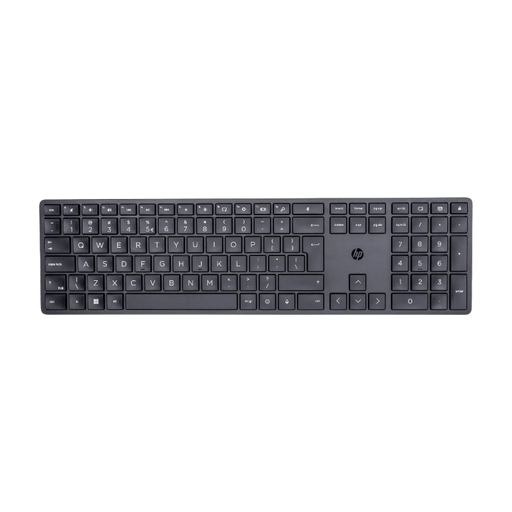
A full-size option for anyone who wants to use a numeric keypad when entering collection details.
QWERTY layout, black, wired and plug-and-play.
 No image available
An option to consider if you’re looking for a wireless keyboard with customisable keys for tasks you perform regularly.
The product name mentions a wireless connection and programmable keys; check whether the customisation options work with your catalogue software.
 No image available
This compact keyboard is worth considering if you’re looking for a mechanical model with tri-mode connectivity.
The product name mentions a 75% layout, tri-mode connectivity, Flying Fish Switches and US QWERTY.
 No image available
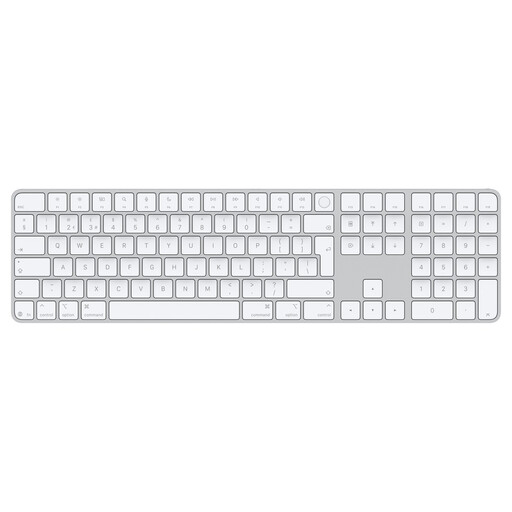
A full-size option to consider if you enter lots of numbers and use a Mac with Apple silicon.
The product name mentions a numeric keypad, QWERTY, a Dutch layout and white keys. This version is designed for Mac models with Apple silicon.
 No image available
A keyboard with a supplied mouse to consider if you’re looking for a compact set and room beside the keyboard matters to you.
The product name mentions RF wireless and Bluetooth, QWERTY US English and the colour blue. Check that not having an integrated numeric keypad suits the way you enter numbers.
No, you need to set up the backup separately on your computer. Microsoft describes File History for Windows 10 and 11, which uses an external drive or network location. Check that the folders containing your catalogue and images are included, and that you can restore files.
Reconnect the drive and check the backup in File History. Microsoft also describes how to start it manually by selecting ‘Run now’.
The requirement described by Arboportaal applies to employees who spend more than two hours a day working with display screen equipment: their screen and keyboard must not be attached to each other. This guidance is about display screen work; for a hobby purchase, focus on finding a layout that suits your workspace and how you use it.
When you buy online from a business, you’ll usually have a 14-day cooling-off period, although there are exceptions. According to the Dutch government, there’s no set statutory period for the legal guarantee; report a faulty product to the seller.