
Vandaag of morgen in huis

Kwaliteit gegarandeerd

Welkomstaanbiedingen ontgrendelen: GRATIS bezorging | Tot 80% korting | Gratis 30 dagen JoyPlus-proefperiode
Download de app
The right mobility aid can make everyday life easier at home, outdoors and when travelling. However, many people choose a product based on an attractive photo or a high maximum load without properly checking its dimensions, controls and storage requirements. This can result in a rollator that will not fit through the doorway, a wheelchair that is difficult to get into the car or a walking aid that is not properly suited to the user.
As a Joybuy Product Recommendation Officer, I focus primarily on verifiable information. Below, you’ll find what to look for when choosing mobility aids for older people, which common pitfalls are often overlooked and which type of aid is best suited to different situations.
A load capacity of, for example, 136, 150 or 158 kg does not tell you everything. The user must be able to sit or walk comfortably, but also manoeuvre safely. With a rollator featuring a seat, you must also include the weight of shopping in the basket. Therefore, check:
Treat the maximum load as an upper limit, not a target value.
A foldable rollator or foldable wheelchair takes up less space once folded, but it can still be heavy. Pay attention to the net weight, folded dimensions and shape of the frame. For example, a 17.5 kg mobility aid requires more lifting strength than an 8.5 kg model.
Measure the boot, storage area, lift and narrowest passageway in your home beforehand. Also check whether the product remains upright when folded. This varies from model to model.
A brand may state that a product provides extra comfort, support or relief. Do not present such claims as guaranteed results. According to Lucovitaal’s own information, the copper woven knee brace and adjustable back brace are intended to provide support and protection. However, the product experience may vary from person to person. Read the instructions and seek advice from a doctor or physiotherapist if symptoms persist.
With a copper knee brace or copper back brace, the key points you can verify are the size range, fastening, material and wearing comfort. The presence of copper in the material is not a reason to assume that the product has a medical effect.
Do not only check the maximum weight. Also look at the seat width, seat depth and seat height. A self-propelled wheelchair with a seat width of 40 or 42 cm may be suitable for one user but too narrow for another. With a rollator with seat, the size of the seat is important for short rest breaks.
A seat that is too narrow restricts freedom of movement. A seat that is too wide can make posture and operating the brakes less practical.
An adjustable walking aid should be set to suit the user’s height. When the user is standing upright with relaxed arms, the handles should be approximately at wrist height. Check how many settings are available. Some models offer five height positions, allowing more precise adjustment than a product with just one fixed height.
Also consider the shape of the handles, the type of brake and how the brake locks. Always practise first on a flat, quiet surface.
Larger wheels can be more practical on uneven outdoor paths, while compact wheels are easier to turn indoors. A walking frame with wheels designed for indoor use has different priorities from a mobility aid for indoor and outdoor use.
Check:
An electric wheelchair is not a substitute for careful driving. Practise starting, stopping and turning, and follow local traffic regulations when driving outdoors.
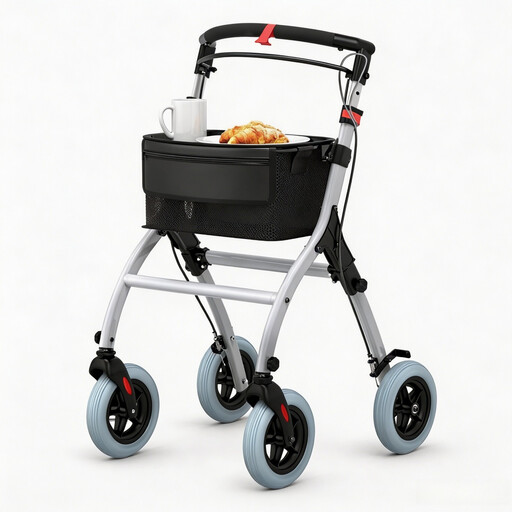
Why it suits this profile: At a relatively light net weight of 7.8 kg, this aluminium model is easy to move and designed for indoor use.
The folded dimensions and five adjustment positions are listed, allowing you to check in advance whether the aid is suitable for your home.
Aluminium frame, 8-inch PU wheels, five height positions and a maximum load capacity of 110 kg.
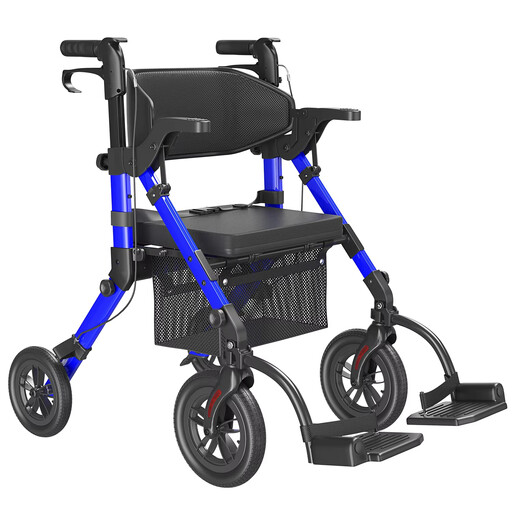
Why it suits this profile: The combination of larger front and rear wheels and a foldable design suits users who want to walk both indoors and outdoors.
The load capacity, wheel sizes and folded dimensions are clearly stated. This allows you to compare the load and available storage space.
10-inch front wheels, 8-inch rear wheels, foldable frame and a maximum load capacity of 136 kg.
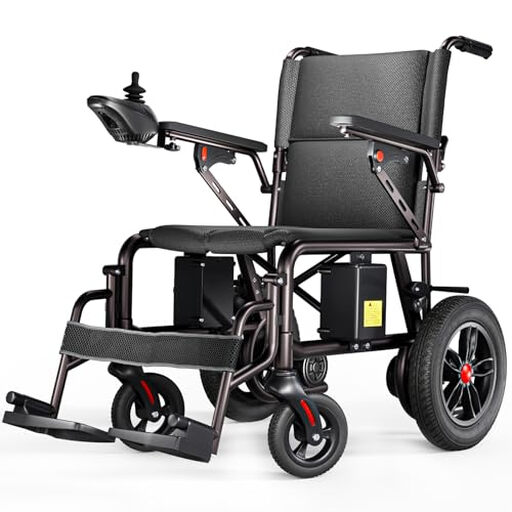
Why it suits this profile: This model is designed for users who value electric power and portability for everyday use indoors and outdoors.
Information about speed, battery capacity, gradient and folded size is clearly shown, helping you match the product to your usage and storage needs.
Dual 250 W motors, electric brake, maximum load capacity of 150 kg, maximum speed of 6 km/h and foldable design.
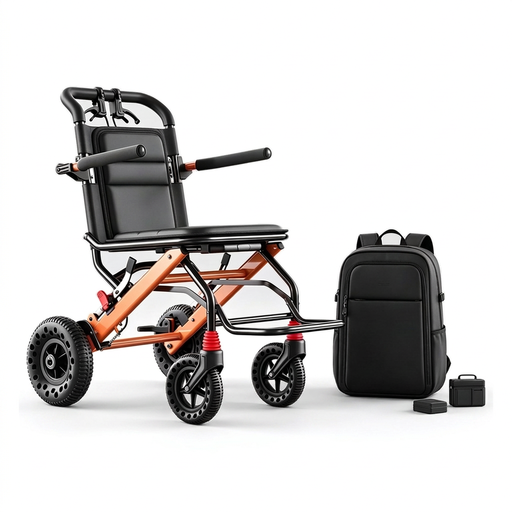
Why it suits this profile: The low net weight of 8.6 kg and included storage bag are practical for day trips, travelling and transporting the chair in a car.
The distinction between net and gross weight is stated. This helps you assess lifting, transport and storage requirements.
Aluminium frame, 40 cm seat width, 6- and 8-inch honeycomb wheels, load capacity of up to 110 kg and storage bag.
A walking frame with wheels provides support while walking, but requires sufficient arm and hand function for steering and braking. A rollator with a seat is more convenient when regular rests are needed along the way. Choose a foldable rollator if transport and storage are important, but always compare the weight.
A transport wheelchair is particularly suitable when a carer pushes the user. A self-propelled wheelchair with larger rear wheels can offer greater independence, but requires more strength and practice. With an electric wheelchair, pay extra attention to battery charging, turning radius, gradients and the available space indoors.
For knee or back support, a copper knee brace or copper back brace may be used as an additional aid in accordance with the product instructions. Check the size, adjustability and comfort against the skin. Stop using the product if irritation occurs and seek medical advice if you have any health-related questions.
We’ve compiled a complete, up-to-date list of products that fully meet these strict selection criteria and the applicable European safety regulations.
Stand upright with relaxed shoulders and let your arms hang by your sides. Set the handles to approximately wrist height. Your elbows may be slightly bent while walking. Then check that the brake levers are easy to reach and practise first on a flat surface.
The lifespan depends on usage, weight, surface and maintenance. Regularly check the brake cables, wheel fittings, screws, tyres and folding mechanism. Keep the frame dry and clean moving parts according to the instructions. For electric wheelchairs, battery condition and correct charging are particularly important.
In addition to the purchase price, you mainly pay for electricity, possible maintenance and, eventually, a replacement battery. The actual costs depend on charging frequency, battery capacity and conditions of use. Therefore, do not compare only the maximum range. Also consider charging time, battery type, weight and the availability of spare parts.
